Best Hospitals in Thailand 2026: Newsweek and Statista Reveal Top 30 Hospital Rankings

Bumrungrad International Hospital ranks No. 1 in Thailand in Newsweek's World's Best Hospitals 2026, followed by Samitivej Sukhumvit Hospital and King Chulalongkorn Memorial Hospital. The latest rankings recognize 30 hospitals across Thailand, highlighting the country's healthcare capabilities, medical expertise, and commitment to quality patient care.
Newsweek, in partnership with global data and business intelligence platform Statista, has released its World's Best Hospitals 2026 rankings, recognizing leading healthcare institutions across 32 countries.
The annual evaluation assessed more than 2,500 hospitals worldwide, with special recognition given to the top 250 institutions globally. The rankings also provide country-specific results to help patients, families, and healthcare professionals identify hospitals recognized for their quality of care, professional recommendations, and patient experience.
In Thailand, Bumrungrad International Hospital secured the No. 1 position with a score of 91.80%, followed by Samitivej Sukhumvit Hospital at 87.80% and King Chulalongkorn Memorial Hospital at 86.09%.
The results highlight Thailand's diverse healthcare landscape, including private hospitals, public hospitals, and university-affiliated medical institutions.
Top 10 Best Hospitals in Thailand 2026
According to the Newsweek and Statista World's Best Hospitals 2026 rankings, the ten highest-ranked hospitals in Thailand are:
1 Bumrungrad International Hospital 91.80%
2 Samitivej Sukhumvit Hospital 87.80%
3 King Chulalongkorn Memorial Hospital 86.09%
4 Siriraj Piyamaharajkarun Hospital 85.81%
5 Bangkok Hospital 85.62%
6 MedPark Hospital 80.97%
7 Ramathibodi Hospital 78.66%
8 Bangkok Christian Hospital 78.38%
9 Thonburi Hospital 78.14%
10 Ramkhamhaeng Hospital 78.10%
Source: Newsweek and Statista, World's Best Hospitals 2026 Thailand.
All ten hospitals are located in Bangkok, reflecting the capital's concentration of major healthcare institutions.
The rankings include private healthcare providers alongside public and university-affiliated hospitals, illustrating the range of healthcare services available within Thailand's medical system.
Complete List: Top 30 Hospitals in Thailand 2026
Beyond the ten highest-ranked institutions, Newsweek and Statista recognized another 20 hospitals in Thailand.
The complete list of hospitals ranked 11 through 30 is presented below.
11 Praram 9 Hospital 77.92%
12 Yanhee Hospital 77.31%
13 Bangkok International Hospital 76.77%
14 BPK 9 International Hospital 74.77%
15 Rajavithi Hospital 74.18%
16 Samitivej Srinakarin Hospital 73.68%
17 Phyathai 2 Hospital 73.58%
18 Phyathai 1 Hospital 72.28%
19 Maharaj Nakorn Chiang Mai Hospital 71.17%
20 Bangkok Hospital Hat Yai 70.54%
21 Vajira Hospital 70.24%
22 Phyathai 3 Hospital 70.13%
23 Mission Hospital 69.98%
24 BNH Hospital 69.96%
25 Vejthani Hospital 69.93%
26 CGH Hospital Phaholyothin 69.84%
27 Songklanagarind Hospital 69.61%
28 Piyavate Hospital 69.57%
29 Srinagarind Hospital 69.52%
30 Siriraj Hospital 69.50%
Source: Newsweek and Statista, World's Best Hospitals 2026 Thailand.
While most ranked hospitals are located in Bangkok, several institutions outside the capital also appear on the list.
These include Maharaj Nakorn Chiang Mai Hospital in Chiang Mai, Bangkok Hospital Hat Yai and Songklanagarind Hospital in Songkhla, and Srinagarind Hospital in Khon Kaen.
Their inclusion reflects the presence of recognized healthcare institutions across different regions of Thailand.
World's Top 5 Best Hospitals in 2026
In addition to country-specific rankings, Newsweek and Statista identified leading hospitals in the global evaluation.
The five highest-ranked hospitals worldwide in 2026 are:
-
Mayo Clinic : Rochester, United States
-
Toronto General Hospital : University Health Network, Canada
-
Cleveland Clinic, United States
-
Karolinska Universitetssjukhuset, Sweden
-
Massachusetts General Hospital, United States
These institutions are recognized among the world's leading hospitals and represent major healthcare systems with established clinical services and medical expertise.
The global ranking is determined using international professional recommendations and national ranking performance. It should therefore be distinguished from the individual scores reported in each country's ranking.
How Does Newsweek Rank the World's Best Hospitals?
The World's Best Hospitals 2026 rankings are based on four principal evaluation components.
The methodology combines hospital quality indicators, professional recommendations, patient experience information, and patient-reported outcome measures.
1. Hospital Quality Metrics 40%
Hospital quality metrics account for 40% of the overall evaluation.
These indicators are collected from publicly available sources and may include measures related to treatment quality, hygiene standards, and patient-to-healthcare-professional ratios.
The specific quality indicators available for evaluation vary across countries.
2. Medical Expert Recommendations 35%
Recommendations from healthcare professionals account for 35% of the evaluation, divided into:
-
National medical expert recommendations: 30%
-
International medical expert recommendations: 5%
Newsweek and Statista invited medical professionals, including physicians, hospital managers, and other healthcare specialists, to recommend hospitals in their own countries and internationally.
Participants were not permitted to recommend their own employers or hospitals.
3. Patient Experience 18.5%
Patient experience contributes 18.5% to the hospital evaluation.
This component incorporates existing patient survey data, which may assess overall satisfaction, quality of medical care, and willingness to recommend a hospital.
Patient experience is particularly relevant because it provides insight into how individuals perceive the healthcare services they receive.
4. Patient-Reported Outcome Measures (PROMs) 6.5%
PROMs implementation accounts for 6.5% of the overall score.
Patient-Reported Outcome Measures are standardized, validated questionnaires completed by patients to evaluate aspects of their health, functional wellbeing, and quality of life.
These measures support healthcare systems in understanding treatment outcomes from the patient's perspective.
For the 2026 rankings, Newsweek and Statista increased the weighting of hospital quality metrics and PROMs implementation while incorporating additional quality, safety, accreditation, and patient experience information.
The evaluation also expanded to include the Philippines and Turkey for the first time.
Why Hospital Rankings Matter for International Patients
Choosing a hospital is an important decision, particularly for patients seeking complex medical treatment or traveling abroad for healthcare.
Hospital rankings can provide a useful starting point for understanding which institutions have received recognition based on available quality information and professional assessments.
However, rankings should not be the only factor influencing healthcare decisions.
International patients should also consider:
-
Medical specialization: Whether the hospital and physician have relevant expertise in the required treatment.
-
Clinical quality and patient safety: The hospital's treatment standards, infection prevention practices, and safety procedures.
-
Physician qualifications: Professional credentials, clinical experience, and relevant specialization.
-
Treatment costs: Transparent quotations and information about what is included in the proposed treatment.
-
International patient services: Language assistance, appointment coordination, and communication support.
-
Continuity of care: Follow-up arrangements, recovery planning, and management of potential complications.
A hospital that ranks highly overall may not necessarily be the most appropriate provider for every medical condition.
Patients should therefore evaluate hospital rankings alongside their individual healthcare needs and advice from qualified medical professionals.
Can Hospital Scores Be Compared Across Countries?
An important limitation of the World's Best Hospitals 2026 rankings is that hospital scores are comparable only within the same country.
According to Newsweek and Statista, countries use different sources of hospital quality metrics and patient experience information.
These differences prevent meaningful standardization of numerical scores across national healthcare systems.
For example, a hospital receiving a score of 91.80% in Thailand should not automatically be considered better than a hospital receiving a lower numerical score in another country.
The scores are designed primarily to support comparisons among hospitals within the same national ranking.
This distinction is particularly important for international patients researching healthcare options across multiple countries.
What the 2026 Rankings Mean for Thailand's Medical Tourism Industry
Thailand has established a prominent position in international medical tourism, attracting patients interested in specialist medical care, health screenings, surgical procedures, dental treatment, and wellness services.
The inclusion of 30 Thai hospitals in Newsweek's 2026 country ranking provides another source of information for international patients evaluating healthcare options in Thailand.
The ranked institutions include private hospitals, university-affiliated medical centers, and public hospitals, reflecting the diversity of Thailand's healthcare sector.
For medical travelers, the availability of information from independent ranking publications may help support more informed research before selecting a healthcare provider.
However, inclusion in a hospital ranking does not guarantee a particular clinical outcome or indicate that an institution is suitable for every procedure.
Thailand's long-term competitiveness in medical tourism will continue to depend on patient safety, medical expertise, service quality, transparent communication, and continuity of care.
Thailand's Healthcare Development and Medical Hub Ambitions
Thailand continues to promote the development of its medical and wellness sectors as part of its broader ambition to strengthen its position as a regional healthcare hub.
The country's healthcare ecosystem includes public and private hospitals, medical education institutions, specialist clinics, rehabilitation services, and wellness providers.
Bangkok remains an important center for international healthcare services, while regional medical institutions contribute to the availability of healthcare across the country.
The presence of recognized hospitals in Chiang Mai, Songkhla, and Khon Kaen demonstrates that Thailand's healthcare capabilities extend beyond the capital.
Continued investment in clinical quality, medical technology, healthcare workforce development, and international patient services will remain important to the sector's future growth.
ArokaGO: Helping International Patients Explore Healthcare Providers in Thailand
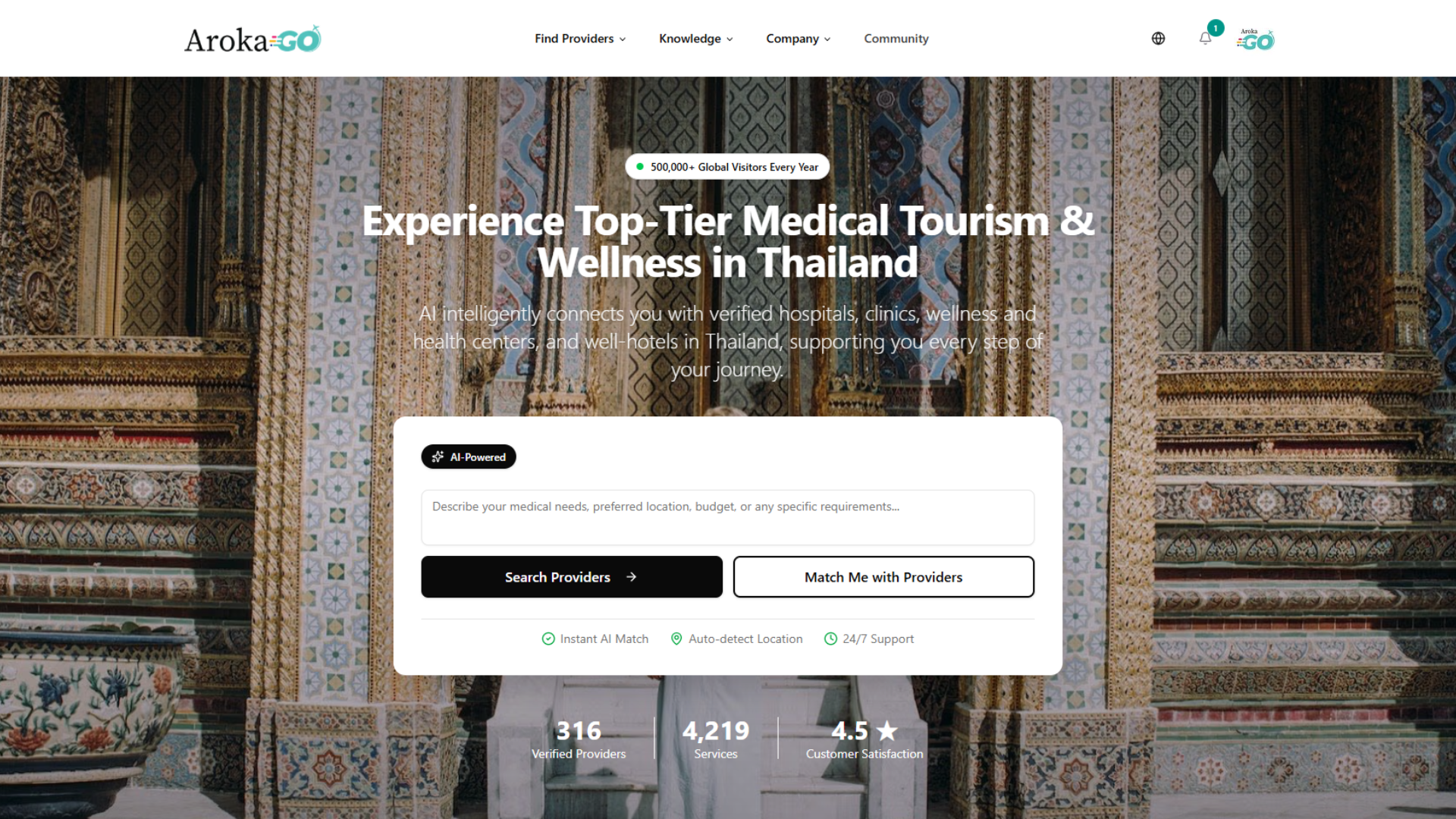
As international patients increasingly research healthcare options online, digital platforms play a growing role in providing accessible information about hospitals, clinics, and medical services.
ArokaGO, an AI-native medical and wellness tourism platform based in Thailand, supports international healthcare discovery by providing information about hospitals, clinics, and wellness providers across the country.
Through its healthcare provider directory and medical information resources, ArokaGO helps users explore available healthcare services and identify providers relevant to their needs.
International visitors can browse healthcare providers in Thailand through the ArokaGO Healthcare Provider Directory.
Access to reliable healthcare information can support informed medical travel planning. Nevertheless, diagnosis, treatment selection, and medical decisions should always involve appropriately qualified healthcare professionals.
Conclusion: Thailand's Best Hospitals in 2026 Highlight the Importance of Healthcare Quality
The World's Best Hospitals 2026 rankings by Newsweek and Statista recognize 30 hospitals in Thailand, led by Bumrungrad International Hospital, Samitivej Sukhumvit Hospital, and King Chulalongkorn Memorial Hospital.
The results offer patients and healthcare professionals an additional resource for understanding hospital recognition and quality-related information within Thailand.
For the country's medical tourism industry, the rankings provide an opportunity to highlight the diversity of its healthcare institutions and the importance of maintaining high standards of patient care.
As Thailand continues developing its international healthcare sector, clinical quality, patient safety, transparency, and patient-centered services will remain essential to building long-term confidence among both domestic and international patients.
Frequently Asked Questions (FAQ)
What is the best hospital in Thailand in 2026?
According to Newsweek and Statista's World's Best Hospitals 2026 Thailand ranking, Bumrungrad International Hospital ranks first with a score of 91.80%.
What are the top three hospitals in Thailand in 2026?
The three highest-ranked hospitals are Bumrungrad International Hospital (91.80%), Samitivej Sukhumvit Hospital (87.80%), and King Chulalongkorn Memorial Hospital (86.09%).
How many Thai hospitals are included in Newsweek's 2026 rankings?
The Thailand country ranking recognizes 30 hospitals, including private hospitals, public hospitals, and university-affiliated medical institutions.
Which hospitals in Bangkok are ranked among Thailand's best in 2026?
The ten highest-ranked hospitals are all located in Bangkok, including Bumrungrad International Hospital, Samitivej Sukhumvit Hospital, King Chulalongkorn Memorial Hospital, Siriraj Piyamaharajkarun Hospital, and Bangkok Hospital.
Are there highly ranked hospitals outside Bangkok?
Yes. The ranking includes Maharaj Nakorn Chiang Mai Hospital in Chiang Mai, Bangkok Hospital Hat Yai and Songklanagarind Hospital in Songkhla, and Srinagarind Hospital in Khon Kaen.
How are the World's Best Hospitals 2026 rankings calculated?
The rankings use hospital quality metrics (40%), national and international medical expert recommendations (35%), patient experience (18.5%), and PROMs implementation (6.5%).
Can Newsweek hospital scores be compared internationally?
No. Newsweek and Statista explain that hospital scores are comparable only within the same country because the underlying data sources and healthcare evaluation systems differ between countries.
How should international patients choose a hospital in Thailand?
Patients should consider the hospital's relevant medical expertise, physician qualifications, safety standards, treatment costs, international patient services, and follow-up arrangements. Rankings can support research but should not replace professional medical advice.
References
ArokaGO
Share this article
More Articles
Discover more insights on health care and medical tourism.

Gum Contouring (Gummy Smile): What to Know Before You Do It & Where to Get the Best Results
Many people feel self-conscious about their smiles because of “excessive gums” or a “gummy smile.” Although this condition doesn’t directly affect oral health, it can significantly impact one’s confidence and overall appearance. That’s why gum contouring has become a popular treatment - helping to balance the proportion between gums and teeth, creating a more natural, harmonious, and beautiful smile.

Tooth Decay Reaching the Pulp: Dangers, Symptoms, and Treatment Options
How Dangerous Is Tooth Decay That Reaches the Pulp? Tooth decay is a condition where minerals are lost from the enamel surface until a cavity forms. The development of dental caries is influenced by four main factors: dental plaque or food debris that is not properly removed, a diet high in sugar and starch, the tooth’s natural resistance, and time. When tooth decay extends deep into the pulp chamber, patients often experience severe toothache that makes it difficult to eat, speak, or carry out normal daily activities.

How Long Does ED Treatment Take? Understanding Realistic Recovery Timelines
How long does ED treatment take? Recovery timelines depend on the underlying cause, severity, and program design. Understand the typical 2 - 3 month framework used at PYONG MEN and the biology behind it. One of the most common questions men ask before starting care is straightforward: how long does ED treatment take? The honest answer is that recovery timelines depend on the underlying cause, the severity of the condition, and the type of program selected. This article explains the typical 2–3 month framework used at PYONG MEN, why structured biological recovery requires continuity rather than a single session, and which individual factors most influence the time it takes.