Conditions courantes du genou auxquelles les athlètes doivent faire attention

Les athlètes font partie des professions qui exigent une utilisation physique intense, avec un risque élevé de collisions et d'accidents lors des activités sportives. Pour les athlètes professionnels, les blessures peuvent avoir un impact direct sur leur carrière, au point parfois d'être assez graves pour les empêcher de pratiquer à nouveau leur sport. Cependant, même ceux qui ne pratiquent pas le sport de façon professionnelle mais qui sont régulièrement actifs physiquement courent un risque tout aussi élevé. Le genou est l'une des parties du corps les plus souvent blessées et présente un risque élevé de lésions graves. C'est pourquoi tous les passionnés de sport doivent accorder une attention particulière à la protection de leurs genoux.
5 pathologies courantes du genou causées par le sport
Comme presque tous les sports impliquent des mouvements du genou - tels que sauter, courir, et effectuer fréquemment des changements de direction et de vitesse - le risque de blessure au genou est élevé. Il existe différentes formes de blessures du genou, et voici les 5 pathologies les plus fréquemment rencontrées chez les athlètes et les personnes pratiquant régulièrement une activité sportive :
1. Rupture du ligament croisé antérieur (LCA)
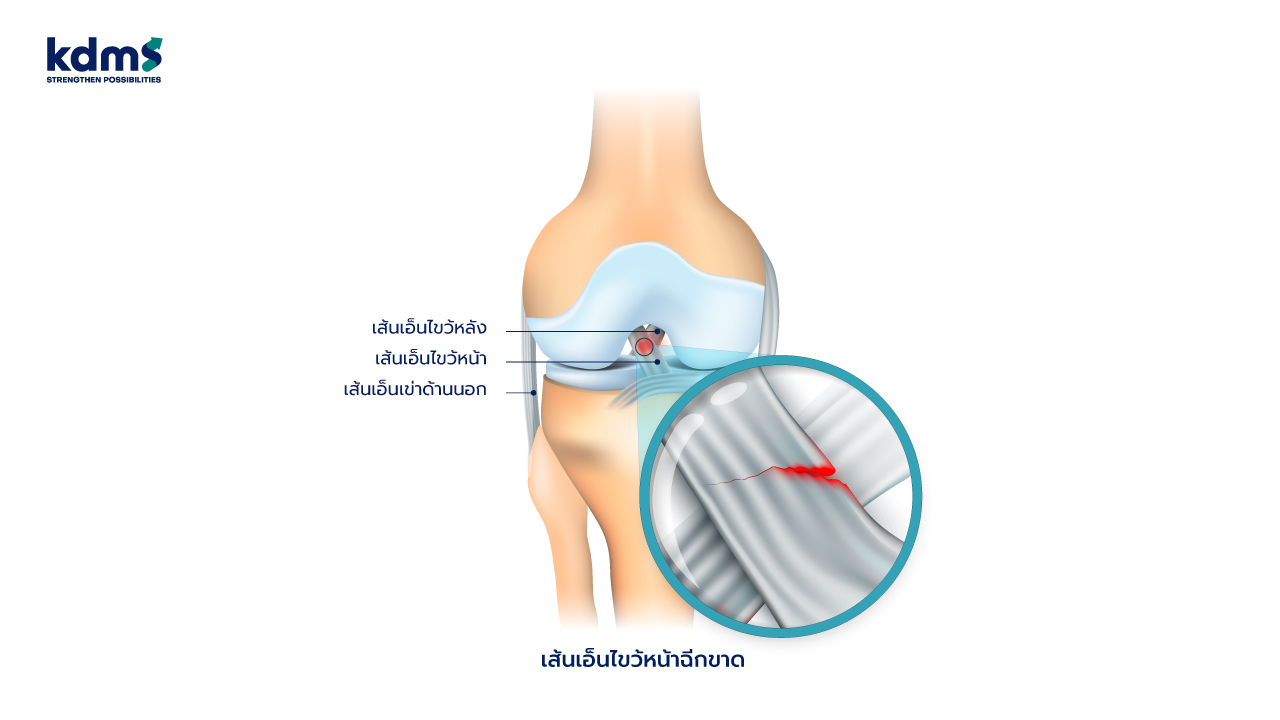
Lésion du ligament croisé antérieur (LCA)
Le ligament croisé antérieur (LCA) joue un rôle clé dans la stabilisation du genou en empêchant un glissement ou une torsion excessive de l'articulation. Une lésion du LCA survient souvent à la suite d'une forte torsion ou d'un impact important provoquant une rotation forcée du genou, menant à une rupture. Ce type de blessure peut aussi s'accompagner de lésions du ménisque, du cartilage ou d'autres ligaments qui entourent le genou, tels que le ligament croisé postérieur (LCP), les ligaments médiaux (internes) du genou, et les ligaments latéraux (externes) du genou.
Symptômes
Au début, les patients ayant une rupture du LCA ressentent souvent une douleur importante au niveau du genou, rendant difficile l'appui sur la jambe atteinte. Dans certains cas, il est possible de marcher, mais avec une douleur intense et un gonflement. D'autres symptômes courants incluent une instabilité du genou, comme une sensation de "lâchage" ou de "craquement" du genou lors de certains mouvements.
Diagnostic et traitement
Pour confirmer une rupture du LCA, un médecin procédera à une évaluation complète, comprenant un interrogatoire médical détaillé, un examen clinique et une radiographie pour écarter une fracture osseuse. Une IRM peut être prescrite pour confirmer la lésion du LCA et rechercher d'éventuelles lésions associées à d'autres structures du genou.
Pour les non-athlètes présentant une rupture isolée du LCA (sans autres lésions), un traitement conservateur sans chirurgie est parfois possible. Cela comprend le repos, la prise d'antalgiques et la kinésithérapie pour réduire le gonflement et améliorer la fonction du genou. Cependant, pour les athlètes ou ceux qui souhaitent retourner à une pratique intensive, une intervention chirurgicale est généralement indiquée.
Traitement chirurgical
La méthode la plus courante pour la reconstruction du LCA repose sur l'arthroscopie, où un nouveau LCA est créé à partir d'un tendon prélevé sur le patient lui-même. Les tendons fréquemment utilisés sont le tendon des ischio-jambiers, le tendon patellaire (tendon rotulien os-tendon-os), ou le tendon du quadriceps. L'intervention dure généralement 1 à 2 heures.
Soins post-opératoires
Après reconstruction du LCA, les patients peuvent avoir besoin de béquilles pendant 1 à 2 semaines pour faciliter la marche. La reprise complète de l'appui est généralement possible après cette période. Au cours des trois premiers mois suivant la chirurgie, le travail portera sur l'extension du genou, la remise en extension complète et le renforcement musculaire pour éviter l'atrophie. Entre 3 et 5 mois, la rééducation insistera sur la récupération de la force musculaire via des activités telles que le footing, le vélo, ou la natation. Vers 5-6 mois, le patient pourra débuter les sauts et certaines activités sportives légères après accord du chirurgien.
Le délai global de récupération avant la reprise du sport est généralement de 8 à 10 mois, en fonction des progrès du patient et de l'avis médical.
2. Lésion du ménisque
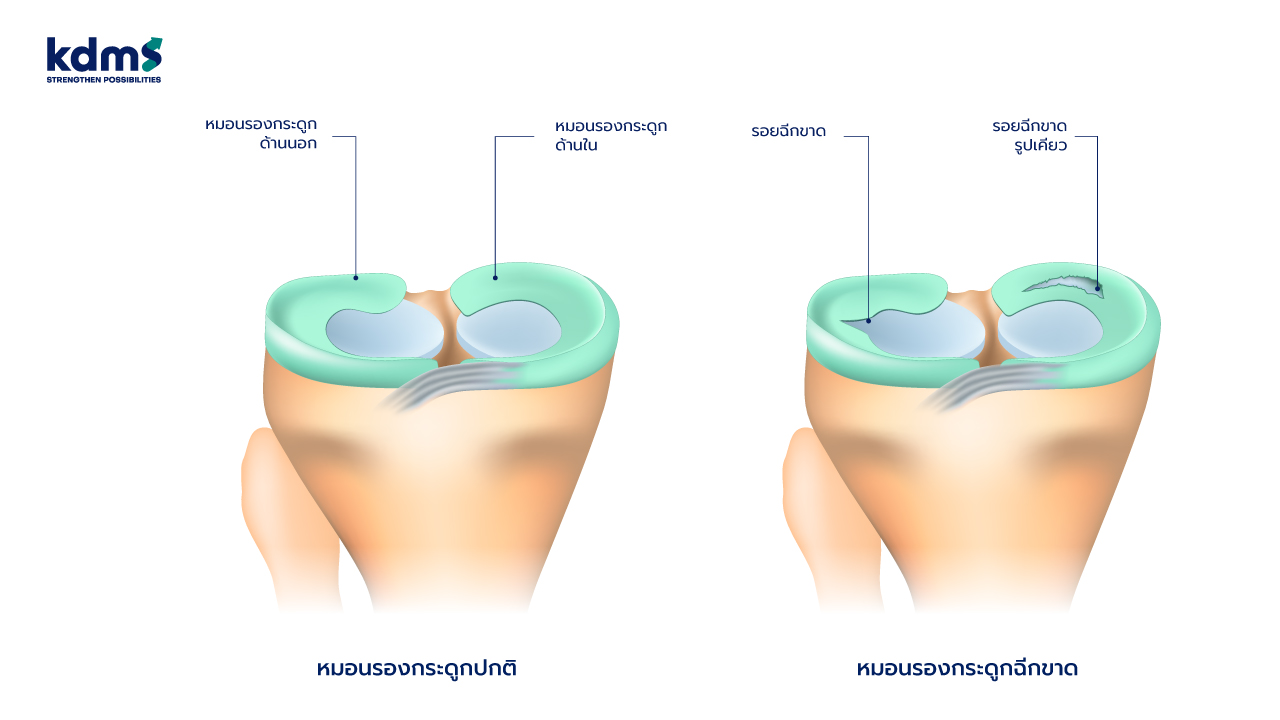
Lésion du ménisque
Le ménisque du genou agit comme un amortisseur de chocs, répartissant les forces exercées dans l'articulation du genou. Il a une forme de croissant et se situe entre les deux os de l'articulation - sur la face interne et externe du genou. Une déchirure du ménisque survient typiquement lors d'une torsion du genou, d'un choc ou d'une force excessive appliquée sur le genou. Les patients avec une lésion méniscale présentent souvent un gonflement et une douleur du genou, particulièrement le long de l'interligne articulaire. De plus, une déchirure du ménisque peut s'associer à une rupture du ligament croisé antérieur (LCA) ou à un dommage cartilagineux du genou.
Méthodes de traitement
Les médecins établiront le diagnostic par interrogatoire, examen clinique et recommandent souvent une IRM pour évaluer les caractéristiques de la lésion. Si la déchirure mesure plus de 8-10 millimètres, une intervention chirurgicale est généralement nécessaire, car les larges lésions ne cicatrisent pas spontanément. Sans chirurgie, une lésion du ménisque risque d'entraîner une gonarthrose et d'autres lésions du genou. Actuellement, la réparation du ménisque se fait couramment sous arthroscopie, par laquelle une petite caméra et des instruments chirurgicaux sont introduits dans le genou pour suturer le ménisque déchiré. Si la déchirure est trop importante ou que le ménisque ne peut être sauvé, la partie abîmée est retirée pour éviter le frottement ou le blocage de l'articulation.
Soins post-opératoires
Après la chirurgie, le patient réalisera des exercices de renforcement musculaire et d'extension du genou. Les béquilles sont généralement nécessaires pendant 4 à 6 semaines, après quoi l'appui est autorisé. Environ 3 mois après l'opération, le patient peut débuter le jogging, le vélo ou la natation. Les sportifs peuvent reprendre leur discipline vers 4 à 6 mois après la chirurgie. En cas d'association avec une lésion du LCA, le temps de récupération peut être prolongé car des soins supplémentaires sont nécessaires pour la rupture du LCA.
3. Lésion du cartilage du genou
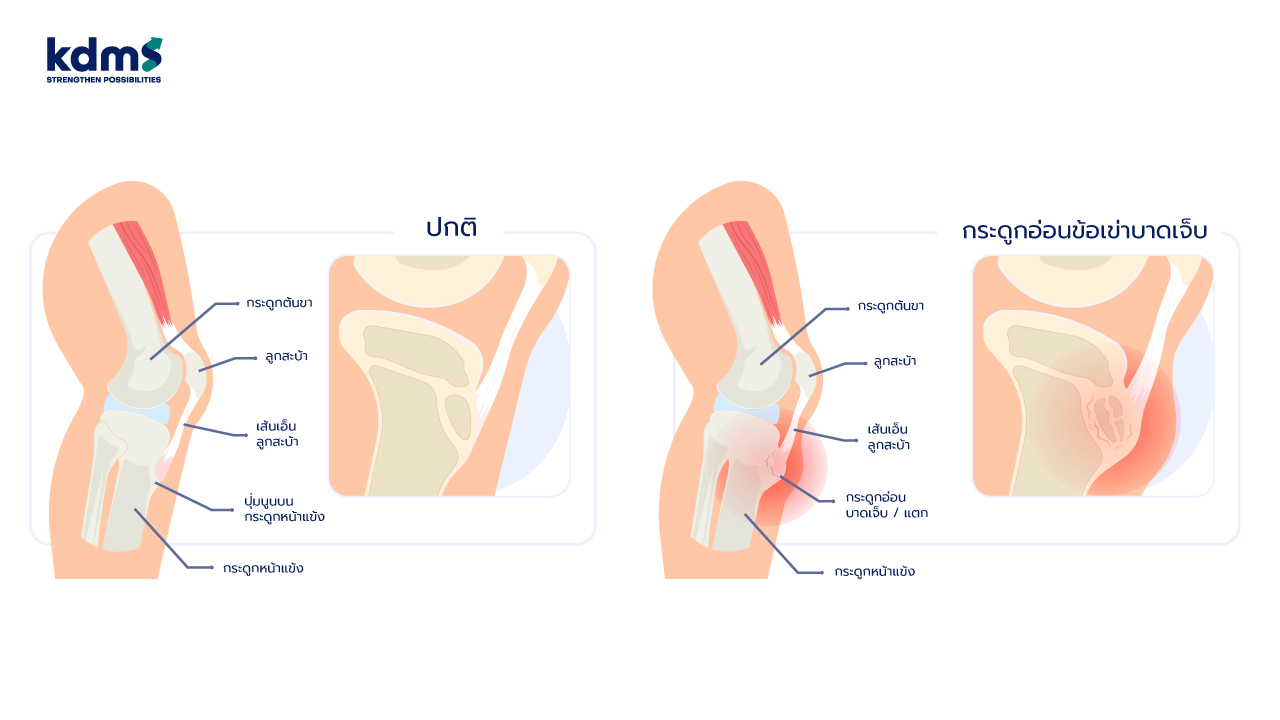
Lésion du cartilage du genou
Les lésions cartilagineuses du genou se présentent généralement sous deux formes : la première est causée par un traumatisme direct provoquant des fractures, entraînant douleurs et gonflement du genou après l'accident. La seconde survient lorsque le cartilage se détache spontanément sans traumatisme évident : il s'agit de l'ostéochondrite disséquante (OCD). Cette pathologie est fréquemment observée chez les sportifs et peut se manifester également chez des sujets jeunes, généralement entre 10 et 20 ans, avec des symptômes comme la douleur, l'œdème ou le blocage du genou.
Méthodes de traitement
Le médecin procède à un interrogatoire détaillé, un examen clinique et une IRM pour confirmer le diagnostic. Si l'atteinte est légère, avec des dommages cartilagineux mineurs, le traitement repose généralement sur la prise de médicaments et le repos, en évitant les efforts du genou pendant 4 à 6 semaines environ. Cependant, pour des lésions sévères, avec des fragments cartilagineux volumineux ou détachés, une intervention chirurgicale peut s'avérer nécessaire.
Les gestes chirurgicaux diffèrent selon la taille et la localisation de la lésion cartilagineuse, et peuvent inclure :
- Arthroscopie avec microfractures : de petits trous sont percés dans l’os sous-jacent au cartilage pour stimuler la guérison et la réparation.
- Implantation de matrice (scaffold) : un support est placé pour faciliter la régénération du cartilage.
- Transplantation ostéochondrale : du cartilage prélevé sur une zone du genou moins sollicitée est transplanté pour remplacer le cartilage endommagé.
En cas de lésion cartilagineuse du genou provoquée par l’OCD, le traitement est similaire aux autres atteintes du cartilage. Après diagnostic, la sévérité, la taille et la localisation de la lésion sont évaluées, et une chirurgie peut être envisagée. Pour les formes moins sévères, telles que les petites fractures, des vis peuvent être placées pour fixer le cartilage et prévenir l’aggravation. Les cas plus graves peuvent nécessiter une chirurgie arthroscopique ou d'autres procédures visant à favoriser la régénération cartilagineuse.
Soins post-opératoires
Après intervention, les patients doivent en général utiliser des béquilles pendant 4 à 6 semaines et pratiquer des exercices d’extension du genou. Après 3 mois, les exercices de renforcement musculaire peuvent être entrepris, et une activité légère du genou introduite progressivement. La reprise complète du sport est possible en général 4 à 6 mois après l’intervention.
4. Genou du sauteur (Tendinite rotulienne)
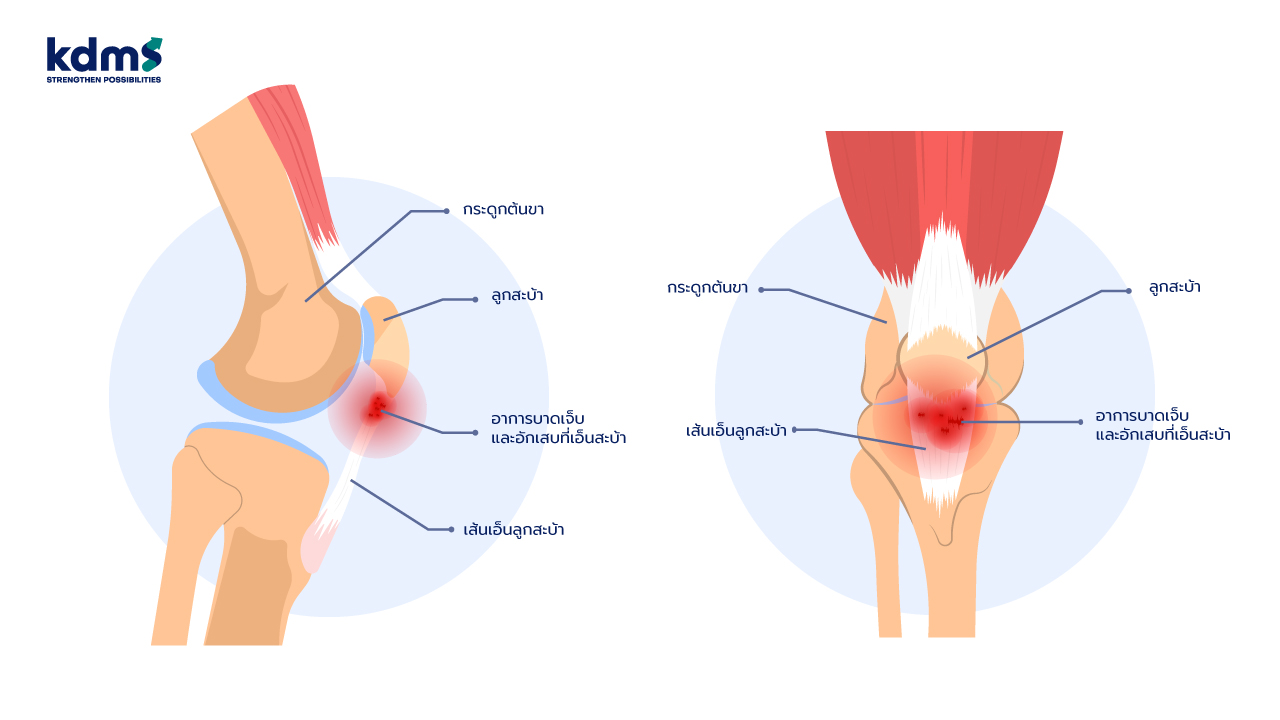
Genou du sauteur (Tendinite rotulienne)
Le genou du sauteur est une pathologie courante chez les sportifs ou personnes pratiquant des activités nécessitant des sauts ou mouvements de détente fréquents, tels que les joueurs de basket-ball, football, athlètes, badistes, ou tennismen. Cette affection se manifeste par une douleur chronique et une inflammation autour du tendon rotulien. Les personnes souffrant de genou du sauteur ressentent habituellement une douleur à l’avant du genou, autour du tendon, ou parfois au-dessus de la rotule. La douleur peut également irradier vers la rotule. L’inflammation du tendon rotulien peut être aiguë ou chronique.
Méthodes de traitement
Le traitement commence par un diagnostic rigoureux comprenant l’interrogatoire, l'examen clinique et éventuellement une radiographie du genou. Le traitement inclut fréquemment :
- Médicaments : prise d’antalgiques ou d’anti-inflammatoires non stéroïdiens (AINS) pour soulager la douleur et l’inflammation.
- Kinésithérapie : élément clé de la récupération, elle cible le renforcement et les étirements des muscles autour du genou, en particulier le quadriceps et la bandelette ilio-tibiale (BIT), afin de réduire la tension sur le tendon rotulien.
- Adaptation de l'activité : ajustement du niveau et du type d’exercice pour éviter l’aggravation de la lésion tout en maintenant la mobilité et la force.
Les patients guérissent généralement du genou du sauteur et peuvent reprendre le sport une fois complètement rétablis et en l'absence totale de douleur. La récupération dure habituellement entre 2 et 4 semaines, mais ce délai dépend de la gravité de la blessure.
5. Instabilité de la rotule (Rotule instable)
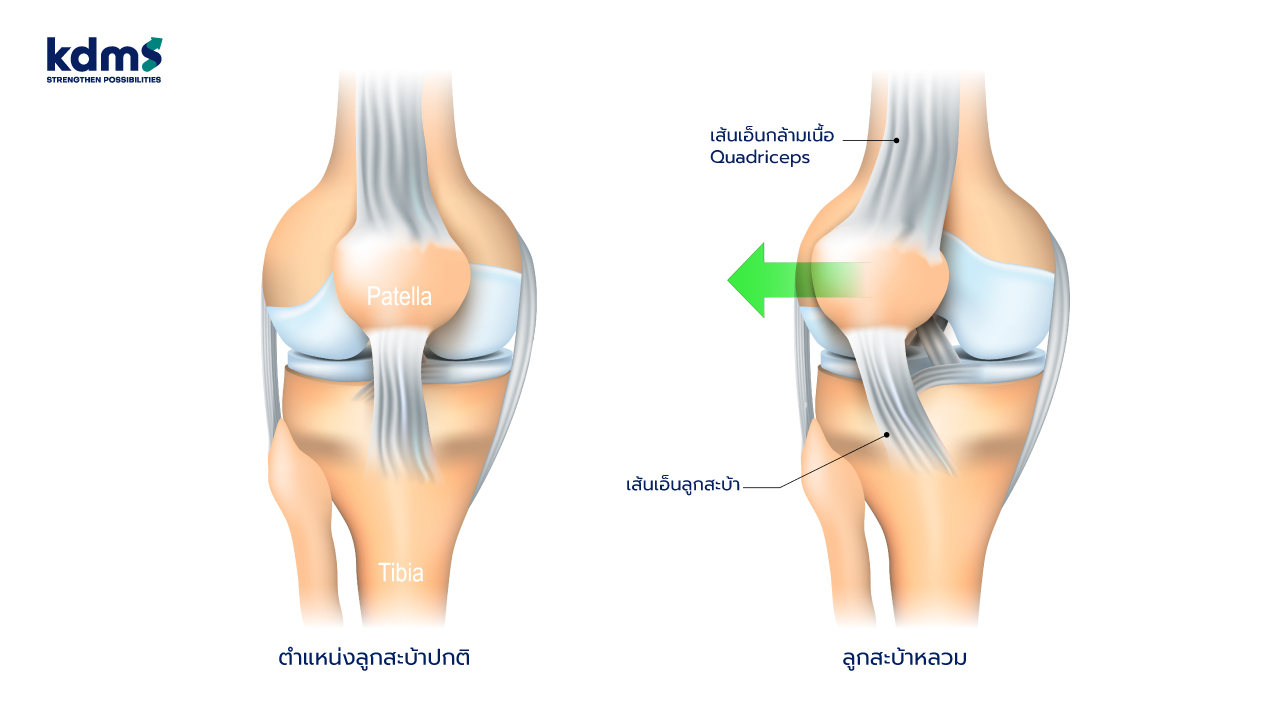
Instabilité de la rotule (Rotule instable)
L’instabilité de la rotule, ou rotule lâche, ne touche pas seulement les sportifs, mais aussi les personnes présentant une laxité ligamentaire. Cette pathologie est souvent constatée chez les individus ayant déjà présenté une luxation de la rotule ou ceux qui sont naturellement sujets à la laxité ligamentaire. Les patients ressentent typiquement des douleurs à l’avant du genou et peuvent rapporter des antécédents de luxation de la rotule en dehors de son axe, réduite ensuite par traitement.
Méthodes de traitement
Le diagnostic repose sur un interrogatoire complet, un examen clinique et souvent des radiographies du genou. Dans certains cas, une IRM peut être nécessaire pour apprécier la gravité de la lésion et rechercher des lésions associées.
Il existe deux principales stratégies thérapeutiques :
- Traitement non chirurgical
Le médecin évaluera le risque de récidive de la luxation. Si la structure osseuse du genou est relativement normale et que le patient ne pratique pas d’activités à fort impact, le traitement s'axera généralement sur le renforcement du quadriceps, en particulier du VMO (Vastus Médialis Oblique), qui stabilise le genou. Les exercices de renforcement, comme le vélo ou les squats, permettent d'améliorer la force musculaire et de renforcer le ligament fémoro-patellaire médial (MPFL), réduisant ainsi le risque de nouvelle luxation.
- Traitement chirurgical
Pour les patients ayant de fréquentes luxations rotuliennes ou les sportifs sollicitant intensivement leurs genoux, la chirurgie peut être nécessaire. L’intervention consiste généralement en une reconstruction du MPFL, similaire à la reconstruction du LCA, mais ciblant la création d’un nouveau ligament à l’intérieur du genou. Cette chirurgie utilise un tendon prélevé sur le patient (ischio-jambiers ou quadriceps) pour recréer le MPFL. En cas d’anomalie structurelle des os du genou, une ostéotomie peut être réalisée pour réaxer les structures osseuses.
Soins post-opératoires
Après l’intervention, le patient peut immédiatement prendre appui si aucune douleur n’est ressentie, mais doit souvent porter une attelle afin d’éviter de trop plier le genou durant le premier mois. Après un mois, la rééducation vise à améliorer la flexion du genou et la reprise progressive d'activités légères. Le retour complet au sport a généralement lieu 4 à 6 mois après l'opération.
Comment prévenir et préserver ses genoux pour éviter les blessures sportives ?
Tant que vous continuez à pratiquer un sport régulièrement ou à titre professionnel, le risque de blessure du genou subsiste. Cependant, vous pouvez réduire ce risque en entraînant correctement votre corps et vos muscles, tout en conservant un bon équilibre psychologique. Si votre corps, vos muscles et votre mental ne sont pas prêts, votre agilité sportive sera compromise, augmentant la probabilité de collisions et d’accidents. Il est également primordial de pratiquer sur des surfaces adaptées, telles que des terrains sportifs conformes, non glissants ni irréguliers. Évoluer sur des surfaces inadéquates augmente le risque de lésion du genou.
Les problèmes de genou sont fréquents chez les sportifs et amateurs de sport, et il est essentiel que tous comprennent ces pathologies. Cette connaissance permet une meilleure prise en charge et de reconnaître rapidement les symptômes anormaux. Si vous constatez des symptômes inhabituels, ne les ignorez pas et n’insistez pas en dépit de la douleur, car cela pourrait aggraver la situation et imposer un traitement à long terme. Ignorer une blessure au genou peut bouleverser votre quotidien et compromettre votre carrière sportive.
Il est important de garder à l’esprit que plusieurs pathologies du genou peuvent coexister, comme une rupture du LCA associée à une lésion méniscale ou cartilagineuse. Plus vous retardez la prise en charge, plus la blessure risque de s’aggraver. Consulter un médecin pour le diagnostic et la planification du traitement est la meilleure solution pour garantir des genoux solides et une bonne qualité de vie, vous permettant de reprendre vos activités sans complications supplémentaires.
Source : KDMS Hospital
**Traduit et compilé par l’équipe de contenu ArokaGO
Rédacteur indépendant
Partager cet article
Plus d'articles
Découvrez plus d'informations sur les soins de santé et le tourisme médical.

Trompes de Fallope obstruées + spermatozoïdes de qualité insuffisante : une histoire de réussite d’une grossesse gémellaire.
Même en cas d’hydrosalpinx (trompes de Fallope obstruées et remplies de liquide) associé à une mauvaise qualité spermatique, il est encore possible d’avoir un bébé grâce à la FIV/ICSI. En effet, le processus de fécondation contourne entièrement les trompes de Fallope. Cependant, avant de commencer une FIV, les médecins recommandent souvent l’ablation chirurgicale ou la pose d’une clip sur la trompe de Fallope atteinte afin d’augmenter les chances de réussir une grossesse — comme dans ce cas réel d’une mère qui a finalement conçu des jumeaux après 3 ans d’attente.

Combien de temps dure la FIV avec ICSI ? Un calendrier du premier rendez-vous jusqu’à la grossesse.
L’ICSI est l’une des technologies de procréation médicalement assistée les plus populaires pour les couples confrontés à l’infertilité. L’une des questions les plus fréquemment posées est : « Combien de temps dure l’ICSI ? » ou « Combien de mois faut-il pour l’ICSI avant de connaître le résultat ? ». La réponse n’est pas simplement un nombre fixe, mais dépend de plusieurs facteurs médicaux et de la réponse de chaque individu au traitement.

Pendant combien de temps des ovules congelés peuvent-ils être conservés et quand faut-il les utiliser ?
Pendant combien de temps les ovocytes congelés peuvent-ils être conservés ? C’est une question importante pour toute personne qui n’est pas encore prête à avoir des enfants et qui prévoit d’utiliser ses ovocytes à l’avenir. Les ovocytes congelés peuvent être conservés pendant de nombreuses années dans des conditions appropriées. Cependant, décider du moment où les utiliser nécessite de prendre en compte votre âge au moment du prélèvement ovocytaire, votre état de santé lorsque vous prévoyez de tomber enceinte, ainsi que les conditions de votre contrat de stockage. Comprendre ces différents facteurs peut vous aider à établir un projet plus clair pour avoir des enfants.