Why More Travelers Choose IV Drip Phuket Services

Why More Travelers Choose IV Drip Phuket Services
IV Drip Phuket services have become a quiet essential for many wellness-minded travelers, not because they promise miracles, but because they fit real travel life. Long-haul flights, humid heat, late nights, salty meals, and inconsistent sleep can leave people feeling flat, puffy, or simply “not quite themselves.” In a tropical climate like Thailand, dehydration can build faster than expected, especially when sun exposure and sweating increase.
Anyone looking for a trusted clinic experience may also explore our medically supervised hydration and recovery programs. IV Drip – Siam Clinic Thailand
What an IV Drip Actually Does
An IV drip delivers fluids, and sometimes electrolytes and selected nutrients, directly into a vein under medical supervision. Clinically, the purpose of IV fluids is to help replace lost fluids and electrolytes when needed. We notes that treating dehydration involves replacing both fluids and electrolytes, and the best approach depends on severity and cause.
For travelers, an IV drip may help improve:
๐ Hydration status when intake has been low
๐ Recovery after heat exposure and heavy sweating
๐ Feelings of fatigue linked to fluid and electrolyte imbalance
๐ General wellness comfort during a short trip
Results vary by individual, and the best plan depends on your health history, current symptoms, and medical screening.
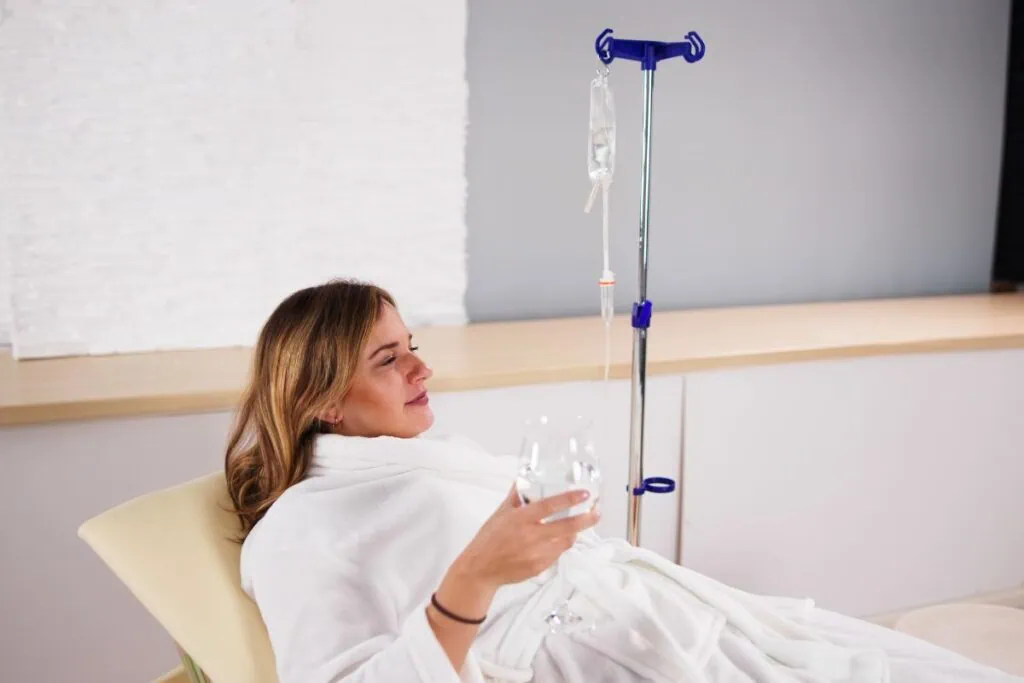
Why IV Drip Phuket Makes Sense for Travel Wellness
Phuket is designed for movement. Beach walks, island-hopping, outdoor markets, and boat days are part of the charm. Yet humid weather changes the body’s fluid needs quickly. Heat and sweating increase water and electrolyte losses, which can affect how you feel and perform.
Common travel scenarios that can contribute to dehydration
๐ Flights and jet lag disrupting sleep and routine
๐ Alcohol intake that is higher than usual
๐ Long periods outdoors with sweating
๐ Skipping meals or relying on convenience foods
๐ Gastrointestinal upset while traveling
Electrolytes are minerals in body fluids such as sodium, potassium, magnesium, and chloride. They help support fluid balance and normal body function.
That is why many visitors in Phuket pair beach time with structured recovery, including hydration planning and, when appropriate, clinic-supervised IV therapy.
IV Drip Phuket vs Oral Hydration
A premium clinic should be transparent about this. For many mild cases, oral rehydration is enough.
Oral hydration is often a great first step
We emphasizes replacing fluids and electrolytes, and for many situations, that can be done orally.
Oral hydration may be suitable when you can drink comfortably and symptoms are mild.
Travel-friendly oral strategy:
1. Water consistently across the day
2. Electrolyte support after heavy sweating
3. Balanced meals that include minerals and fluids
4. Reduce alcohol and very salty foods for 24 hours
When IV hydration may be considered
IV therapy may be considered when:
๐ You are unable to keep fluids down
๐ Dehydration is more significant
๐ Symptoms are disrupting your ability to function
๐ Medical evaluation suggests IV support is appropriate
A medically responsible clinic will assess you first, rather than offering a “one drip fits all” menu.
What to Expect During an IV Drip Appointment
A premium clinic experience should feel calm and clinically grounded.
1) Medical screening
You may be asked about:
๐ Current symptoms (fatigue, headache, dizziness, nausea)
๐ Hydration status, heat exposure, and alcohol intake
๐ Medical conditions, especially kidney or heart concerns
๐ Current medications and supplement use
๐ Allergies and prior reactions
2) A personalized plan
Instead of promising outcomes, a clinician focuses on what the drip can support:
- Fluids to support hydration
- Electrolytes when appropriate
- Nutrients selected based on your needs and safety profile
3) Monitoring and aftercare
After the drip, you may receive guidance on:
๐ Continuing oral hydration
๐ Light meals and rest
๐ Heat and sun exposure pacing
๐ When to seek further medical evaluation if symptoms persist
Safety First: What a High-Standard IV Clinic Should Do
This is where quality truly matters. Any IV involves skin puncture and a catheter, so infection prevention and aseptic technique are essential.
The CDC’s catheter-related infection prevention guidance emphasizes hand hygiene, aseptic technique, and evidence-based practices to reduce infection risk.
A reputable IV clinic typically:
๐ Uses trained medical professionals for cannulation and monitoring
๐ Screens for contraindications (for example, some heart or kidney conditions)
๐ Maintains sterile technique and appropriate skin preparation
๐ Monitors for discomfort, swelling, and local irritation
๐ Provides clear instructions for what to watch for afterward
If you want to cite the gold-standard infection prevention guidance directly in your outbound links, this is a strong source: CDC: Guidelines for the Prevention of Intravascular Catheter-Related Infections
Who Should Be Extra Cautious
IV therapy is not a casual wellness accessory for everyone. A careful clinic may advise additional evaluation, modification, or avoidance if you have:
๐ Kidney disease or reduced kidney function
๐ Heart conditions where fluid balance is sensitive
๐ Uncontrolled high blood pressure
๐ Pregnancy or breastfeeding
๐ A history of significant allergic reactions
๐ Ongoing infection, fever, or severe symptoms that need medical workup
If symptoms are severe (confusion, fainting, chest pain, severe weakness), emergency evaluation is more appropriate than a wellness drip.
Why Travelers Like the Experience (When Done Properly)
Many travelers choose IV Drip Phuket services because the experience can be:
๐ Time-efficient: one appointment that fits into a short itinerary
๐ Comfort-focused: quiet recovery, especially after flights or heat exposure
๐ Personalized: plans based on symptoms, not trends
๐ Clinically guided: screening that helps reduce risks
This is also why some wellness-focused visitors combine hydration support with broader recovery planning, such as sleep adjustment, nutritional support, and cellular-energy focused education.
NAD+ Therapy – Siam Clinic Thailand
Travel-Smart Tips to Stay Hydrated in Phuket
Even if you book an IV drip, the best results come from what you do around it.
Simple habits that can support hydration
๐ Drink water before you feel thirsty during heat exposure
๐ Add electrolytes after heavy sweating, especially if you feel weak or crampy
๐ Balance alcohol with water and food, not just water
๐ Choose fruits, soups, and mineral-rich meals
๐ Avoid “catch-up drinking” huge volumes at once, especially in the heat
Electrolytes matter because dehydration is not only water loss. It is also a shift in electrolytes that support fluid balance and normal cellular function.
source : Siam Clinic Phuket
**Translated and compiled by ArokaGO Content Team
Siam Clinic Phuket
Share this article
More Articles
Discover more insights on health care and medical tourism.

Navigator Technique for Precise Knee Surgery
When pain occurs in your joints, whether caused by wear and tear from use or an accident, the best option for you is to receive treatment from a specialized physician to relieve the symptoms and even cure the pain. Traditional surgery can cause you to experience more pain and injury. Therefore, the Knee and Hip Replacement Surgery Center at Phyathai Nawamin Hospital has introduced the Navigator innovation for highly precise surgery, targeting the exact area where you are in pain. For your safety, this minimizes injury from treatment, allowing you to recover faster after surgery compared to traditional surgery.

"Monkeypox" Do not panic but be aware and understand how to protect yourself
The outbreak of monkeypox outside the African continent in 2022 was first reported in the United Kingdom on May 7, 2022, and the World Health Organization has declared it a Public Health Emergency of International Concern (PHEIC) since July 23, 2022.

Boost your immune system with vaccines for adults
It is well known that Thailand has entered an aging society, which means a significant increase in the elderly population. Most elderly or adults tend to have lower immunity compared to when they were young, resulting in more severe symptoms and a higher risk of complications when infected. Therefore, we should emphasize preventive health care for the elderly, whether it is infectious diseases or chronic non-communicable diseases (NCDs).