Frozen Shoulder: What Is It and How Is It Treated?

Frozen Shoulder is a condition that causes pain and limited movement in the shoulder joint. It typically occurs due to inflammation of the shoulder capsule, leading to scar tissue formation and reduced mobility.
What is the Shoulder Capsule?
The shoulder capsule is a thin layer of tissue that surrounds the shoulder joint. It plays a crucial role in protecting and supporting shoulder movement.
This capsule is made up of flexible connective tissue, allowing the shoulder to move freely in multiple directions.
Characteristics of the Shoulder Capsule
๐ It surrounds the humerus (upper arm bone) and the glenoid (shoulder socket)
๐ Contains ligaments and connective tissues that stabilize the joint
๐ Expands and contracts with movement, enabling lifting, rotating, and extending the arm
Functions of the Shoulder Capsule
๐ Protection: Shields the shoulder joint from injury
๐ Mobility: Allows movement in various directions (lifting, rotating forward/backward)
๐ Stability: Maintains strength and stability while allowing flexibility
When the shoulder capsule becomes inflamed, it leads to restricted movement and stiffness—this condition is known as Frozen Shoulder.
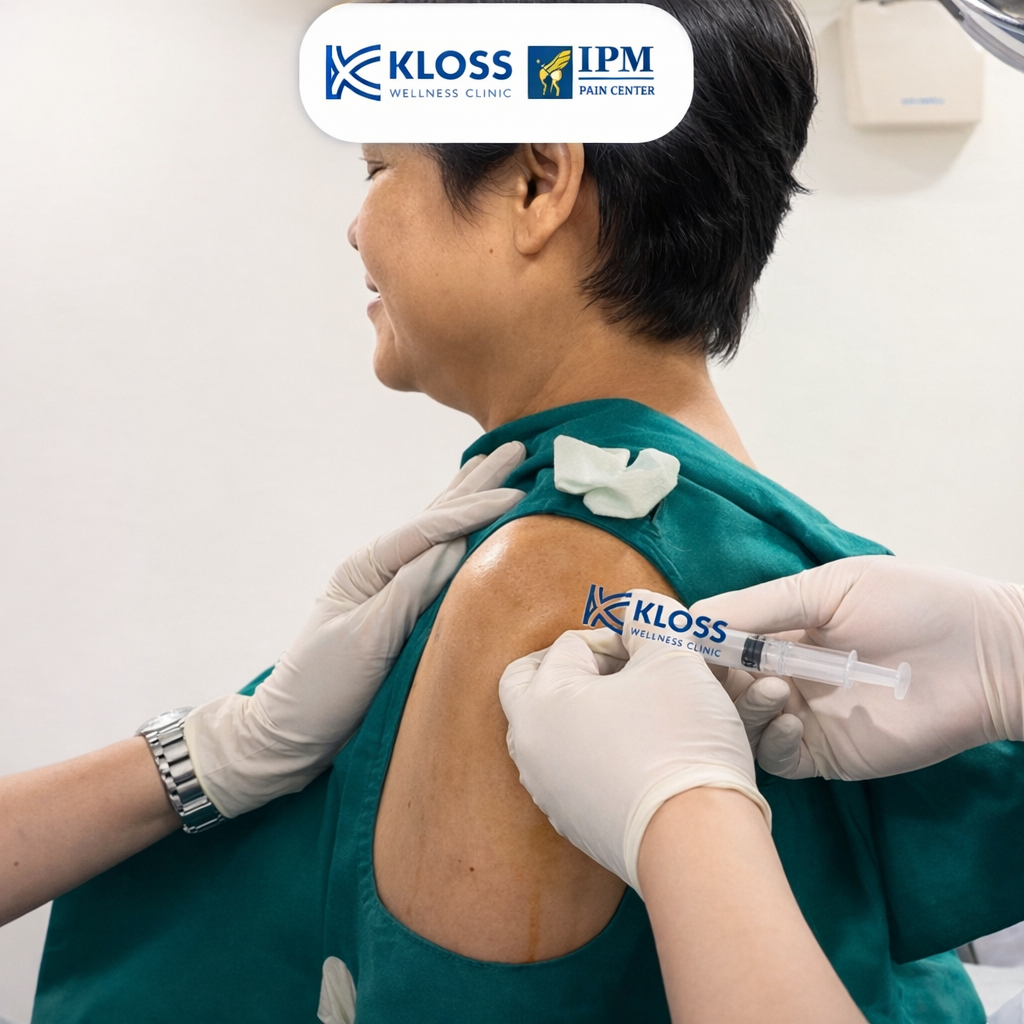
Stages of Frozen Shoulder
1. Freezing Stage
Characteristics:
Inflammation begins, causing increasing pain
Symptoms:
๐ Gradual increase in shoulder pain
๐ Difficulty moving the shoulder
๐ Pain worsens at night, affecting sleep
๐ Progressive stiffness
Duration: 6 weeks to 9 months
2. Frozen Stage
Characteristics:
Pain decreases, but stiffness becomes more severe
Symptoms:
๐ Reduced pain
๐ Significant limitation in shoulder movement
๐ Difficulty performing daily activities
Duration: 4 to 12 months
3. Thawing Stage
Characteristics:
Gradual recovery of mobility
Symptoms:
๐ Pain significantly decreases
๐ Movement slowly improves
๐ Ability to perform daily activities returns
Duration: 6 months to 2 years
Frozen Shoulder Treatment at Kloss Wellness Clinic
1. Physiotherapy
Assessment and treatment by experienced physiotherapists to correct physical imbalances
2. Active Cell Therapy
Cell-level stimulation techniques to reduce inflammation and pain, while relaxing tight muscles and improving function
3. Cartilage Tissue Engineering
Advanced regenerative therapy to stimulate cartilage and collagen production, promoting tissue repair
4. Nutrition & Lifestyle Therapy
Guidance on nutrition, exercise, and daily habits to reduce recurrence and improve long-term outcomes
When Should You See a Doctor?
If you experience:
๐ Chronic shoulder pain
๐ Limited shoulder movement
You should consult a medical professional for proper diagnosis and treatment planning.
Source : Kloss Wellness Clinic
**Translated and compiled by ArokaGO Content Team
Kloss Wellness Clinic
Share this article
More Articles
Discover more insights on health care and medical tourism.

Songkran Warning: How to Prevent and Handle “Shoe Suction” Injuries During Water Festival Celebrations
As Thailand celebrates Songkran, many festival-goers are enjoying water splashing in the streets, but one surprisingly common issue keeps returning every year, the so-called “shoe suction” problem, when wet slip-on sandals or rubber shoes become stuck tightly to the foot or ankle after prolonged exposure to water.

Office Syndrome: A Common Health Problem Among Modern Workers
In an era when working in front of a computer has become part of everyday life, Office Syndrome has emerged as one of the most common health concerns among working-age adults.

Urine does not flow, cannot hold urine
Urine does not flow, cannot hold urine, check urgently before it becomes an enlarged prostate or BPH (Benign Prostate Hyperplasia).