How Many Types of Acne Scars Are There?

Many people who have experienced acne often face skin concerns even after it has healed. One of the most common issues is acne scars, which can affect both appearance and self-confidence. Acne scars occur due to deep inflammation beneath the skin, leading to collagen loss and the formation of indentations, making the skin appear uneven and rough rather than smooth.
Understanding the types of acne scars is important, as each type has different characteristics and depths. Choosing the right treatment based on the specific type can improve results and reduce the risk of ineffective or inappropriate care.This article will introduce you to the different types of acne scars, including ice pick scars, boxcar scars, rolling scars, and shallow scars, along with simple ways to identify them on your own.
Understanding Acne Scars Before Exploring Their Types
Before understanding each type of acne scar, let’s briefly and clearly define what acne scars are.Acne scars are skin conditions caused by deep inflammation beneath the surface, which damages collagen and skin tissue. When the acne heals, the skin is unable to fully regenerate the lost tissue, resulting in indentations, shallow depressions, or small pits on the skin.
Acne scars vary in severity-from shallow scars, which are less noticeable, to deeper scars such as ice pick scars, which are narrow and deep. Understanding and recognizing each type of acne scar will help you choose the most suitable skincare and treatment approach.
Why Is It Important to Understand Different Types of Acne Scars?
Understanding the types of acne scars helps you better recognize your skin condition and choose the most appropriate treatment. Each type of scar varies in depth and appearance, which means treatment results will differ. Knowing the differences also helps set realistic expectations, reduces the risk of using unsuitable treatments, and allows you to select skincare products that match your skin’s needs.
Recognizing each type of acne scar is an important step in post-acne care. Whether it’s ice pick, boxcar, rolling, or shallow scars, each has distinct characteristics and depths. By observing and understanding them, you can choose treatments that are more targeted and effective. Although some types of acne scars cannot be completely removed immediately, selecting the right treatment for each type can help improve skin smoothness and reduce the risk of permanent scarring.
How Many Types of Acne Scars Are There?
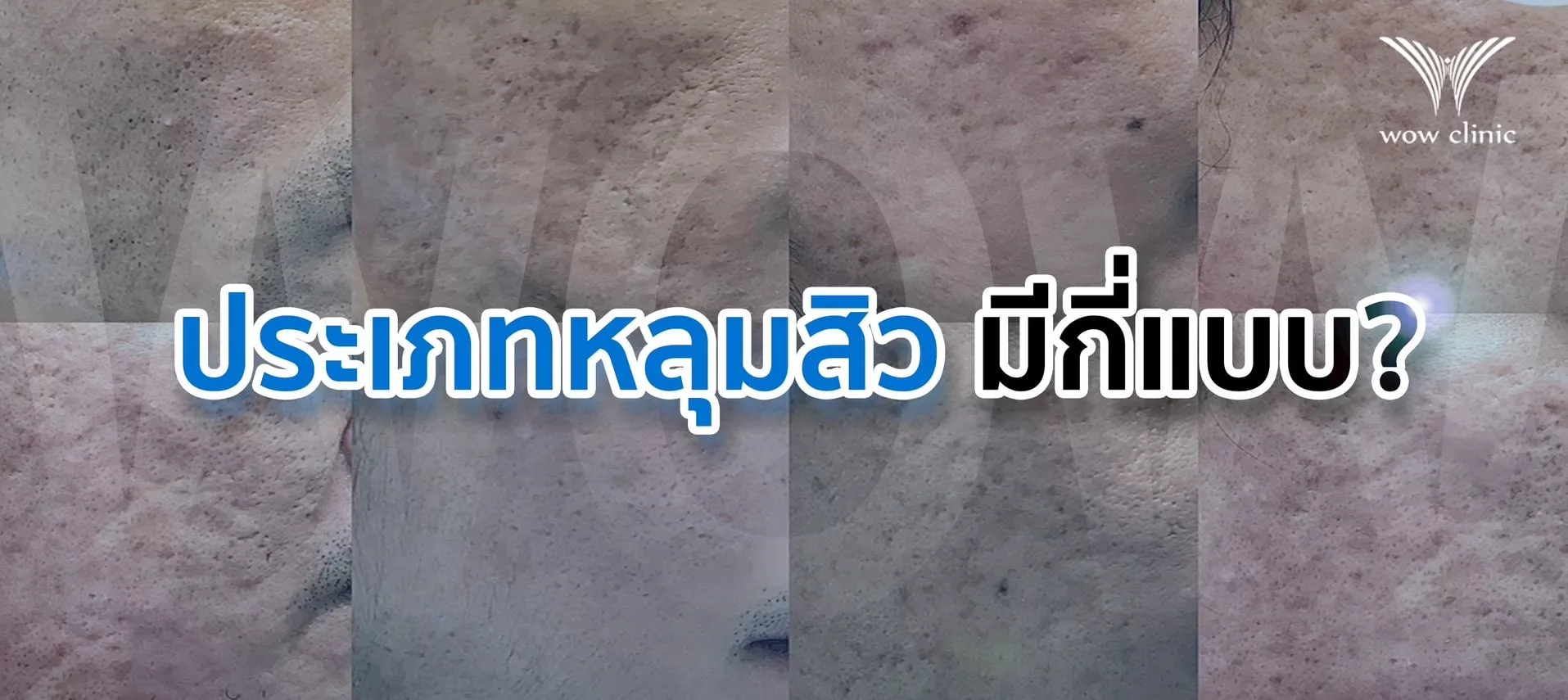
How Many Types of Acne Scars Are There?
In general, acne scars can be classified into three main types: ice pick scars, boxcar scars, and rolling scars. Each type has distinct characteristics, and understanding these differences helps you choose the most appropriate treatment.
1. Ice Pick Scars
Ice pick scars are one of the most common and concerning types due to their narrow and deep appearance. They resemble small, cone-shaped holes with a tiny opening and a deeper base, making them more difficult to treat than other types. These scars often extend into the dermis, causing significant collagen damage and typically requiring medical procedures for treatment.
- Characteristics: Narrow, deep, resembling pinholes or drill marks
- Size: Usually about 1–2 mm in diameter, but deep into the skin
- Identification: More visible when light hits the skin from the side
- Impact: Can cause uneven skin texture and permanent scarring if untreated
- Common cause: Deep inflammatory acne such as cystic acne or severe pustules
Ice pick scars are usually caused by deep inflammation that damages collagen beneath the skin. Consulting a dermatologist is recommended to determine the most suitable treatment.
2. Boxcar Scars
Boxcar scars are wider with well-defined edges and result from collagen loss after acne inflammation. Unlike ice pick scars, they are not as deep but are still clearly visible on the skin.
- Characteristics: Broad, with sharp and defined edges
- Size: Approximately 1.5-4 mm in diameter
- Identification: Clearly defined borders, commonly found on the cheeks or forehead
- Impact: Causes uneven skin texture but is generally easier to treat than ice pick scars
- Treatment: Often treated with laser therapy or dermal fillers
Understanding boxcar scars helps in selecting appropriate treatments and reducing the risk of permanent scarring.
3. Rolling Scars
Rolling scars are shallow, wave-like depressions with soft, undefined edges, giving the skin an uneven, rolling appearance. They are typically caused by fibrous bands pulling the skin downward, often due to mild inflammation or habits like picking or squeezing acne.
- Characteristics: Wide, shallow, with smooth, sloping edges
- Size: Approximately 1.5–5 mm in diameter
- Identification: Skin feels uneven or wavy when touched
- Impact: Less severe but still affects overall skin smoothness
- Treatment: Can be improved with laser treatments, collagen stimulation, or skincare products that boost collagen
Although different types of acne scars - whether deep like ice pick scars or shallow like rolling scars-require time and consistency to treat, proper care and prevention can significantly improve skin texture over time.At WOW Clinic, we focus on personalized skin care tailored to each individual. Our experienced dermatologists, with over 10 years of expertise, provide detailed skin analysis and recommend treatments based on each patient’s specific acne scar type. Our approach not only addresses current concerns but also focuses on long-term skin health, ensuring safe and sustainable results for smoother, more confident skin.
source : Wow Clinic Thailand
**Translated and compiled by ArokaGO Content Team
Independent Writer
Share this article
More Articles
Discover more insights on health care and medical tourism.

Songkran Warning: How to Prevent and Handle “Shoe Suction” Injuries During Water Festival Celebrations
As Thailand celebrates Songkran, many festival-goers are enjoying water splashing in the streets, but one surprisingly common issue keeps returning every year, the so-called “shoe suction” problem, when wet slip-on sandals or rubber shoes become stuck tightly to the foot or ankle after prolonged exposure to water.

Office Syndrome: A Common Health Problem Among Modern Workers
In an era when working in front of a computer has become part of everyday life, Office Syndrome has emerged as one of the most common health concerns among working-age adults.

Urine does not flow, cannot hold urine
Urine does not flow, cannot hold urine, check urgently before it becomes an enlarged prostate or BPH (Benign Prostate Hyperplasia).