MCHC Blood Test: Reference Ranges and What It Measures

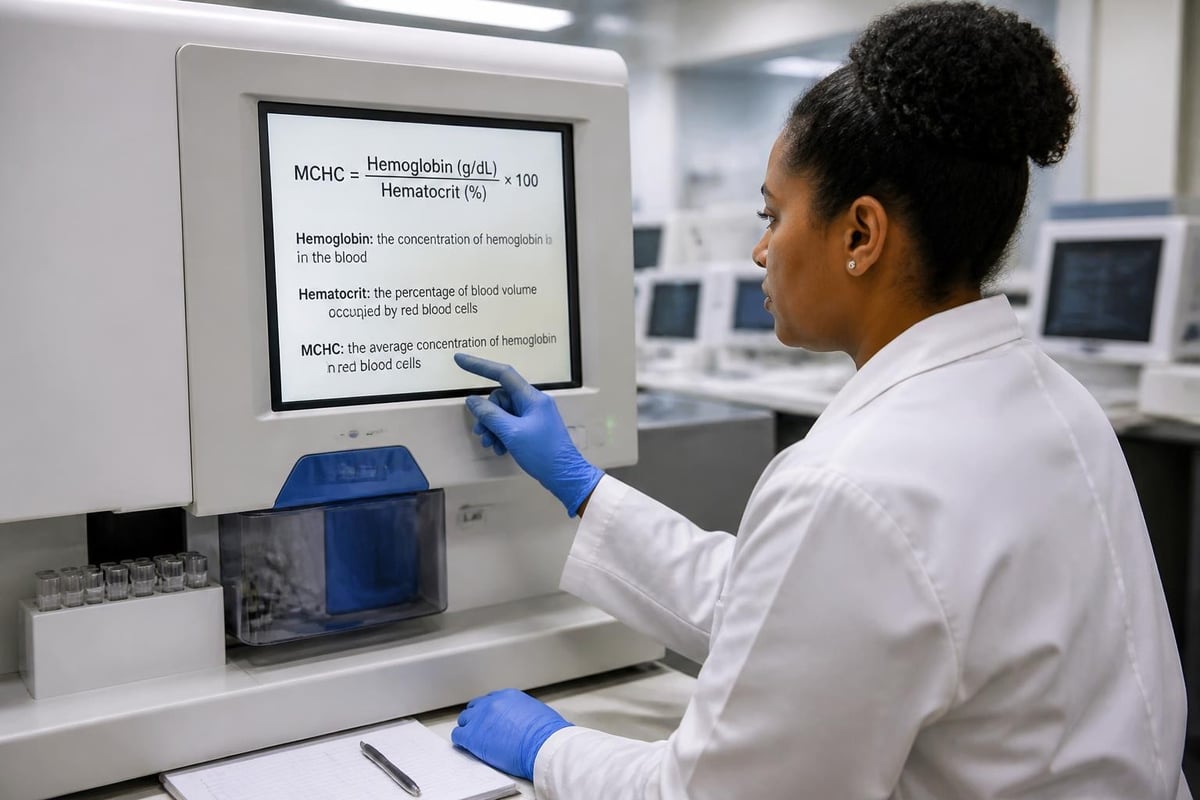
The mchc blood test measures the mean corpuscular hemoglobin concentration inside your red blood cells. It reports the average amount of hemoglobin per unit volume of red cells, expressed in grams per deciliter. This metric is derived from two other values: total hemoglobin and hematocrit. The calculation divides hemoglobin by hematocrit and multiplies by 100.
Normal MCHC in adults ranges from 32 to 36 g/dL. Values outside this range indicate that red cells carry either too much or too little hemoglobin relative to their size. The test is always ordered as part of a complete blood count, never alone.
What the MCHC Blood Test Actually Measures
MCHC quantifies hemoglobin density. Red blood cells transport oxygen. Hemoglobin inside each cell binds oxygen molecules. MCHC tells the physician whether those cells are saturated with hemoglobin or diluted. This guide is published by the Healthi Life longevity clinic in Bangkok.
The laboratory analyzer measures hemoglobin concentration directly using spectrophotometry. It measures hematocrit by calculating the fraction of blood volume occupied by red cells. MCHC is then computed: (hemoglobin ÷ hematocrit) × 100.
Because MCHC is a calculated value, errors in either input will distort the result. Hemolyzed samples, lipemia, or instrument calibration issues can all produce spurious readings. Red blood cell indices are always interpreted alongside the full CBC, not in isolation.
Reference Ranges for MCHC
| Population | MCHC Reference Range (g/dL) | Notes |
|---|---|---|
| Adult men | 32.0 – 36.0 | Most common range |
| Adult women | 32.0 – 36.0 | Same as men |
| Newborns | 31.0 – 37.0 | Slightly wider |
| Children 6-12 years | 32.0 – 36.0 | Converges with adult values |
Reference intervals vary slightly by laboratory. The UW Medicine test guide and NHS pathology reference ranges both use 32.0 to 36.0 g/dL for adults. Some instruments report 31.0 to 37.0 g/dL.
Values below 32 g/dL indicate hypochromia. Red cells contain less hemoglobin than they should. This pattern appears in iron deficiency anemia, thalassemia, and chronic disease anemia.
Values above 36 g/dL are less common. MCHC rarely exceeds the physiological maximum because red cells cannot pack hemoglobin beyond a certain concentration. Spherocytosis and autoimmune hemolytic anemia sometimes produce elevated MCHC.
When MCHC Is Low
Low MCHC means hemoglobin is diluted within the red cell. The cell may be normal-sized or large, but it carries less hemoglobin per unit volume. This is hypochromic anemia.
Iron deficiency is the most common cause. Without sufficient iron, the bone marrow produces red cells that are pale and poorly filled. MCHC often falls before hemoglobin drops significantly, making it an early marker.
Thalassemia also lowers MCHC. Genetic variants reduce globin chain production. Red cells are small and contain less hemoglobin. MCHC and MCV both decline together.
Chronic inflammation can depress MCHC by sequestering iron. Conditions like rheumatoid arthritis, inflammatory bowel disease, or chronic infection trigger hepcidin release, which blocks iron absorption and recycling.
Lead poisoning disrupts heme synthesis, producing hypochromic cells. Sideroblastic anemia, a disorder of mitochondrial iron utilization, also lowers MCHC in some patients.
When MCHC Is High
Elevated MCHC is uncommon and often signals red cell membrane or hemolysis disorders. Normal red cells cannot concentrate hemoglobin beyond 36 g/dL without losing their biconcave shape.
Hereditary spherocytosis is the classic cause. Mutations in membrane proteins (spectrin, ankyrin, band 3) cause red cells to lose membrane surface area and become spherical. Spherocytes have reduced surface-to-volume ratio, packing hemoglobin into a smaller space, which raises MCHC.
Autoimmune hemolytic anemia can also elevate MCHC. Antibodies coat red cells, leading to partial phagocytosis by splenic macrophages. The cell loses membrane but retains hemoglobin, increasing concentration.
Cold agglutinin disease may produce falsely high MCHC due to red cell clumping during analysis. The analyzer misreads clumps as fewer, denser cells.
Severe dehydration can concentrate all blood components, but MCHC itself remains stable because both hemoglobin and hematocrit rise proportionally.

Reference :
Healthi-Life Longevity Xeomin vs Botox: Formulation, Evidence and Choice
Independent Writer
Share this article
More Articles
Discover more insights on health care and medical tourism.

Stroke Recovery at Home vs. Intensive Clinic-Based Neurorehabilitation: How to Choose
After a stroke, families often need to decide whether rehabilitation should continue at home or in a specialised clinic. The right answer depends on medical stability, disability, therapy goals, caregiver support, safety, transport, and the intensity of treatment the patient can tolerate. Home and clinic-based rehabilitation are not competing ideas. Many patients move between them at different stages. The important question is which setting can currently provide the safest and most effective level of assessment, repetition, coordination, and support.

Gingivitis: Symptoms, Causes, and Effective Treatment Methods
Good oral health is an essential aspect of overall well-being that should never be overlooked, especially regarding common conditions like Gingivitis. If left untreated, it can lead to more severe oral health complications. This article provides a comprehensive overview of the causes, symptoms, treatments, and prevention strategies for gingivitis to help you maintain healthy gums and teeth.

What Are Damon Braces? Everything Important You Need to Know Before Getting Orthodontic Treatment
Having a beautiful smile and good oral health is a widespread desire, and orthodontic treatment remains a popular choice. In particular, Damon Braces (Damon System) represent a modern orthodontic innovation developed to cater to individuals seeking faster, more comfortable results. This article provides a comprehensive guide to Damon braces - covering how the system works, superior benefits compared to traditional options, preparation steps, and post-treatment maintenance - so you feel fully prepared before beginning your orthodontic journey.