Medical Article What is Ovulation Mucus ? Understanding Your Body’s Signals to Increase Natural Conception Success

What is Ovulation Mucus?
Ovulation mucus is a secretion produced by glands in the cervix. Its quantity and characteristics change based on estrogen levels during different phases of the menstrual cycle.
The primary function of ovulation mucus during its most fertile stage is to create an alkaline environment. This protects sperm from the natural acidity of the vagina and acts as a “swimming pool” or “highway,” allowing sperm to easily swim through to meet the egg in the fallopian tube and survive longer (up to 3 - 5 days).
Characteristics of Mucus During the Menstrual Cycle
To help you observe more easily, compare your mucus characteristics and pregnancy chances using the table below:
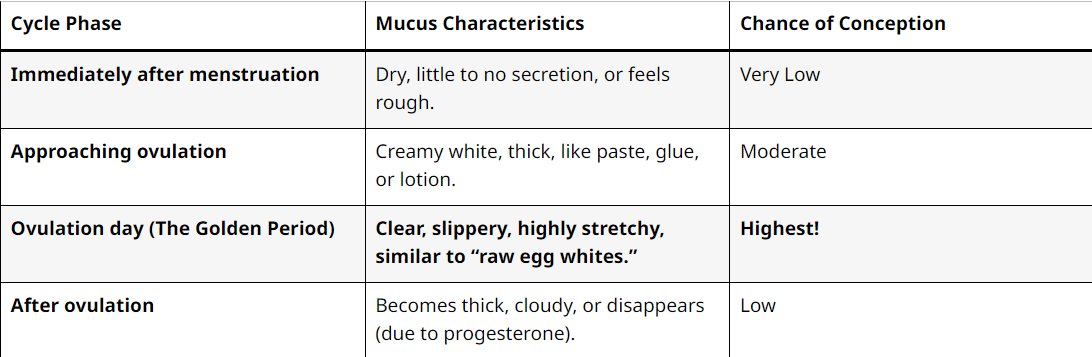
Key Observation Point: The mucus indicating that “ovulation is about to occur” is Egg White Cervical Mucus (EWCM). It is clear, slippery, and can be stretched between your fingers for 1-2 inches without breaking.
How to Check Ovulation Mucus Yourself
You can easily observe your mucus when using the bathroom by following these steps:
1. Wash your hands thoroughly to prevent infection.
2. Use your index or middle finger to gently reach into the vagina, or use a tissue to wipe the vaginal opening before urinating.
3. Observe and feel: Place the mucus between your index finger and thumb, then slowly spread them apart to check for elasticity, color, and slipperiness.
4. Check your underwear: You may notice clear discharge on your underwear or feel more “wet” and “slippery” than usual during the day.
Tips for Natural Conception Using Ovulation Mucus
- Take action immediately: Do not wait for the exact day of ovulation. Seeing raw egg white-like mucus means you have entered your Fertile Window. Having intercourse 1 - 3 days before and on the day of ovulation offers the highest success rate.
- Stay hydrated: The body needs water to produce secretions. Drinking plenty of water helps increase the clarity, slipperiness, and volume of the mucus.
- Avoid certain lubricants: Standard lubricants can damage sperm or hinder their movement. If needed, use only sperm-friendly lubricants.
- Combine with other signs: For better accuracy, track your mucus alongside Basal Body Temperature (BBT) or Ovulation Predictor Kits (OPK).

Reference:
Deep & Harmonicare IVF Clinic
Share this article
More Articles
Discover more insights on health care and medical tourism.

Blocked Fallopian Tubes + Poor Sperm A Twin Pregnancy Success Story.
Even with hydrosalpinx (fluid-filled, blocked fallopian tubes) combined with poor sperm quality, having a baby is still possible through IVF/ICSI. This is because the fertilization process bypasses the fallopian tubes entirely. However, before starting IVF, doctors often recommend surgically removing or clipping the affected fallopian tube to increase the chances of a successful pregnancy-just like this real case of a mother who finally conceived twins after a 3 year wait.

How Long Does ICSI Take? A Timeline from Your First Consultation to Pregnancy.
ICSI is one of the most popular assisted reproductive technologies for couples experiencing infertility. One of the most frequently asked questions is, “ How Long Does ICSI Take? ” or “How many months does ICSI take before knowing the result?” The answer is not simply one fixed number, but depends on several medical factors and each individual’s response to treatment.

How Long Can Frozen Eggs Be Stored and When Should They Be Used?
How Long Can Frozen Eggs ? This is an important question for anyone who is not yet ready to have children and is planning to use their eggs in the future. Frozen eggs can be stored for many years under appropriate conditions. However, deciding when to use them requires consideration of your age at egg retrieval, your health when you plan to become pregnant, and the terms of your storage agreement. Understanding these different factors can help you make a clearer plan for having children.