When a Child Has a Febrile Seizure

When a Child Has a Febrile Seizure
Febrile seizures in children commonly occur in those under 5 years old and affect only 2-4% of children. However, parents need not worry too much, as it is very rare for a seizure to lead to brain damage if it is not severe.
Symptoms of Febrile Seizures
The signs that a child is having a seizure due to a high fever include:
๐ Unconsciousness or unresponsiveness
๐ Staring or fixed gaze
๐ Tightening or jerking of limbs, or generalized body convulsions
๐ Some children may have frothy saliva at the mouth, and may also experience incontinence (urinating or defecating)
Febrile seizures typically subside on their own within 5-10 minutes. If you notice your child having a seizure, here’s what to do:
1. Check the mouth for any objects that might be obstructing the airway. If something is found, remove it immediately, as it could block the airway.
2. Take the child to the hospital immediately for further care.
At the hospital, the doctor will evaluate the child’s medical history, including:
๐ How long the fever has lasted
๐ How long the seizure lasted and the number of minutes it continued
๐ Any other symptoms related to the fever
These details are important for the diagnosis and treatment plan.
Impact of Febrile Seizures
If the seizure is short and not severe, it does not typically affect brain function or intelligence. However, if a child has rapid and repeated fever spikes, there is a higher chance of recurring seizures. In some cases, a family history of seizures may also play a role in the child developing febrile seizures.
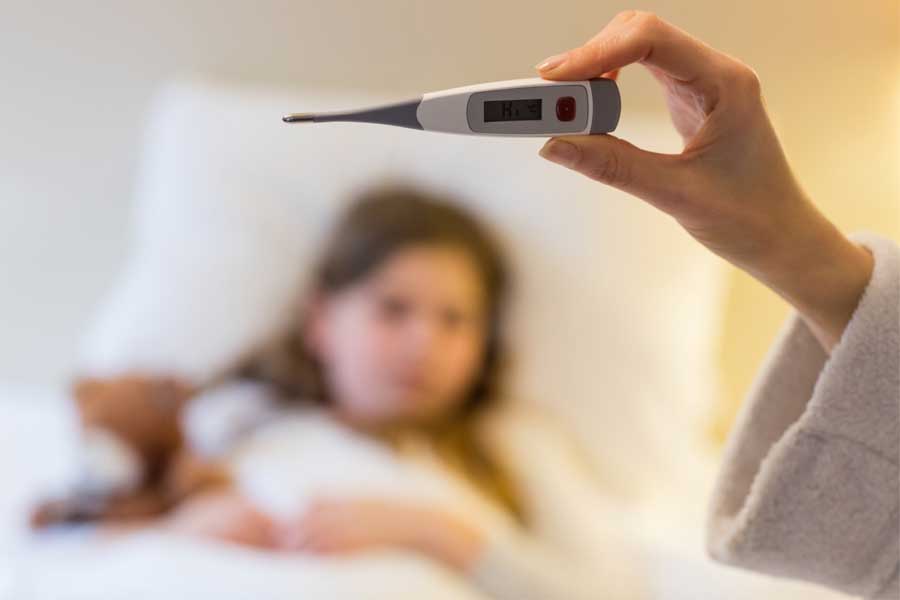
How to Prevent Febrile Seizures from Fever
1. Frequent Body Sponging with Room Temperature Water
Avoid using cold water because it could cause the body to react suddenly, leading to shock. Likewise, hot water won’t help lower the temperature effectively.
๐ Proper method: Sponge from the hands up towards the arms.
2. For Infants:
You may bathe the child in a small tub (or a basin) with lukewarm water. Don’t use soap; simply wipe the child’s head with a damp sponge to lower the temperature.
3. For Older Children:
If they can take a bath, let them bathe to help lower the fever.
4. Post-Sponging:
Don’t apply creams or powders after sponging, as they might hinder the body’s ability to dissipate heat.
5. Avoid Overdressing:
Don’t dress the child in thick clothing or cover them with heavy blankets, as this can prevent the body from releasing heat, which may increase the risk of a seizure.
6. If You’re Exhausted and Can’t Keep Watch:
If you are too tired or find it hard to monitor your child properly, it’s better to take them to the hospital for overnight care. Nurses will monitor them to prevent a seizure from occurring due to high fever.
Conclusion
Febrile seizures are common in children under 5 years old and, in most cases, they do not lead to long-term brain damage. While it is important to monitor your child during a fever, appropriate fever management and preventive care can minimize the risk of a seizure. If a seizure occurs, it’s crucial to keep calm, remove any objects from the child’s mouth, and seek medical attention immediately.
source : Muangloei Ram Hospital
**Translated and compiled by ArokaGO Content Team
Independent Writer
Share this article
More Articles
Discover more insights on health care and medical tourism.

Bipolar Disorder: What Is It?
Bipolar Disorder is a mental health condition characterized by extreme mood swings between two opposite emotional states: mania (high mood) and depression (low mood).

Fat Build-Up in Brain Blood Vessels: Warning Signs and Prevention
Cerebral Atherosclerosis is a condition where fat or cholesterol accumulates in the walls of blood vessels that supply the brain. This leads to narrowing of the arteries and reduced blood flow.

Can Thin Lips Get Lip Fillers?
Lip fillers have become one of the most popular non-surgical aesthetic treatments today. Whether you want fuller lips, a defined lip shape, or a more youthful appearance, lip filler can help enhance your look instantly.