Who is music therapy for children suitable for, and what are its benefits?

Music is not just a pleasant sound that entertains children, but also an important tool that helps promote emotional development, concentration, and communication skills effectively. Music therapy for children has therefore become an increasingly popular approach in education and child care. Through music therapists, it can be adapted for children of various ages and special needs. It helps children develop various skills without pressure or force. Children simply play, listen, and move according to the music, allowing natural learning to occur.
What is music therapy for children?
Music therapy for children involves the use of music, sounds, and musical activities such as singing, rhythm playing, moving to music, or focused listening to promote the child's development in a systematic way. Music helps stimulate the brain, reduce stress, and provides an opportunity for children to communicate, express themselves, and develop their emotional, social, and learning skills.
It is suitable for both typically developing children and those with special needs, making the therapeutic process natural, fun, and accessible for everyone. Participants do not need any musical skills to engage in the activities.
What are the benefits of music therapy for children?
Enhances concentration, memory, and executive functions
- Music therapy helps improve focus, memory retention, and cognitive abilities such as problem-solving and planning.
Promotes physical movement and responsiveness to stimuli
- Musical activities encourage children to move their bodies and respond to different sensory stimuli, supporting motor skill development.
Stimulates physical, emotional, social, and mental development
- Music therapy aids in the overall development of the child, fostering emotional expression, social interaction, and physical growth.
Develops speech and communication skills
- Singing and rhythm activities improve language development, pronunciation, and communication abilities.
Encourages self-regulation and appropriate emotional expression
- Music therapy helps children learn to manage their emotions and express themselves in a healthy, appropriate manner.
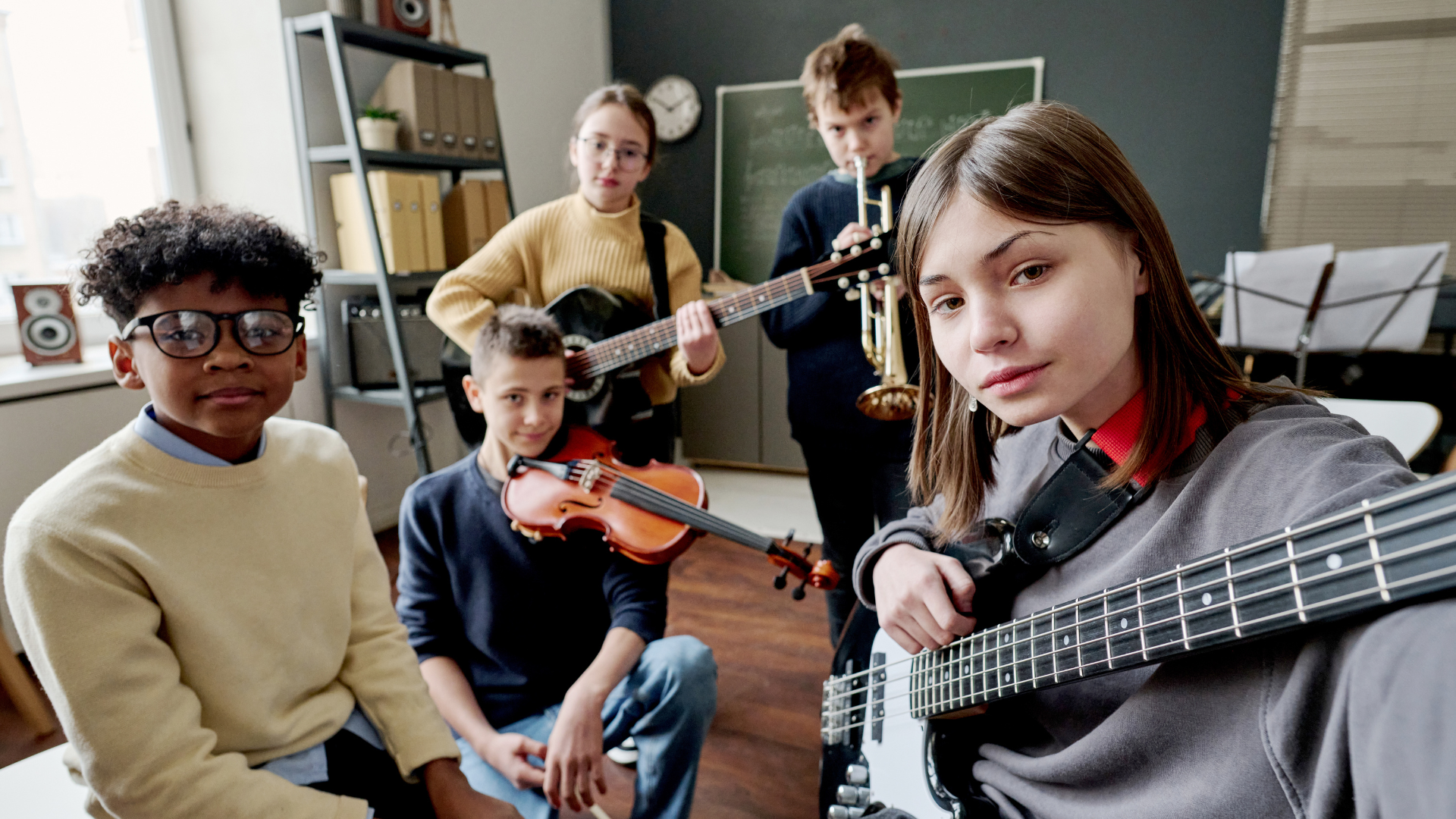
Who is music therapy suitable for?
- Newborns to 3 years old:
Music therapy supports sensory stimulation, develops basic communication skills, encourages interaction, and helps with both fine and gross motor skills. It also promotes self-regulation, emotion management, and calming behaviors.
- Ages 3 to 6 years:
This is the "golden brain age" where children are highly receptive to all types of development. Activities aim to improve social skills, patience, sharing, language development, emotional regulation, self-control, self-esteem, self-confidence, creativity, and imagination.
- Ages 6 to 12 years
Music therapy fosters self-esteem, builds social and emotional skills, and enhances concentration. It also supports the development of executive functions such as planning, decision-making, and problem-solving.
- Ages 12 to 18 years:
The goal is to help develop and control emotional expression, manage stress, social pressures, or academic challenges. Music therapy enhances positive social skills, leisure skills, and helps prevent mental health risks.
Steps in the Music Therapist's Process
- Assess needs and skills to be developed
The music therapist begins by observing, asking questions, and conducting initial assessments through activities to identify the skills that need to be developed in the child, such as communication, emotional regulation, concentration, movement, or social skills.
- Design personalized musical activities
Based on the assessment information, the music therapist plans activities that are suitable, such as singing, playing simple instruments, moving to rhythm, songwriting, or purposeful listening. These activities are tailored to the child’s age, abilities, and personality to ensure motivation and active participation. The activities are designed to stimulate the brain, reduce anxiety, or encourage positive behaviors in line with the set goals.
- Select appropriate music styles for the child
The therapist chooses familiar songs or genres to provide a sense of safety and trust. Predictable music helps the child adapt easily, reduces anxiety, and encourages more participation. Once the child is comfortable, new songs may be gradually introduced to expand the child’s musical experience and increase therapeutic challenges.
- Conduct the music therapy activities for children
The child participates in activities according to the plan, while the music therapist observes behavior, responses, and engagement closely. Activities may be adjusted immediately based on the child’s mood, readiness, and energy to maximize effectiveness.
- Reassess and track progress
After some time, the therapist conducts another evaluation to compare progress before and after the therapy sessions. The results are used to adjust the therapy plan for the next cycle, ensuring that the child benefits as much as possible. In some cases, progress may be reported to parents, teachers, or other professionals for collaborative long-term planning.
Source :
Arokago Providers Nakornthon Hospital
**Translated and compiled by ArokaGO Content Team
Independent Writer
Share this article
More Articles
Discover more insights on health care and medical tourism.

Medical Tourism in Thailand: Where Getting Well Feels Like the Trip of a Lifetime
Imagine waking up in Bangkok, overlooking the Chao Phraya River as long-tail boats drift past your window. Hours later, you've completed a full health screening at a world-class hospital, reviewed your results, and are enjoying iced coffee by a rooftop pool before dinner at Asiatique.

Difference Between “General Massage” and “Anatomy & Wellness Massage”
Anatomy & Wellness Massage combines relaxation with an understanding of muscle structure and body balance. It helps relieve tension, muscle pain, and stiffness, restore movement, and address the root causes of discomfort. Suitable for people with Office Syndrome or chronic muscle pain.

Songkran Warning: How to Prevent and Handle “Shoe Suction” Injuries During Water Festival Celebrations
As Thailand celebrates Songkran, many festival-goers are enjoying water splashing in the streets, but one surprisingly common issue keeps returning every year, the so-called “shoe suction” problem, when wet slip-on sandals or rubber shoes become stuck tightly to the foot or ankle after prolonged exposure to water.