
Thailand Strengthens Cancer Radiotherapy Safety Through National and International Collaboration
Thailand’s Office of Atoms for Peace joins forces with the Department of Medical Services to enhance cancer radiotherapy safety, improve radiation dose accuracy, and align treatment standards with international practices.
Thailand’s Office of Atoms for Peace joins forces with the Department of Medical Services to enhance cancer radiotherapy safety, improve radiation dose accuracy, and align treatment standards with international practices.
Thailand is taking further steps to strengthen the safety and quality of cancer radiotherapy through collaboration between the Office of Atoms for Peace (OAP), under the Ministry of Higher Education, Science, Research and Innovation (MHESI), and the Department of Medical Services (DMS), under the Ministry of Public Health.
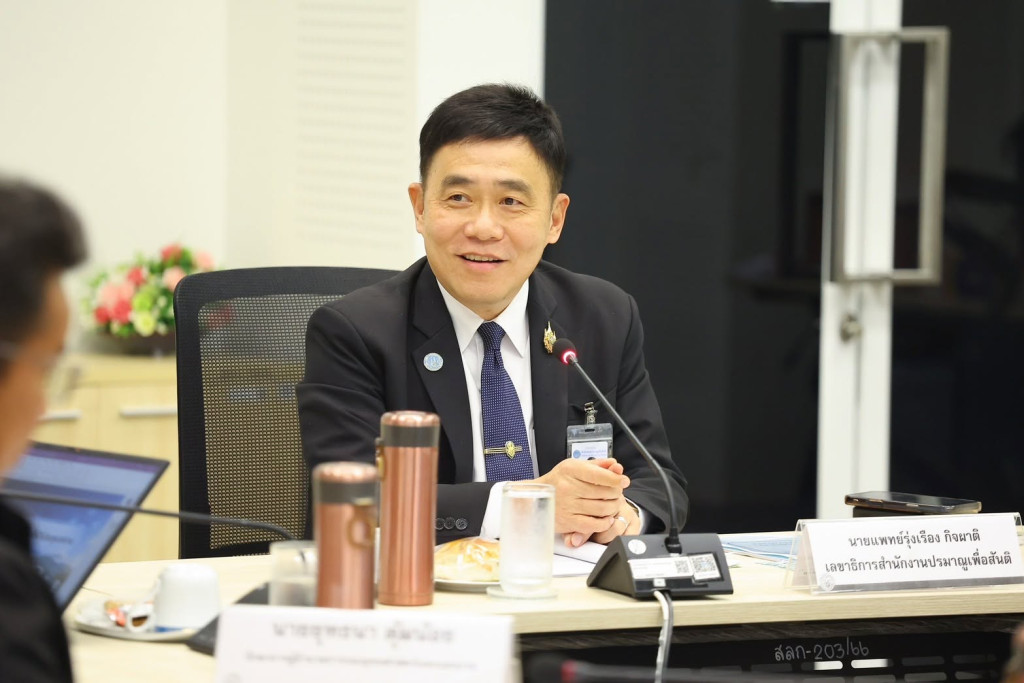
Dr. Rungruang Kitphati, Secretary General of the Office of Atoms for Peace, explained that the initiative aligns with the policy of Prof. Dr. Yodchanan Wongsawat, Deputy Prime Minister and Minister of Higher Education, Science, Research and Innovation, to apply scientific innovation and technology to improve public health and quality of life.
Through national and international partnerships, the initiative aims to improve the accuracy and safety of cancer radiation treatment in Thailand in line with international standards.
Strengthening Collaboration to Improve Cancer Treatment Safety
The Office of Atoms for Peace has been working closely with the Ministry of Public Health, particularly the Department of Medical Services, through the National Cancer Committee.
The collaboration brings together the expertise and responsibilities of both organizations. While the Department of Medical Services oversees clinical treatment standards and patient care, the OAP focuses on radiation safety, equipment monitoring, and quality control of radiotherapy machines.
The initiative aims to promote consistent radiation safety standards across hospitals nationwide and enhance the effectiveness and safety of cancer treatment.
Radiation Dose Accuracy: A Key to Safe Cancer Treatment
Accurate radiation delivery is essential in cancer radiotherapy. Excessive radiation doses may damage healthy tissues, while insufficient doses may reduce the effectiveness of treatment against cancer cells.
To support radiation dose accuracy, the International Atomic Energy Agency (IAEA) has introduced DAN DAVA (Dosimetry Audit Network Database and Validation System), a global database and validation system designed to collect and verify radiation dosimetry audit information.
The system supports transparency, accuracy, and quality assurance in radiation dose measurements, contributing to improved patient safety worldwide.
TRADOS: Thailand’s National Radiation Dosimetry Safety Network
To further align Thailand’s radiotherapy practices with international standards, the Office of Atoms for Peace has collaborated with nine leading national organizations, including the Department of Medical Sciences and Chulalongkorn University, to establish the TRADOS national network.
TRADOS will serve as a national mechanism for verifying radiation dose measurements, ensuring accuracy and metrological traceability in accordance with international standards.
The network is intended to strengthen radiation safety for both cancer patients and healthcare professionals working with radiotherapy equipment.
Through cooperation between TRADOS and the National Cancer Committee, Thailand aims to reinforce public confidence in the safety and quality of cancer radiation treatment.
Two Strategic Priorities for Thailand’s Healthcare System
The Office of Atoms for Peace has proposed two key measures to support the long-term development of radiation safety in Thailand.
1. Reducing Healthcare Inequality Through Consistent Safety Standards
Radiotherapy centers and hospitals nationwide should participate in radiation quality audits through the TRADOS network and connect relevant information with international systems such as DAN DAVA.
The proposal aims to ensure that patients have equitable access to radiation safety standards, regardless of where they receive treatment.
2. Investing in Medical Physics and Radiation Biology Specialists
The Ministry of Higher Education, Science, Research and Innovation and the Ministry of Public Health will work together to promote funding and educational scholarships to support the development of specialists in medical physics and radiation biology.
These professionals play an essential role in calculating, monitoring, and controlling radiation doses to protect patients during cancer treatment.
The initiative also aims to strengthen Thailand’s potential as a regional hub for medical radiation safety.
Advancing Thailand’s Cancer Care Through Science and Innovation
The collaboration between the Office of Atoms for Peace, the Department of Medical Services, and national and international partners reflects Thailand’s commitment to improving cancer treatment safety through scientific knowledge, technology, and quality assurance.
By strengthening radiation monitoring systems, developing specialized healthcare professionals, and promoting consistent safety standards nationwide, Thailand aims to improve the quality of cancer care and build greater confidence among patients and their families.
Source:
Office of Atoms for Peace (OAP)
https://www.oap.go.th/
Articles in this category are written by our editorial team to keep you informed about the latest healthcare and medical tourism news.

