
Thailand’s Wellness Ecosystem Showcased in Australia to Tackle Global NCD Crisis
BDMS Wellness Clinic Showcases Thailand’s Wellness Ecosystem Model on the Australian Stage Addressing the Global NCD Crisis at the Royal Thai Consulate-General in Sydney Reinforcing Thailand’s Role as a Global Wellness Hub
Bangkok, Thailand – BDMS Wellness Clinic, a preventive healthcare center under Bangkok Dusit Medical Services Public Company Limited (BDMS), continues to expand Thailand’s Wellness Ecosystem model onto the global stage.
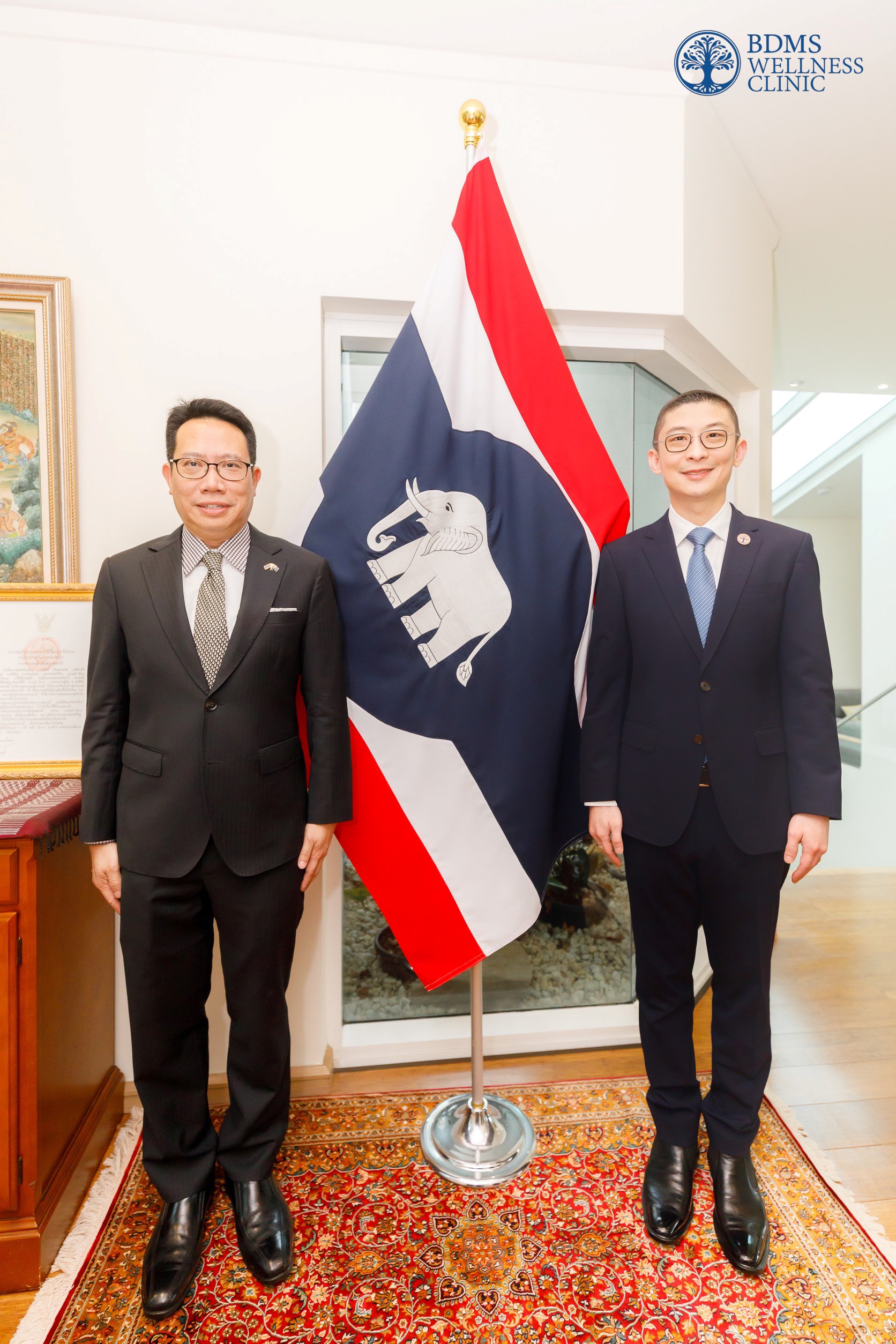
Led by Dr. Tanupol Virunhagarun (“Dr. Amp”), Chief Executive Officer of BDMS Wellness Clinic and BDMS Wellness Resort, the initiative was presented in Sydney, Australia, with the opening remarks delivered by Mr. Naruchai Ninnad, Consul-General of Thailand in Sydney.
During the event, Dr. Tanupol delivered a keynote speech titled “Wellness Hub Thailand: The Future of Global Wellness,” highlighting an integrated approach that combines healthcare, tourism, and lifestyle to promote sustainable well-being at the international level.
This knowledge exchange comes at a critical time when countries worldwide including advanced healthcare systems such as Australia are facing growing challenges from Non-Communicable Diseases (NCDs), which account for over 90% of total deaths. This underscores that medical advancement alone is insufficient without a strong focus on preventive healthcare and holistic lifestyle management.
The event was attended by representatives from government agencies, private sectors, and tourism organizations, including the Tourism Authority of Thailand (Sydney Office), the Department of International Trade Promotion, the Office of Investment Promotion in Sydney, and various business leaders reflecting strong interest in Thailand - Australia collaboration in shaping the future of global wellness.
From High Quality of Life to Chronic Health Crisis: Australia’s NCD Challenge
Australia is widely recognized as one of the countries with the highest quality of life globally, supported by a strong healthcare system, modern infrastructure, and well-designed urban living environments. Citizens have broad access to quality food, advanced technology, and efficient healthcare services.
However, beneath this stability lies a growing health crisis.
According to the World Health Organization (WHO) 2025 report, NCDs have become the leading cause of death in Australia, accounting for more than 90% of total mortality. The Australian Institute of Health and Welfare (AIHW) further reports that the leading causes include coronary heart disease, dementia, stroke, lung cancer, and chronic obstructive pulmonary disease (COPD).
Another alarming indicator is obesity. Approximately 66.5% of Australians or over 17.2 million people are overweight or obese, highlighting the strong link between modern lifestyles and rising health risks. This reinforces the urgent need for healthcare systems to shift from treatment toward prevention.

Australia’s Preventive Health Strategy
Mr. Naruchai Ninnad emphasized that Australia has implemented key national policies to promote public health, including the National Preventive Health Strategy 2021 - 2030, which aims to transition healthcare from reactive treatment to proactive prevention.
The strategy addresses key risk factors such as nutrition, physical activity, smoking reduction, alcohol control, cancer screening, and mental health care, with the goal of improving lifelong health and reducing inequalities.
Additionally, the National Obesity Strategy 2022 - 2032 serves as a targeted action plan to combat obesity one of the major drivers of NCDs.
He stated:
“BDMS Wellness Clinic’s participation in sharing preventive healthcare knowledge represents an important step toward advancing public health in Australia. It reflects a shared vision between Thailand and Australia to position preventive care as a cornerstone of modern healthcare systems focusing on risk reduction, early intervention, and empowering individuals to take control of their health.”
This collaboration also strengthens opportunities in wellness tourism, connecting Thailand’s preventive healthcare expertise with global health demands, while reinforcing Thailand’s reputation as a world-class wellness destination.
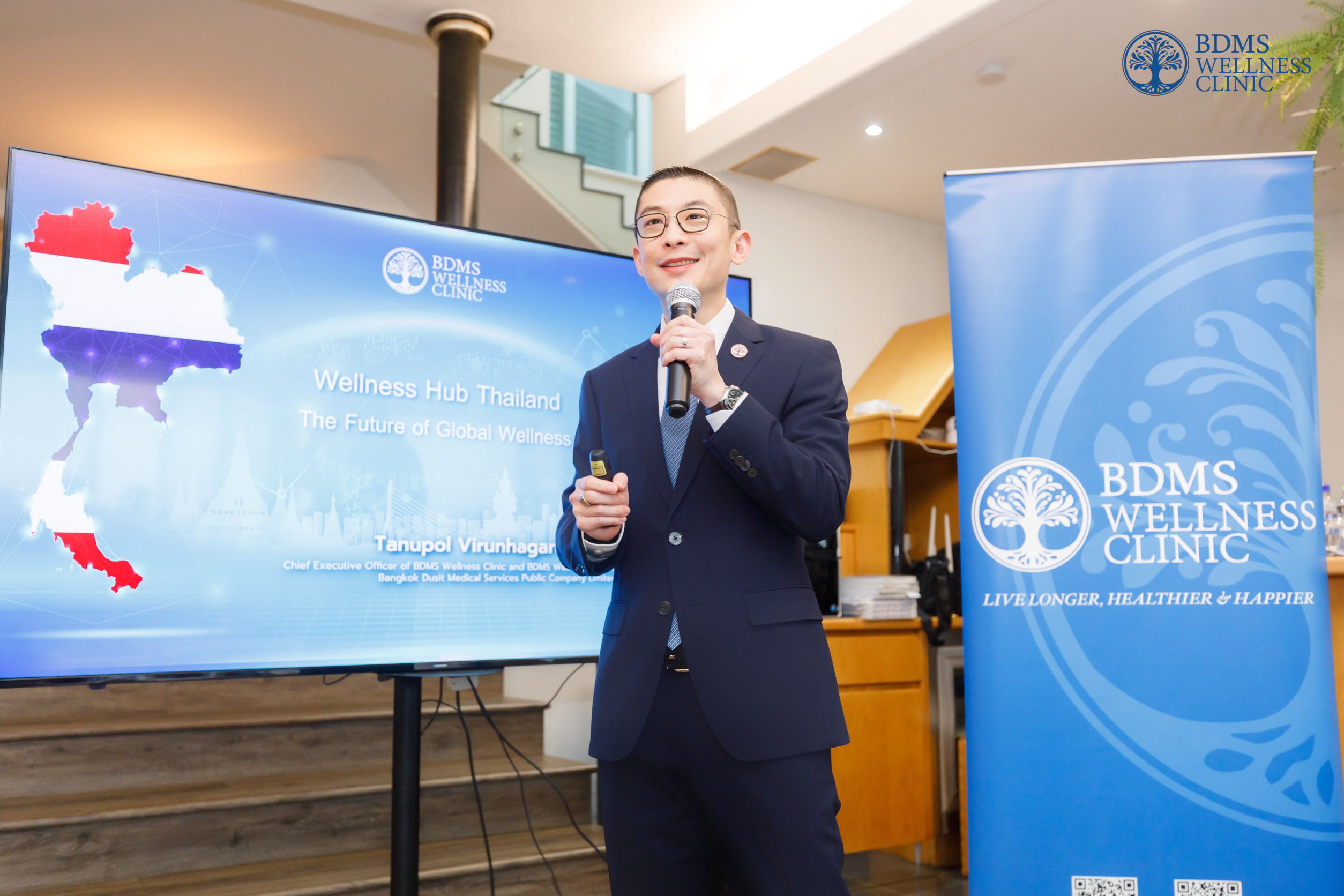
Mental Wellness: A Critical Foundation of Holistic Health
Dr. Tanupol emphasized that today’s health crisis extends beyond physical illness to include mental health, which significantly impacts cellular aging.
Modern society particularly younger generations faces increasing pressures from economic instability, social expectations, workload, and career competition. These pressures contribute to chronic stress, which triggers inflammation, accelerates cellular degeneration, and increases the risk of NCDs.
Scientific evidence shows that obesity is associated with shortened telomeres, protective DNA structures linked to aging. Increased fat mass leads to oxidative stress and free radical production, accelerating telomere shortening. Severe obesity has been linked to a reduction in life expectancy by approximately 8.8 years.
Similarly, chronic stress has been shown to shorten telomere length equivalent to about 10 years of biological aging, particularly among women.
These findings reinforce that mental wellness is a fundamental pillar of holistic health, and modern healthcare must integrate both physical and mental dimensions.
Thailand’s Wellness Ecosystem: From National Vision to Global Impact
Dr. Tanupol highlighted that Thailand is entering an aging society while facing increasing NCD burdens such as heart disease, diabetes, cancer, and obesity challenges similar to those seen globally.
He reaffirmed the importance of preventive healthcare as a national strategy, aiming not only to improve the health of Thai citizens but also to expand Thailand’s wellness model internationally.
A key vision is to position Thailand as a global wellness destination, leveraging its strengths in natural beauty, rich culture, traditional Thai medicine, healthy cuisine, and renowned hospitality combined with internationally accredited medical expertise and advanced technologies.
He concluded:
“Developing Thailand as a wellness destination is not only about enhancing national image it is a major opportunity to create sustainable economic value through healthcare, tourism, and service industries.
Our goal is not just to care for Thai people, but to elevate Thailand as a place of healing for the world. We envision Thailand as ‘The Land of Life’ a destination where visitors leave healthier in body, mind, and spirit.”

Wellness: Beyond a Trend to a National Strategy
While wellness tourism is often seen as a global megatrend, Dr. Tanupol emphasized that it is far more than a temporary movement it represents a long-term national development strategy.
Wellness is not a product driven by trends, but a new global infrastructure. Investing in preventive healthcare and building a strong wellness ecosystem is essential not only for tourism, but also for long-term national competitiveness and sustainable quality of life.
About BDMS Wellness Clinic
BDMS Wellness Clinic is a preventive healthcare center under Bangkok Dusit Medical Services Public Company Limited (BDMS), Thailand’s leading private hospital network.
The clinic provides early-stage disease prevention and holistic healthcare services, including dental care, sports medicine, and fertility treatment. By integrating medical science and advanced technology, BDMS Wellness Clinic promotes lifestyle transformation to enhance long-term health and quality of life.
Its ultimate mission is to help people live longer, healthier lives physically and mentally through sustainable well-being.
Source : BDMS Wellness Clinic
Articles in this category are written by our editorial team to keep you informed about the latest healthcare and medical tourism news.

