
WHO Urges Thailand to Safeguard ThaiHealth Funding and Maintain Tobacco and Alcohol Taxes
The World Health Organization (WHO) has called on the Thai government to protect the financial sustainability of the Thai Health Promotion Foundation (ThaiHealth) and maintain effective tobacco and alcohol taxation policies to support long-term disease prevention and public health promotion.
The World Health Organization (WHO) has called on the Thai government to protect the financial sustainability of the Thai Health Promotion Foundation (ThaiHealth) and maintain effective tobacco and alcohol taxation policies to support long-term disease prevention and public health promotion.
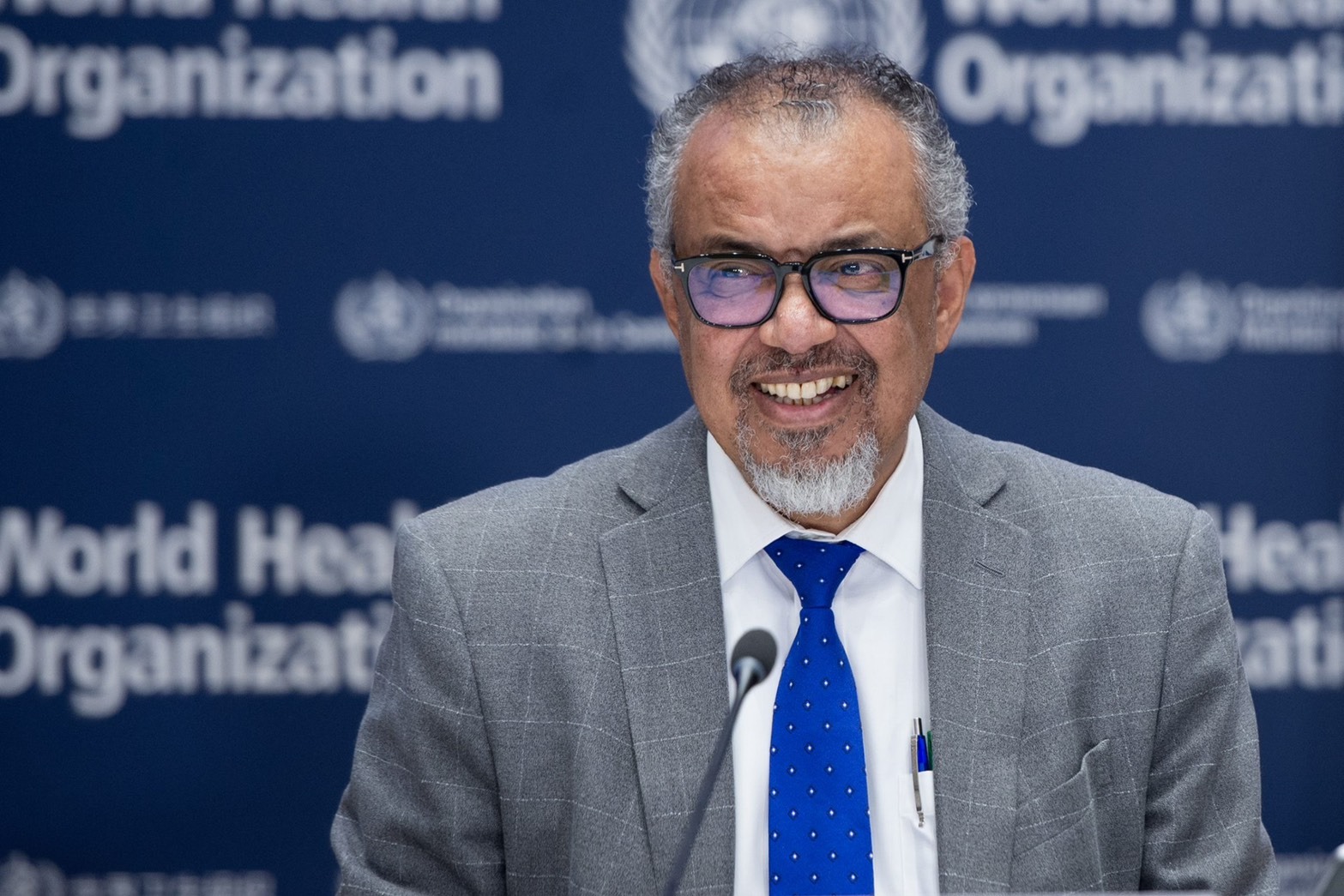
World Health Organization Director-General Dr. Tedros Adhanom Ghebreyesus has expressed support for Thailand's longstanding public health promotion efforts, emphasizing the importance of sustainable financing for the Thai Health Promotion Foundation (ThaiHealth).
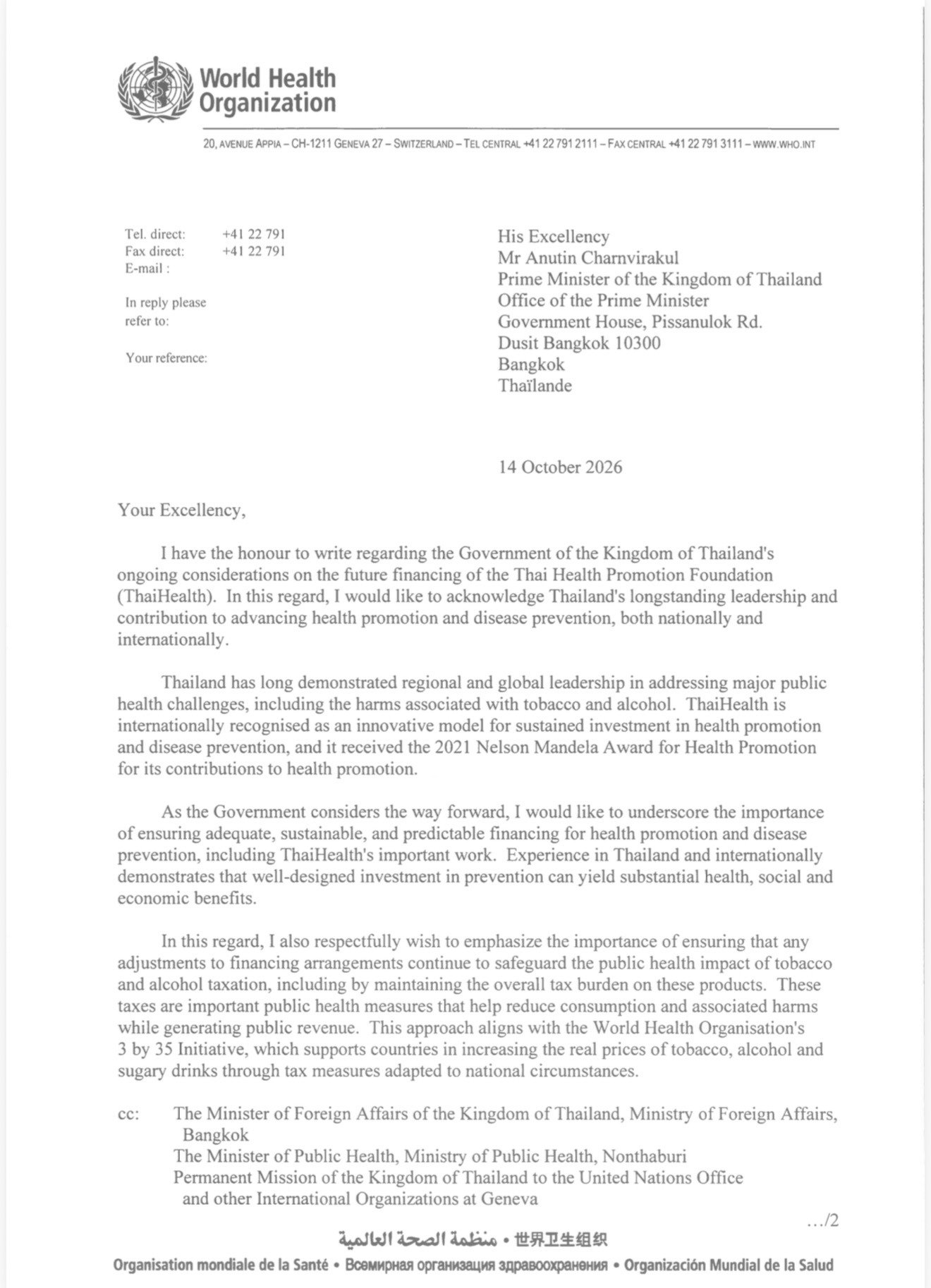
According to a report published by ThaiHealth, Dr. Tedros sent a letter dated October 14, 2026, to Thai Prime Minister Anutin Charnvirakul, with copies to relevant Thai government ministries and diplomatic representatives.
The letter highlighted the importance of maintaining adequate, predictable and sustainable funding for health promotion and disease prevention, alongside effective taxation of tobacco and alcoholic beverages.
WHO Recognizes ThaiHealth as an International Model for Health Promotion
In the letter, Dr. Tedros acknowledged Thailand's longstanding contributions to health promotion and disease prevention at regional and international levels.
He highlighted ThaiHealth as an internationally recognized model for sustainable investment in preventive healthcare.
Established to support health promotion initiatives, ThaiHealth works with public agencies, academic institutions, civil society organizations and community networks to address major health risks.
The foundation received the WHO Nelson Mandela Award for Health Promotion in 2021, recognizing its contributions to public health.
According to the WHO Director-General, Thailand's experience demonstrates the importance of sustained investment in prevention, particularly in addressing tobacco use, harmful alcohol consumption and noncommunicable diseases (NCDs).
Maintaining Sustainable Financing for Disease Prevention
The WHO letter emphasized that well-designed investments in disease prevention can deliver long-term health, social and economic benefits.
Dr. Tedros encouraged Thailand to ensure that funding arrangements for health promotion remain sufficient, sustainable and predictable.
He also emphasized that any changes to existing financing mechanisms should preserve the public health benefits of tobacco and alcohol taxation.
The letter highlighted the importance of maintaining the overall tax burden on these products, recognizing health taxes as tools for reducing harmful consumption while generating government revenue.
WHO's 3 by 35 Initiative Supports Health Taxes
The recommendations are consistent with WHO's 3 by 35 Initiative, a global effort encouraging countries to strengthen taxation on three products associated with major health risks:
-
Tobacco products
-
Alcoholic beverages
-
Sugar-sweetened beverages
The initiative calls for increasing the inflation-adjusted prices of these products by at least 50% by 2035 through taxation, taking into account each country's circumstances.
The objective is to reduce harmful consumption, prevent noncommunicable diseases and generate additional public revenue that can support health and development priorities.
WHO has emphasized that effective health taxation can contribute to both public health protection and long-term financial sustainability.

Mahidol University President Raises Concerns Over Proposed Funding Changes
Professor Dr. Piyamitr Sritara, President of Mahidol University, also expressed concern about potential changes to ThaiHealth's financing arrangements.
According to the ThaiHealth report, Professor Dr. Piyamitr emphasized the foundation's role in supporting health promotion across multiple sectors, including tobacco and alcohol control, NCD prevention and community health initiatives.
He argued that moving ThaiHealth toward greater dependence on annual government budget allocations could weaken financial predictability and expose its operations to political or commercial influence.
He also raised concerns about the potential influence of tobacco and alcohol industry lobbying on future health promotion policies.
These concerns represent his assessment of the potential consequences of changes to the funding system, rather than established findings that such interference has occurred.
Thailand's Public Health Financing Under Discussion
The discussion highlights broader questions about how Thailand should balance fiscal management, public health priorities and the long-term independence of health promotion programs.
WHO's position emphasizes the importance of preserving effective health taxes and ensuring sustainable resources for disease prevention.
Meanwhile, any proposed changes to ThaiHealth's financing arrangements would require consideration of their potential implications for public accountability, fiscal flexibility and the continuity of public health programs.
The WHO Director-General expressed confidence that Thailand would continue prioritizing long-term investment in disease prevention and indicated WHO's willingness to provide scientific evidence, technical guidance and international experience to support the country's public health efforts.
The discussion underscores the importance of sustainable health financing in Thailand's efforts to prevent noncommunicable diseases, strengthen health promotion and protect population health over the long term.
Articles in this category are written by our editorial team to keep you informed about the latest healthcare and medical tourism news.

