
Rhinoplasty Program
Complete service information and details
Description
Rhinoplasty is a surgical procedure used to reshape the nose to harmonize with the facial structure. In some cases, it may also be performed to correct deformities resulting from trauma or congenital nasal abnormalities.
Rhinoplasty Program
There are various techniques for rhinoplasty.
The physician will select the most appropriate method based on the individual’s nasal characteristics and desired outcomes, including:
Closed Rhinoplasty – This technique involves surgery through the nostrils without external incisions. It is suitable for cases requiring minor reshaping without significantly disturbing the nasal structure.
Open Rhinoplasty – This technique involves an incision at the columella (the base of the nose) to allow the surgeon a clear view of the internal nasal structures. It is commonly used for cases requiring detailed structural modification or correction of complex nasal deformities.
Semi-Open Rhinoplasty – A hybrid technique combining elements of both open and closed approaches. It is used when partial reshaping is needed without making a full external incision.
The choice of surgical technique should be determined by a specialized surgeon based on a thorough evaluation and the individual’s anatomical characteristics and goals.
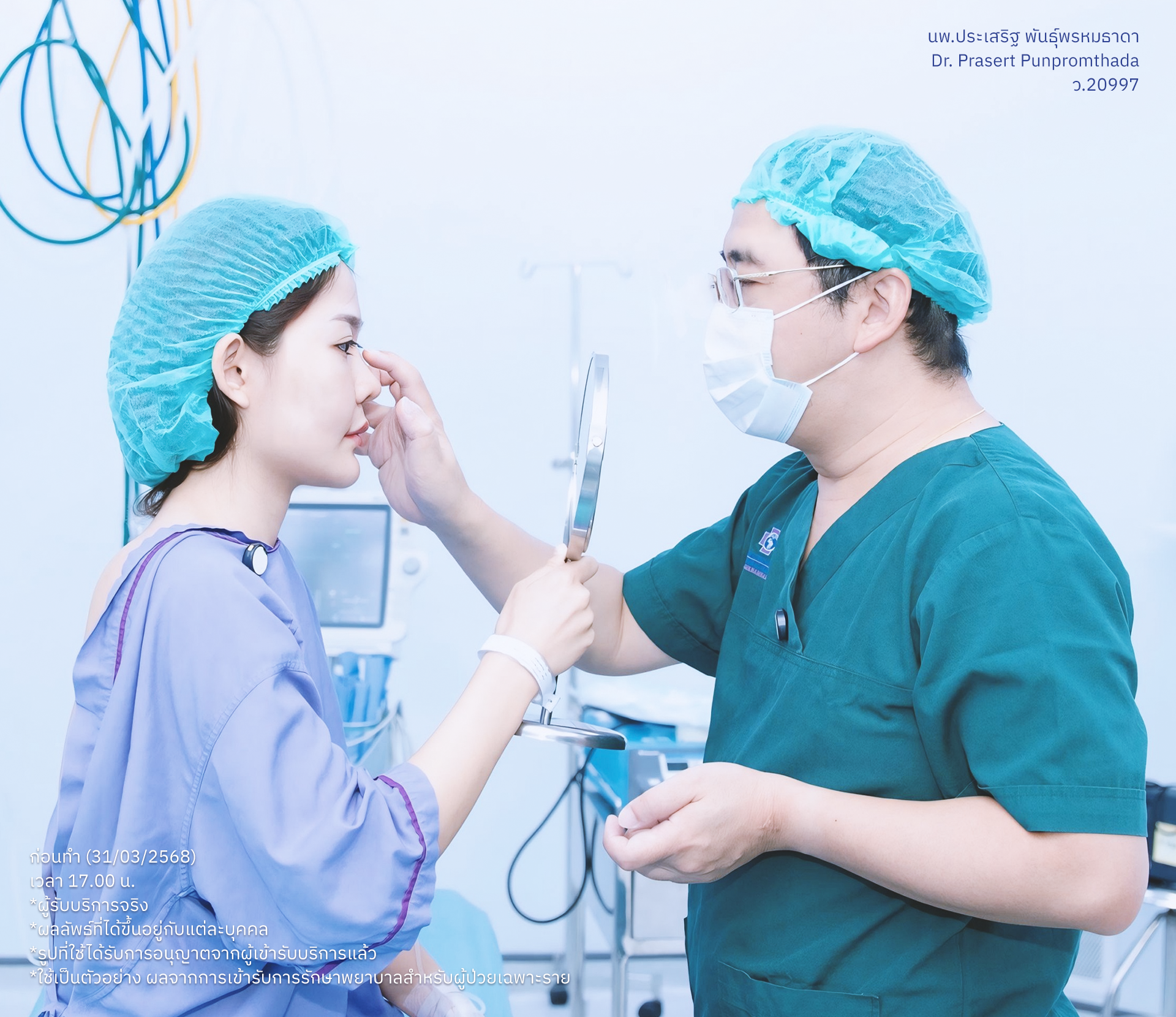
Consultation
The physician evaluates the patient’s facial structure, existing nasal anatomy, medical history, and discusses the patient’s expectations to plan a personalized surgical approach.
Surgical Planning and Technique Selection
The surgeon may choose closed, open, or semi-open rhinoplasty techniques, depending on the nasal structure and the specific details of the procedure.
Preoperative Examination
The physician may request blood tests or X-rays to assess the patient’s readiness for surgery.
Preoperative Preparation
Fast from food and drink for at least 6 - 8 hours (if general anesthesia or sedation is planned).
Avoid smoking, alcohol, and medications that affect blood clotting as advised by the physician.
Surgical Procedure
Surgery is performed according to the selected technique.
Implants may involve silicone, autologous tissue, or other materials, depending on suitability.
Local or general anesthesia is used depending on the technique and duration of surgery.
Postoperative Recovery and Care
Patients may rest for 1 - 2 hours before being discharged.
The physician will provide instructions on wound care, medication intake, and follow-up appointments.
Avoid touching the nose or applying pressure to the face during the recovery period.
Overview
What's Included
- Initial Consultation
- Treatment Procedure
- Follow-up Care
- Medical Report
Pricing
Contact for pricing
Final price depends on your specific requirements
Tags
Contact Us
Reach out through any of these channels:
Provider Information

Kasemrad Plastic Surgery
Nonthaburi, Thailand

Bariatric Surgery Program
Bariatric Surgery Program A Safe and Effective Option Under Medical Supervision Obesity is not merely a cosmetic concern - it significantly increases

Breast Augmentation Program
Breast augmentation program is a surgical procedure designed to increase the size or enhance the shape of the breasts by using implants, most commonly

Abdominoplasty (Tummy Tuck) Program
The abdominoplasty procedure, commonly referred to as a Tummy Tuck, is a surgical intervention that may help improve abdominal contour by excising exc

Facelift Program (Rhytidectomy)
A facelift, or rhytidectomy, is a surgical procedure designed to reposition and tighten facial soft tissue structures in order to restore a more youth

Liposuction Program
Liposuction is an option for targeted body contouring, depending on individual conditions. This procedure may be performed to remove localized fat dep