Bahu Beku: Apa Itu dan Bagaimana Pengobatannya?

Frozen Shoulder adalah kondisi yang menyebabkan nyeri dan keterbatasan gerak pada sendi bahu. Kondisi ini biasanya terjadi akibat peradangan pada kapsul bahu, yang menyebabkan terbentuknya jaringan parut dan penurunan mobilitas.
Apa itu Kapsul Bahu?
Kapsul bahu adalah lapisan tipis jaringan yang mengelilingi sendi bahu. Kapsul ini berperan penting dalam melindungi dan mendukung pergerakan bahu.
Kapsul ini terdiri atas jaringan ikat yang fleksibel, memungkinkan bahu untuk bergerak bebas ke berbagai arah.
Karakteristik Kapsul Bahu
๐ Mengelilingi humerus (tulang lengan atas) dan glenoid (soket bahu)
๐ Mengandung ligamen dan jaringan ikat yang menstabilkan sendi
๐ Mengembang dan berkontraksi dengan pergerakan, memungkinkan pengangkatan, rotasi, dan perpanjangan lengan
Fungsi Kapsul Bahu
๐ Perlindungan: Melindungi sendi bahu dari cedera
๐ Mobilitas: Memungkinkan pergerakan ke berbagai arah (mengangkat, memutar ke depan/belakang)
๐ Stabilitas: Menjaga kekuatan dan stabilitas sambil tetap fleksibel
Jika kapsul bahu mengalami peradangan, akan terjadi keterbatasan gerak dan kekakuan—kondisi ini dikenal sebagai Frozen Shoulder.
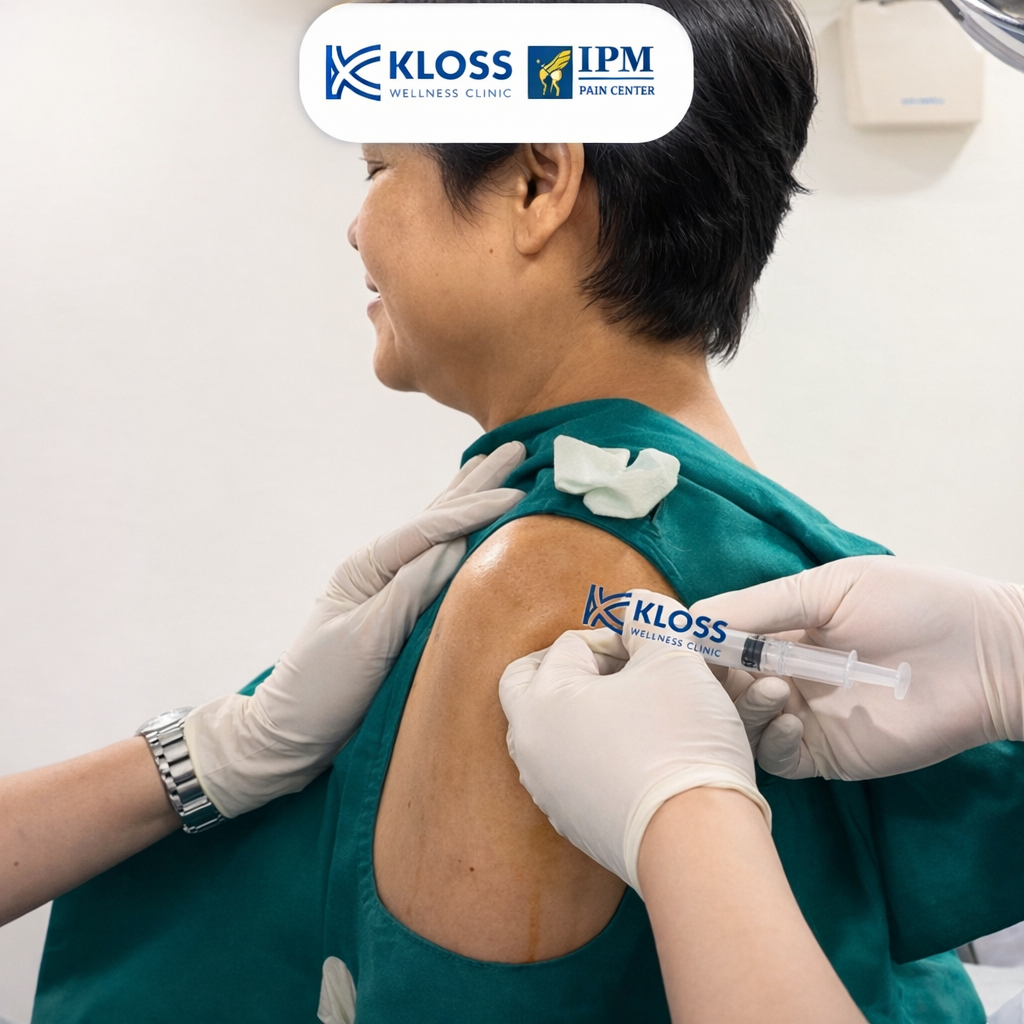
Tahapan Frozen Shoulder
1. Freezing Stage (Tahap Pembekuan)
Karakteristik:
Peradangan mulai terjadi, menyebabkan nyeri yang meningkat
Gejala:
๐ Peningkatan nyeri bahu secara bertahap
๐ Kesulitan menggerakkan bahu
๐ Nyeri memburuk pada malam hari, mengganggu tidur
๐ Kekakuan yang bertambah berat
Durasi: 6 minggu hingga 9 bulan
2. Frozen Stage (Tahap Beku)
Karakteristik:
Nyeri berkurang, namun kekakuan semakin parah
Gejala:
๐ Nyeri berkurang
๐ Pembatasan gerak bahu yang signifikan
๐ Kesulitan melakukan aktivitas sehari-hari
Durasi: 4 hingga 12 bulan
3. Thawing Stage (Tahap Pencairan)
Karakteristik:
Pemulihan mobilitas secara bertahap
Gejala:
๐ Nyeri berkurang secara signifikan
๐ Gerakan perlahan membaik
๐ Kemampuan melakukan aktivitas harian kembali
Durasi: 6 bulan hingga 2 tahun
Perawatan Frozen Shoulder di Kloss Wellness Clinic
1. Fisioterapi
Pemeriksaan dan perawatan oleh fisioterapis berpengalaman untuk memperbaiki ketidakseimbangan fisik
2. Active Cell Therapy
Teknik stimulasi pada tingkat sel untuk mengurangi peradangan dan nyeri, sekaligus melemaskan otot yang tegang dan meningkatkan fungsi
3. Cartilage Tissue Engineering
Terapi regeneratif canggih untuk merangsang produksi kartilago dan kolagen, mendorong perbaikan jaringan
4. Nutrition & Lifestyle Therapy
Panduan tentang nutrisi, olahraga, dan kebiasaan harian untuk mengurangi kekambuhan dan meningkatkan hasil jangka panjang
Kapan Harus Berkonsultasi ke Dokter?
Jika Anda mengalami:
๐ Nyeri bahu kronis
๐ Keterbatasan gerakan bahu
Anda sebaiknya berkonsultasi dengan tenaga medis profesional untuk diagnosis dan perencanaan pengobatan yang tepat.
Sumber : Kloss Wellness Clinic
**Diterjemahkan dan disusun oleh Tim Konten ArokaGO
Kloss Wellness Clinic
Bagikan artikel ini
Artikel Lainnya
Temukan lebih banyak wawasan tentang perawatan kesehatan dan wisata medis.

Peringatan Songkran: Cara Mencegah dan Menangani Cedera “Hisapan Sepatu” Saat Perayaan Festival Air
Saat Thailand merayakan Songkran, banyak pengunjung festival menikmati cipratan air di jalanan, tetapi satu masalah yang cukup umum terus berulang setiap tahun, yaitu masalah yang disebut “sepatu menempel,” saat sandal slip-on basah atau sepatu karet melekat erat di kaki atau pergelangan kaki setelah terpapar air dalam waktu yang lama.

Office Syndrome: Masalah Kesehatan Umum di Kalangan Pekerja Modern
Di era ketika bekerja di depan komputer telah menjadi bagian dari kehidupan sehari-hari, Office Syndrome telah muncul sebagai salah satu masalah kesehatan yang paling umum di kalangan orang dewasa usia kerja.

Urin tidak mengalir, tidak dapat menahan urine
Urine tidak mengalir, tidak dapat menampung urine, periksa segera sebelum menjadi pembesaran prostat atau BPH (Pembesaran Prostat Benign).