The Thailand Effect Is Real? Foreign Travellers Say Yes and Share Their “Cure”

You came to Thailand for a holiday. You ate your way through Bangkok, spent afternoons by the sea, got used to warm evenings, Thai massages, night markets and the feeling that there was always somewhere new to explore.
Then you flew home.
Suddenly, normal life feels unusually quiet. You keep scrolling through photos from Thailand. A plate of pad kra pao makes you nostalgic. You miss the heat, the beaches, the street food perhaps even the chaos of Bangkok traffic.
And before the suitcase is completely unpacked, you are already checking flights back.
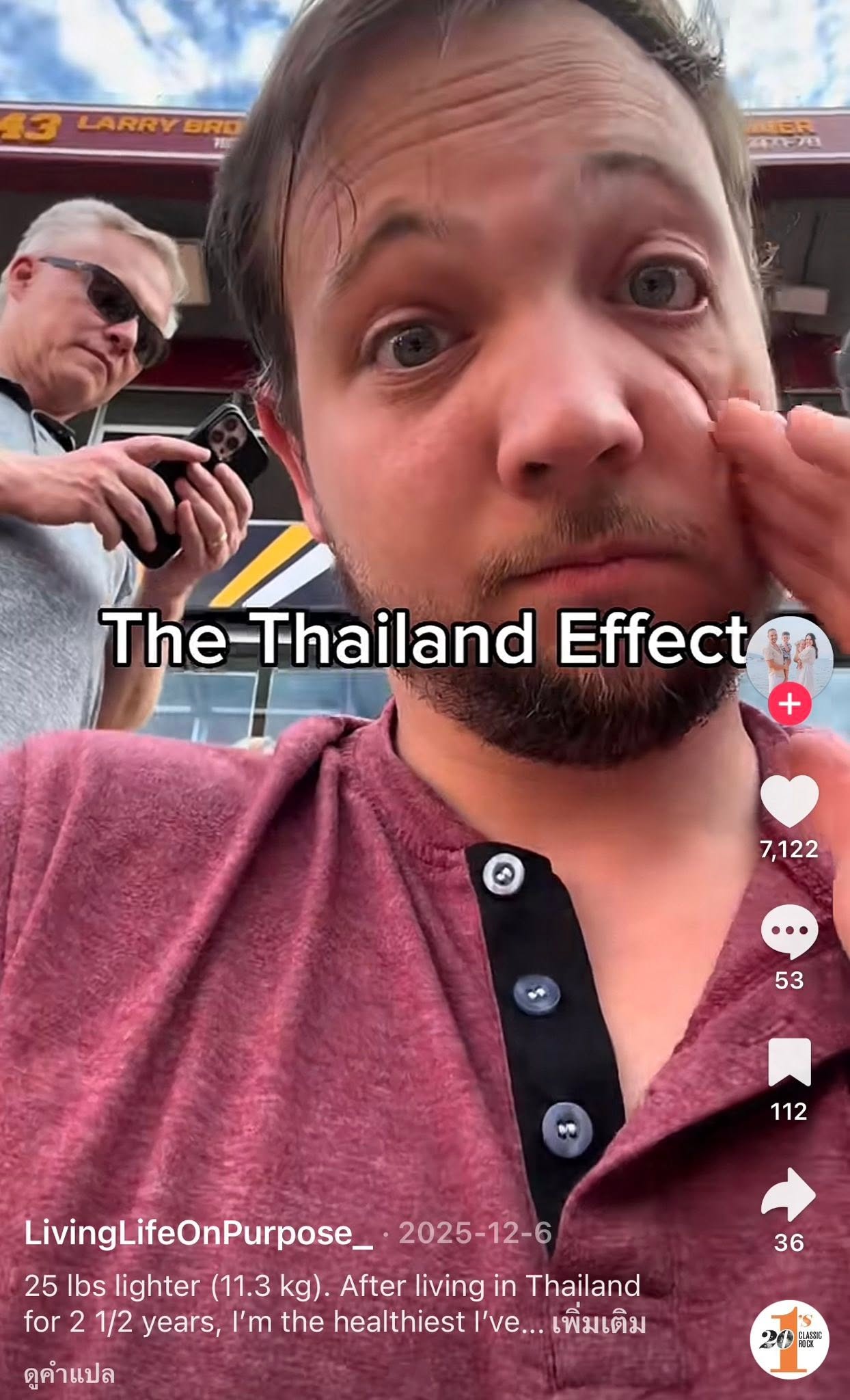
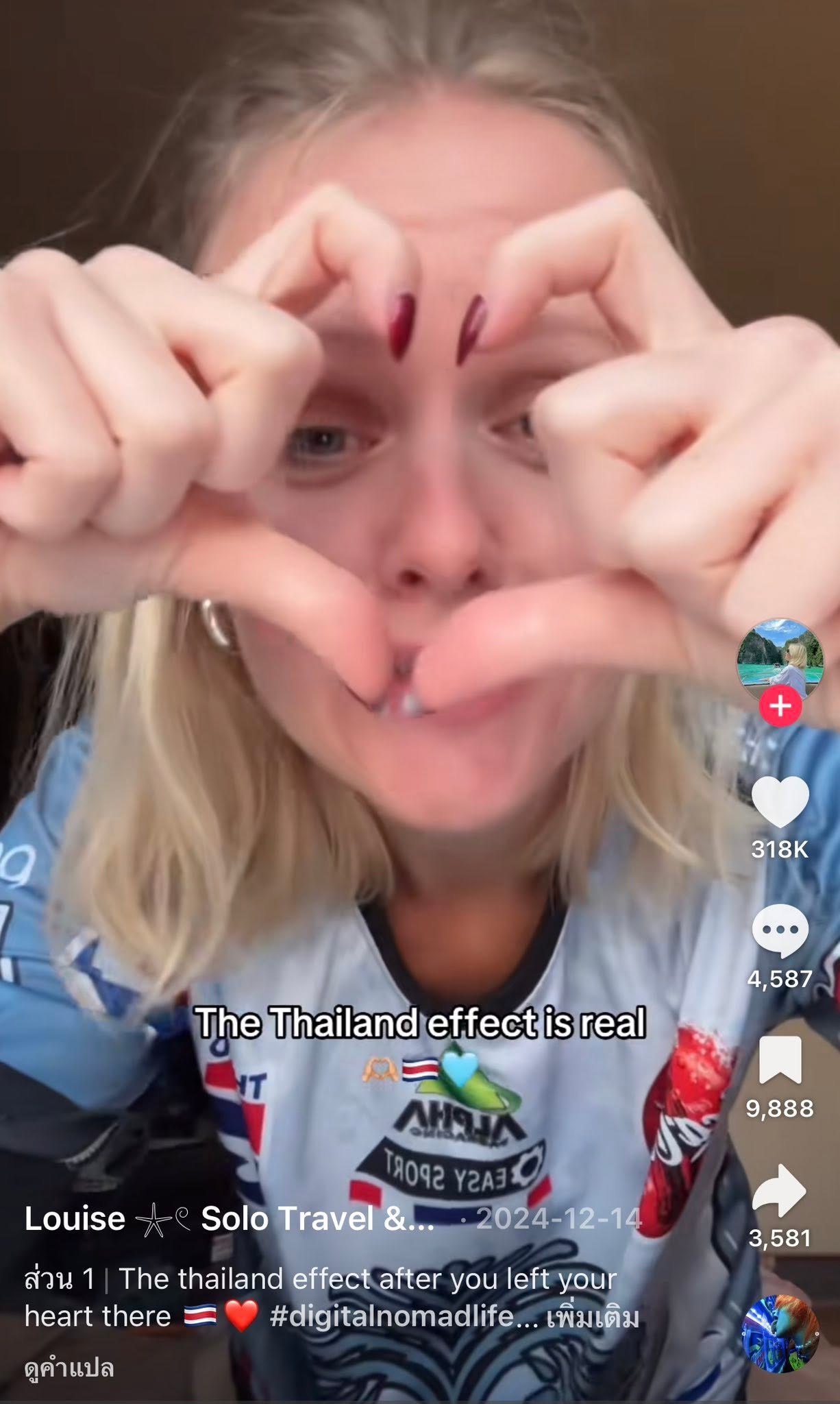
Online, travellers have given this feeling a name: “The Thailand Effect.”
It sounds like another social-media joke. But judging by the number of travellers describing remarkably similar feelings after leaving Thailand, there may be something familiar underneath the meme.
So, what is the “Thailand Effect”?
The Thailand Effect is not a medical diagnosis or an officially recognised psychological condition. The term has been circulating online as a playful way to describe what happens when travellers become deeply attached to their experience in Thailand and then find themselves missing it intensely after returning home.
In 2026, Thai media highlighted videos from international travellers describing exactly this contrast: smiling under the Thai sun one moment, then returning to colder, greyer everyday life and immediately wanting to come back.
One viral example featured traveller Michal Choinski comparing his happy time in Thailand with his mood after returning home, describing the “Thailand Effect” as real. Other social-media posts highlighted travellers missing Thailand’s weather, beaches and everyday atmosphere after returning to Europe.
But the phenomenon did not begin with a viral label. Travellers have been talking about “Post-Thailand Depression” and “Post-Thailand Blues” in online communities for years.

Foreign travellers: “I know I’m not the only one”
Look through travel communities and the stories begin to sound surprisingly familiar.
One traveller returned from a three-week holiday in Thailand and described feeling like a stranger in their own country. What did they miss? Not only beaches and tourist attractions, but also the people, smells, traffic and unpredictability of everyday life in Thailand.
The most popular response was essentially the internet’s favourite “treatment”: book another flight.
Another traveller, returning from a two-week trip, wrote about struggling to return to long workdays and routine after experiencing Thailand’s beaches, food and atmosphere. Other travellers replied that planning their next trip gave them something positive to work towards.
In another 2026 discussion, a traveller wrote that after returning from Thailand, it felt as though their “soul” was still there. They missed Thai food, beaches, Thai tea and even convenience-store snacks.
And this is not always a first-trip phenomenon. In another discussion, a traveller said they had visited Thailand 15 times and still found leaving the country unusually difficult.
Of course, not everyone feels this way. Some long-term visitors point out that spending a few weeks on holiday is very different from actually living in Thailand, with everyday realities such as work, immigration, traffic, heat and air pollution. That distinction matters.
The Thailand Effect is a travel feeling not proof that life in Thailand is perfect.
Why can coming home feel so flat?
There is a broader phenomenon that helps explain at least part of the experience: post-vacation blues.
Post-vacation blues refers to the temporary negative emotions some people experience after returning from a holiday. People may feel sad, nostalgic, tired, unmotivated or reluctant to return to work and everyday responsibilities.
It is not, by itself, a psychiatric diagnosis.
The contrast can be particularly noticeable after an intense trip. Travel offers novelty, freedom from normal responsibilities, new food, different surroundings, more outdoor time and experiences that break everyday routines. Returning home can mean commuting, deadlines, chores and a much more predictable schedule.
Thailand can amplify that contrast for some travellers because many memorable experiences are packed into a relatively short period: tropical weather, busy street life, food available late into the evening, beaches, wellness experiences, markets and constant sensory stimulation.
So the feeling may be real even if “Thailand Effect” is simply the internet’s nickname for it.
Okay, so what is the “cure”?
If you ask the internet, the answer is remarkably consistent: book another trip to Thailand.
One Reddit user even announced that they had been “cured” after months of missing Thailand. Their cure? They finally booked their next flight.
It is a good joke and planning something enjoyable in the future can genuinely give people something to look forward to. Thailand’s Department of Mental Health has also included planning a future holiday among its suggestions for coping with post-vacation blues.
But you do not necessarily need to buy a plane ticket tomorrow. There are healthier and more practical ways to bring some of the positive parts of your trip into everyday life.
1. Give yourself time to return to normal
Jet lag, disrupted sleep and travel fatigue can make the first few days home feel worse. Restore your normal sleep schedule, eat regularly, move your body and avoid expecting yourself to switch instantly from holiday mode to maximum productivity.
2. Keep one thing you loved about your Thailand routine
Think about what actually made you feel good while you were here. Was it walking more? Spending time outdoors? Swimming? Muay Thai? Eating fresh food? Getting regular massages? Having time away from your phone? Meeting people?
Instead of trying to recreate an entire holiday at home, keep one or two habits that made the trip feel good.
3. Stay connected to the experience
Cook a Thai dish, organise your travel photos, practise a few Thai phrases, visit a Thai restaurant or stay in touch with friends you met during your trip.
Nostalgia does not always need to be something you escape from. It can become a way of preserving a meaningful experience without living entirely in the past.
4. Start planning your next trip realistically
You do not need to book tomorrow. Create a travel fund. Save destinations you missed. Decide whether your next Thailand trip will be about beaches, food, culture, wellness or exploring somewhere completely different.
If your first trip was Bangkok and Phuket, perhaps the next one could include Chiang Mai, Hua Hin, Krabi or another part of Thailand.
5. Make the next trip a wellness reset
If what you miss most is how you felt in Thailand rather than a particular attraction, your next visit does not have to repeat the same holiday.
Thailand offers many ways to build wellbeing into a trip from Thai massage, spa and wellness retreats to Muay Thai, healthy food, preventive health check-ups and medical or wellness consultations.
The goal does not have to be “escaping real life.” A trip can also be an opportunity to rest, reassess your routines and take home habits that continue to benefit you afterwards.
But don't call everything the “Thailand Effect”
This distinction is important.
Feeling a little flat, nostalgic or unmotivated for a few days after a great holiday can fit with post-vacation blues. But persistent depression is not a travel meme.
Thailand’s Department of Mental Health notes that post-vacation blues are not a psychiatric disorder and often resolve on their own, although for some people the feelings can last longer.
If sadness persists, becomes more intense, or begins to interfere with your ability to work, sleep, eat, maintain relationships or manage daily life, consider speaking with a qualified mental health professional.
Likewise, if you already live with depression, anxiety or another mental health condition, simply booking another holiday should not be treated as a substitute for appropriate care.
Maybe the Thailand Effect doesn't need a cure
Perhaps the most interesting part of the Thailand Effect is not that people miss a holiday. It is what they miss.
Some miss the food. Some miss the weather. Some miss being active every day. Others miss the freedom to wander around without a schedule, the people they met, the energy of Bangkok or the feeling of waking up near the sea.
Those feelings can tell you something useful about what makes you happy and what might be missing from your everyday routine.
So maybe the Thailand Effect is not something you need to “cure.”
Maybe it is simply a sign that Thailand gave you something worth coming back for.
And if another Thailand trip eventually appears in your calendar, perhaps the best approach is not simply to recreate the last one — but to discover a different side of the country.
Planning a health or wellness journey in Thailand? You can explore certified medical and wellness providers across Thailand on ArokaGO.
Frequently Asked Questions
What is the Thailand Effect?
The Thailand Effect is an informal social-media term used to describe the strong sense of nostalgia or longing some international travellers feel after leaving Thailand. It is not an official medical or psychological diagnosis.
Is the Thailand Effect real?
The term itself is informal, but the feelings travellers describe can be real. Similar feelings after returning from a holiday are often described more generally as post-vacation blues or post-travel blues.
Why do I miss Thailand so much after my trip?
Travel can provide novelty, freedom from everyday responsibilities, social experiences and a change of environment. Returning suddenly to normal routines can create a strong emotional contrast. What each traveller misses about Thailand will be different.
Is “Post-Thailand Depression” a real diagnosis?
No. “Post-Thailand Depression” is an informal phrase commonly used in travel communities. Post-vacation blues are also not considered a psychiatric diagnosis by themselves. Persistent or severe symptoms should not be dismissed as a travel phenomenon.
How do travellers deal with the Thailand Effect?
Common suggestions in traveller communities include planning another trip, keeping in touch with friends, enjoying Thai food at home and maintaining positive habits picked up while travelling. General advice for post-vacation blues also includes restoring sleep and routine, exercising, maintaining social connections and planning enjoyable future activities.
Should I book another trip to Thailand?
That depends on your budget, responsibilities and travel plans. Planning a future holiday can give you something enjoyable to anticipate, but it should be done realistically rather than used as the only response to persistent low mood.

References
- Department of Mental Health, Thailand. Guidance on coping with Post-Vacation Depression / Post-Vacation Blues after long holidays. April 2024.
- Department of Health, Ministry of Public Health, Thailand. Recommendations for adjusting physically and mentally after long holidays. January 2025.
- Medical News Today. Post-vacation depression: Causes and how to cope. Medically reviewed; updated November 2025.
- Manager Online. Coverage of the viral “Thailand Effect” among international travellers. April 2026.
- Reddit, r/ThailandTourism. “Post-Thailand Depression?” Traveller discussion, June 2024.
- Reddit, r/ThailandTourism. “Cured from Post-Thailand depression!” Traveller discussion, April 2024.
- Reddit, r/ThailandTourism. “Missing Thailand.” Traveller discussion, March 2026.
- Reddit, r/ThailandTourism. Traveller discussion about leaving Thailand after repeated visits, January 2026.
Traveller comments referenced in this article represent individual experiences shared publicly online and should not be interpreted as medical evidence. “Thailand Effect” and “Post-Thailand Depression” are informal expressions, not medical diagnoses. This article is for general informational purposes and does not replace professional mental health advice.
독립 작가
이 기사 공유
더 많은 기사
건강 관리 및 의료 관광에 대한 더 많은 인사이트를 발견하세요.

태국 2026 채식 축제: 건강하게 제이 푸드를 즐기는 방법
2026년 채식 축제를 맞아 태국을 방문하시나요? 제이 음식이 무엇인지, 음식 노점에서 무엇을 선택해야 하는지, 그리고 식물성 식사를 더 건강하게 즐기는 방법을 알아보세요.

방콕 스트리트 푸드 가이드: 둘러볼 7개 동네와 꼭 먹어봐야 할 음식
송핫의 오래된 샵하우스를 둘러보거나, 반타트통에서 친구들과 저녁을 함께하고, 야오와랏의 빛나는 간판 아래에서 여유로운 저녁을 보내보세요. 각 동네의 매력을 만들어주는 음식과 사람들을 통해 방콕을 발견해 보세요.

방콕 홍수 2026: 홍수 중 및 이후 주의해야 할 7가지 건강 위험
방콕 홍수 2026: 렙토스피라증과 멜리오이도증부터 뎅기열과 피부 감염까지 주의해야 할 7가지 건강 위험. 최신 태국 자료, 경고 징후, 그리고 안전하게 지내는 방법.