Jerusalem—The Technion-Israel Institute of Technology has revealed that a team of Israeli researchers has developed a new treatment strategy for lung adenocarcinoma (LUAD), a type of lung cancer that is often diagnosed at an advanced stage with limited treatment options such as surgery and chemotherapy.

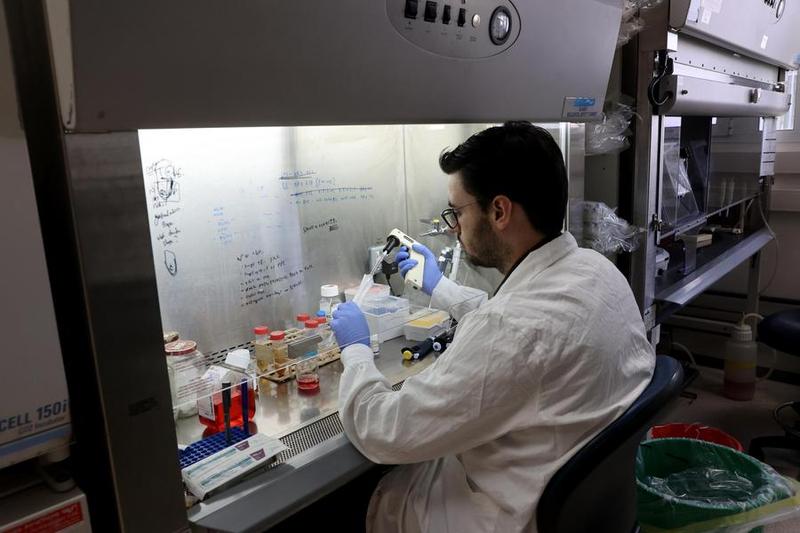
Image: Researchers work in the biological sciences laboratory at the Weizmann Institute of Science in Rehovot, Israel.
The research team aims to create personalized treatments for this type of lung cancer, which is characterized by the loss of the RBM10 protein, a tumor suppressor protein. The mutation-induced loss of this protein causes cells to divide more rapidly, potentially leading to cancer in some cases.
In preclinical studies, the team discovered that RBM10 mutations accelerate the progression of lung cancer. Around 25% of LUAD patients experience the loss of this protein, contributing to resistance to existing treatment methods.
To develop a targeted therapy for RBM10-deficient LUAD, the researchers conducted a thorough genome screening and identified 60 genes that could be effective therapeutic targets. Among these, they focused on the WEE1 gene, as drugs inhibiting this gene are currently being tested in clinical trials for cancer treatment.
Research published in Nature Communications showed that inhibiting the WEE1 gene eliminated RBM10-deficient LUAD cells in mice, highlighting the potential of this approach.
Source: Xinhua Thai
此类别中的文章由我们的编辑团队撰写,旨在让您了解最新的医疗保健和医疗旅游新闻。