What Are Exosomes? What Do They Do in the Body?

Why do small cuts on your skin heal on their own? When an injury occurs, how do the body’s cells know where to begin the repair process?
The answer involves more than the cells themselves. It also relies on a communication system that allows trillions of cells throughout the body to work together in a coordinated way.
Exosomes are one of the important components of this system.
Exosomes have attracted considerable interest in regenerative medicine and antiaging medicine because of their role in communication between cells and their involvement in the body’s repair processes across multiple systems.
Many people hear the terms “exosomes” and “stem cells” mentioned together and assume they are the same. In fact, they have distinctly different functions.
This article explains what exosomes are, where they come from, how they work, and why they are attracting attention in health, regenerative medicine, and skin care.
What Are Exosomes?
Exosomes are small particles enclosed by a membrane. They belong to a group known as extracellular vesicles, which cells naturally produce and release. They are typically nanosized.
Despite their tiny size, exosomes can carry a variety of important biological substances, including proteins, growth factors, cytokines, lipids, microRNAs, and other biomolecules.
These substances serve as “information” transferred from one cell to another, helping cells communicate and respond appropriately to changes in the body.
To put it simply, if cells were people, exosomes would be the messages they send to one another to explain what is happening and how to respond.
Exosomes are therefore not cells. Unlike stem cells, they cannot divide or develop into new cells. Instead, they play an important role in transferring information between cells, helping the body’s systems work together effectively.

How Do Exosomes Work in the Body?
Although exosomes are extremely small, they contribute to processes across many of the body’s systems. Their main function is communication between cells, also known as cell to cell communication.
Their activity can be explained in four stages.
1. Cells Detect Changes
Every day, the body’s cells encounter ongoing changes arising from normal activity, injury, inflammation, and environmental factors.
When cells detect a disturbance, they initiate communication with other cells to help the body respond appropriately.
2. Cells Produce and Release Exosomes
In response to signals, cells produce and release exosomes.
Exosomes can contain various biomolecules, such as proteins, growth factors, cytokines, and microRNAs (miRNAs). These act as the “information” a cell passes on to other cells.
The contents of exosomes vary depending on the type of cell that produces them and the conditions within the body at the time.
3. Exosomes Travel to Recipient Cells
Once released, exosomes move through the fluid outside cells and may reach recipient cells. They transfer the information they carry, helping influence how those cells respond to the surrounding conditions.
For this reason, exosomes are often described as “cellular messengers.”
4. Cells Respond to the Information They Receive
After receiving information carried by exosomes, cells respond according to their particular functions.
These responses may include changes in cellular activity, the transmission of signals to other cells, or coordinated participation in various bodily processes.
Although these mechanisms are complex and remain under investigation, exosomes have attracted considerable interest in regenerative medicine research because of their role in cellular communication and coordination.
Where Do Exosomes Come From?
Exosomes are biological particles naturally produced by living organisms. They have been described in various sources, including:
-
Humans: human derived exosomes
-
Animals: animal derived exosomes
-
Plants: plant derived exosomes
Although these particles are commonly referred to as “exosomes,” their composition and biological properties differ depending on their source. These differences reflect the cells that produce them and the natural functions of the organism.
Which Sources of Exosomes Are Studied in Medicine?
Exosomes are widely studied in medical and regenerative medicine research, particularly those obtained from human cells.
Among these, mesenchymal stem cell derived exosomes, also known as MSC derived exosomes, have attracted substantial interest. Numerous studies have investigated their roles in cellular communication, tissue function, and potential applications in regenerative medicine.
Researchers are also investigating exosomes from other sources, including platelets, immune cells, and plants. Many aspects of these potential applications remain under research and development.
How Are Exosomes Related to Skin?
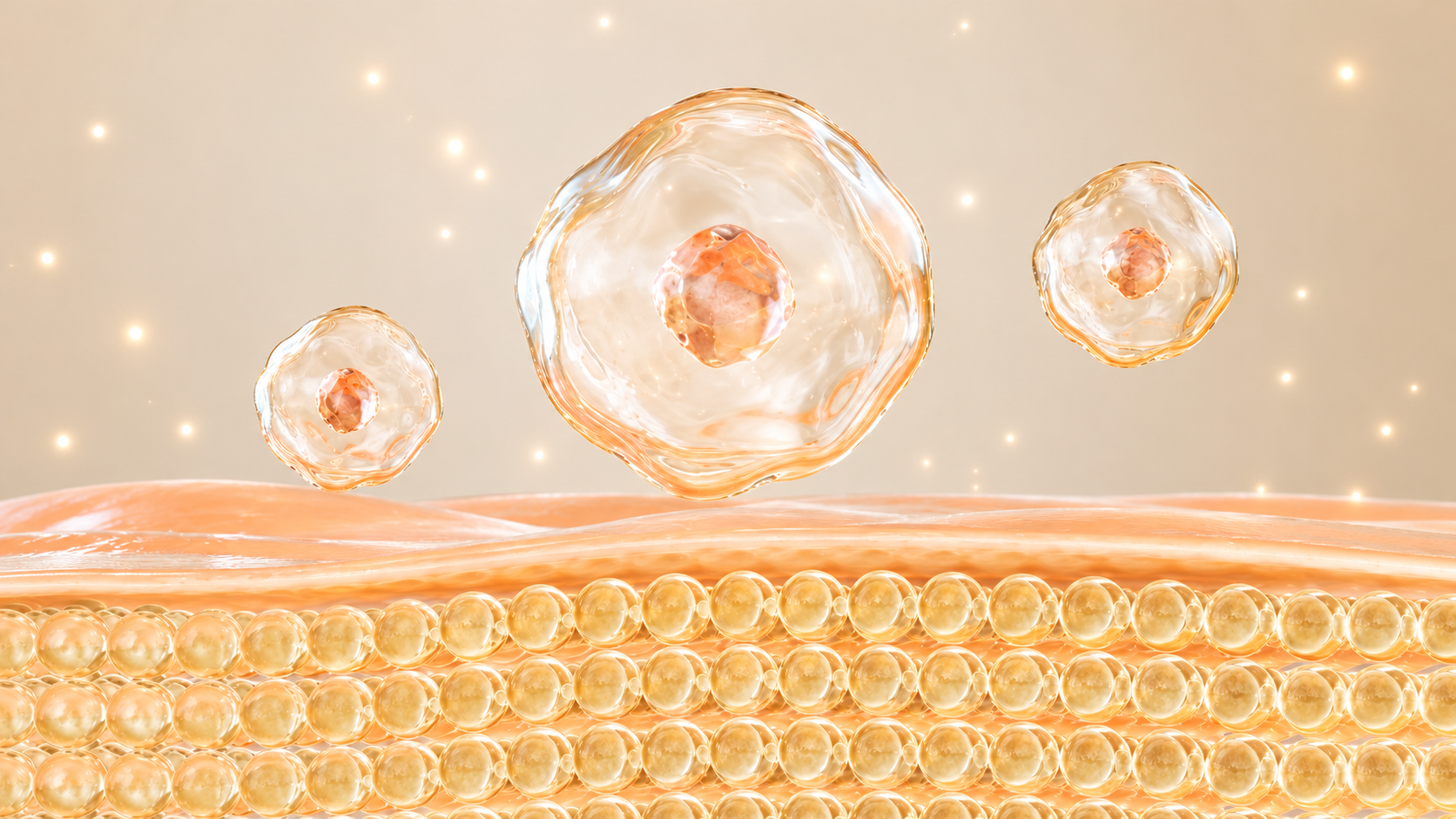
The skin constantly renews and repairs itself in response to factors such as sunlight, pollution, inflammation, and changes associated with aging. These processes depend on communication and cooperation among several types of cells.
Exosomes help transfer information between skin cells. Researchers are therefore studying their involvement in several important processes, including:
-
Communication and coordination among skin cells
-
The activity of fibroblasts, which are involved in collagen production
-
Maintaining a balanced environment within the skin
-
The skin’s natural responses and repair processes
-
The regulation of inflammation and pigmentation in certain research settings
These roles have generated interest in regenerative aesthetics, a field that approaches skin health through an understanding of cellular function and communication, rather than focusing solely on visible surface concerns.
However, exosomes from different sources may have different compositions and properties. Outcomes therefore depend on their source, quality, manufacturing process, method of use, and an assessment of their suitability for each individual.

How Aging Affects Exosome Quality
Like the cells that produce them, exosomes do not retain identical properties throughout life. As the body ages, changes in cells may affect the quantity, composition, and molecular information carried by the exosomes they release.
Current research suggests that communication between cells may change with age. This may be associated with differences in processes such as recovery after injury, collagen production, and the maintenance of tissue balance.
However, these changes are not caused by exosomes alone. They result from a combination of factors, including age, overall health, lifestyle, and the conditions surrounding the cells.
Researchers are therefore increasingly exploring the relationship between exosomes and healthy aging. Their aim is to understand how changes in cellular communication contribute to aging and how this knowledge might inform future developments in regenerative medicine.
How Do Exosomes Differ From Stem Cells?
Exosomes and stem cells are often mistaken for the same thing. Although both are associated with regenerative medicine, they have different roles.
A stem cell can be compared to a production center capable of generating new cells when needed.
An exosome, by contrast, acts as a messenger, carrying information from one cell to another to help the recipient cell respond to changing conditions.
In simple terms:
-
Stem cells are the “builders.”
-
Exosomes are the “messengers.”
Their functions are different but connected within the body’s biological processes.
Conclusion
Exosomes are tiny biological particles that cannot be seen with the naked eye. Nevertheless, they play an important role in communication between cells, one of the fundamental mechanisms that helps the body maintain balance.
They have attracted considerable interest in science and regenerative medicine because of their involvement in cellular activity across multiple systems, including responses to changes in the body, tissue function, and skin health.
As exosome research continues to develop, it highlights an important principle: good health depends both on how individual cells function and on how they communicate with one another.
When cells exchange information and work together effectively, they help support coordinated function throughout the body.
Understanding exosomes therefore offers insight into an important biological mechanism that continues to attract attention in regenerative medicine, antiaging medicine, and personalized wellness.
To learn more about exosomes and their potential applications in regenerative medicine and skin care, explore our other articles at Karnesh Wellness.
Frequently Asked Questions
What Are Exosomes?
Exosomes are small biological particles known as extracellular vesicles. Cells produce and release them as part of communication between cells. They carry biomolecules that help transfer information to recipient cells.
Are Exosomes Stem Cells?
No. Exosomes are not cells and cannot divide like stem cells. Exosomes transfer information between cells, whereas stem cells can divide and develop into different types of cells.
Where Do Exosomes Come From?
Exosomes are naturally produced by various types of cells in humans, animals, and plants. In regenerative medicine research, MSC derived exosomes are among the most extensively studied sources.
How Are Exosomes Related to Skin?
Exosomes contribute to communication between skin cells and are involved in processes such as fibroblast activity, the maintenance of skin balance, and the skin’s natural responses. These roles remain the subject of ongoing research.
Does Aging Affect Exosomes?
As people age, the quantity, composition, and molecular information carried by exosomes may change in response to changes in the cells that produce them. Researchers are studying these changes to better understand aging and bodily function.
Can Exosomes Be Used in Medicine?
Exosomes are attracting considerable research interest in regenerative medicine, aesthetic medicine, and other fields. However, their medical application depends on the specific indication, scientific evidence, and applicable laws and regulations in each country.
Disclaimer: This article provides general information about exosomes for educational purposes only. It does not constitute medical advice and cannot replace a diagnosis or consultation with a qualified physician.
Medical and aesthetic applications of exosomes remain under ongoing investigation. Any application must be considered in relation to the specific indication, scientific evidence, and applicable laws and regulations in each country. Consult a qualified physician before deciding to undergo any treatment.
Source :
Karnesh Wellness & Cell Revitalization Center
Arokago Providers Karnesh Wellness Cell Revitalization Center
**Translated and compiled by ArokaGO Content Team
Karnesh Wellness
Share this article
More Articles
Discover more insights on health care and medical tourism.

Your Private Path to Timeless Wellness: Why Medical Wellness by Hertitude Clinic
Some of the most personal conversations a person will ever have take place in a doctor's office. A discussion about biological age, family history, hormonal changes, energy, sleep, skin or hair is rarely just clinical. It touches identity, work, relationships and how someone hopes to live in the decades ahead.

What Is a Facelift? Exploring Surgery at Asia Cosmetic Hospital
Sagging cheeks, a less defined jawline, and changes in the skin around the neck often lead people to research facelift surgery. Before choosing treatment, it helps to understand that facial aging involves more than the surface of the skin. Different facelift procedures also address different areas.

Silent Threat: Heavy Metals in the Body
Heavy metals are present in the environment around us, including the food we eat, the water we drink, and the air we breathe. While some metals are essential for normal bodily functions, exposure to certain toxic metals or excessive amounts of others can lead to health problems.