"جدري القردة" ينتشر حالياً في تايلاند: منظور الطب التقليدي التايلاندي

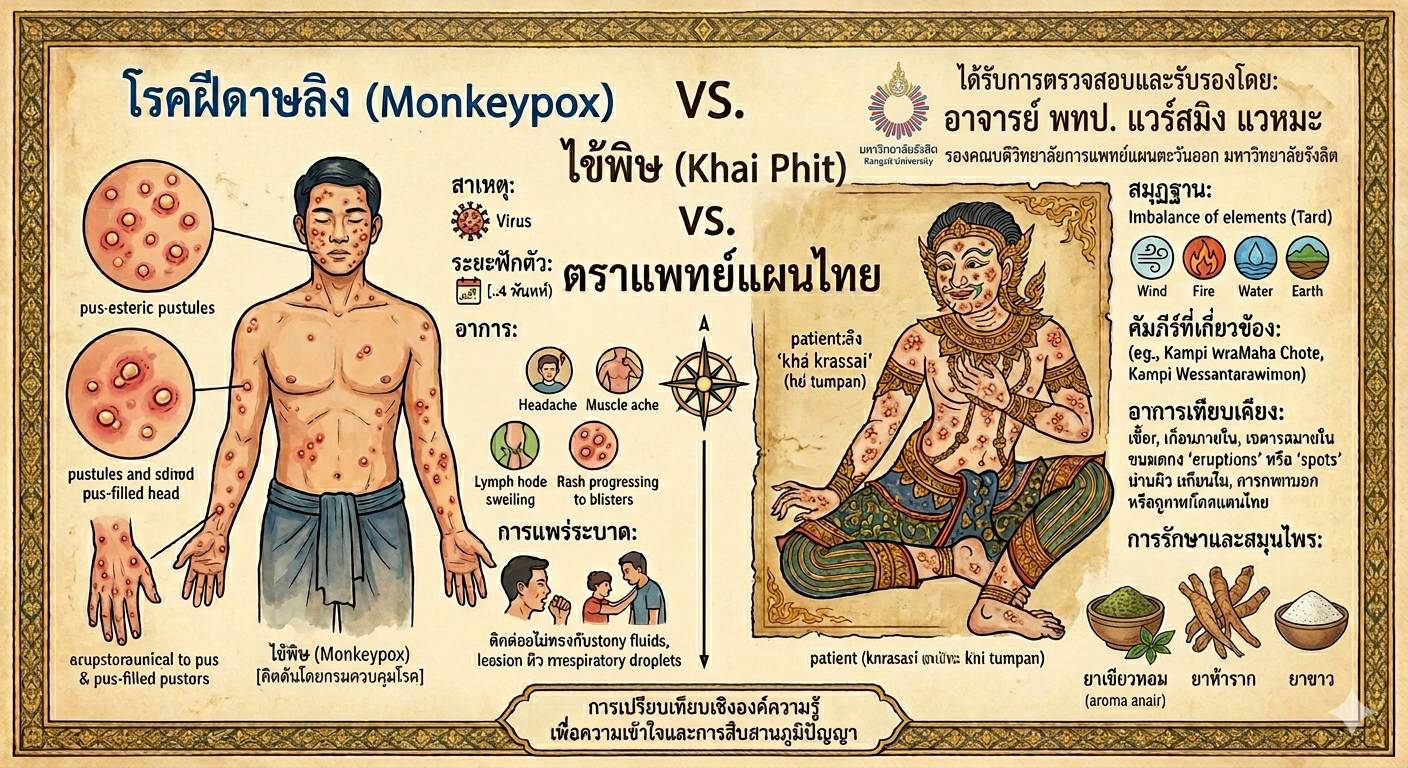
في عالمنا اليوم، حيث نواصل مواجهة انتشار الأمراض المعدية الناشئة والمعاودة مثل جدري القردة، يمكن أن يساعدنا فهم الأمراض من خلال عدة منظورات في الاستجابة بشكل أكثر شمولية. وعلى الرغم من أن نصوص الطب التايلاندي التقليدي الكلاسيكية لا تصف "الفيروسات" بشكل مباشر، لأن هذا الجسم المعرفي قد تطور قبل الاكتشاف العلمي للكائنات الدقيقة، فإن الأعراض وخصائص هذا المرض لا تزال قابلة للتفسير بشكل هادف من خلال نظرية الطب التايلاندي القديمة.
مفهوم "الفيروس" في الطب التايلاندي التقليدي: من علم الأحياء إلى "العامل الممرض السام"
في الطب التايلاندي التقليدي التطبيقي، قد يُفسر "الفيروس" على أنه "عامل ممرض صغير يسبب المرض وغير مرئي للعين المجردة، وله تأثيرات سامة على عناصر الجسم والدم". لذلك يشرح الطب التايلاندي التقليدي الفيروسات من خلال مفاهيم "العوامل الممرضة السامة" أو "سموم الأمراض"، وليس من خلال آليات بيولوجية على مستوى الخلية.
يمكن شرح نشوء المرض من خلال ثلاثة مناظير رئيسية كما يلي:
1. سموم الأمراض المسببة للمرض
تُصنف العوامل التي تسبب الأوبئة أو أمراض الجلد الحادة الشديدة تحت مسمى "الحمى السامة" أو "الحمى السوداء" في الطب التايلاندي التقليدي. ويُعتقد أن هذه الحالات تنتج عن دخول السموم واختبائها في الجسم، مما يؤدي إلى ظهور أعراض سريرية مثل الحمى الشديدة، الطفح الجلدي الأحمر، البثور، الالتهاب، وارتفاع حرارة الجسم بشكل غير طبيعي.
وتصف نصوص الطب التايلاندي التقليدي هذه السموم حسب مظاهرها، مثل:
๐ سم الحمى
๐ السم الأسود
๐ سم الدم
๐ البلغم السام
2. التأثير على وعدم توازن العناصر الأربعة
عندما يدخل "العامل الممرض السام" إلى الجسم، يخل بتوازن العناصر الأربعة، مما يؤدي إلى اضطرابات كما يلي:
๐ زيادة عنصر النار: يسبب حمى عالية، حرارة في الجسم، وتراكم الحرارة الداخلية.
๐ اضطراب عنصر الرياح: يؤدي إلى آلام الجسم، ألم العضلات، القشعريرة أو الشعور بالاعتلال.
๐ ضعف عنصر الماء: يظهر على شكل آفات مليئة بالصديد، سائل لمفاوي غير طبيعي، والتهاب الأنسجة.
๐ اختلال عنصر الأرض: يُسبب اضطرابات الجلد، مثل التقرحات، البثور، والآفات الشبيهة بالدمامل على الجسم.
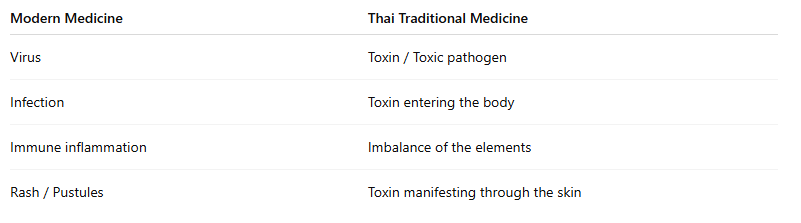
جدول مقارن للمفاهيم بين النظامين الطبيين
لفهم آلية مرض جدري القردة بشكل أفضل، يمكن مقارنة الإطار المفاهيمي للطب الحديث مع الطب التايلاندي التقليدي كما يلي:
نهج الرعاية والعلاج في الطب التايلاندي التقليدي
عند التعامل مع الحالات المصنفة كحمى سامة أو حمى سوداء، فإن المبادئ الرئيسية هي "طرد سموم الحمى" و"تبريد الحرارة السامة" لمنع السموم من التغلغل أعمق داخل الجسم.
تُستخدم التركيبات العشبية التايلاندية التقليدية، بما في ذلك المستحضرات العطرية والعلاجات الخافضة للحرارة المدرجة في القائمة الوطنية للأدوية الأساسية في تايلاند، عادةً للرعاية العرضية. أمثلة على ذلك:
๐ يا كياو هوم: استُخدم تقليدياً لتقليل الحرارة السامة، وتخفيف سموم الحمى، والمساعدة في إخراج الطفح الجلدي أو التفجرات مثل الآفات الشبيهة بالحصبة بطريقة منهجية.
๐ يا ها راك (بنشالوكافيشيان): تركيبة خافضة للحرارة معروفة في الطب التقليدي، تُستخدم لتخفيف الحمى، حرارة الجسم، وأنواع مختلفة من سموم الحمى.
๐ يا كاو: علاج مبرد يُستخدم لخفض الحمى، وتصفية الحرارة السامة، وتخفيف الالتهاب الداخلي.
الخلاصة
على الرغم من أن الطب الحديث والطب التايلاندي التقليدي يستخدمان أطرًا ومصطلحات مفاهيمية مختلفة تمامًا، إلا أنه عند النظر من حيث الأعراض، ومسار المرض، وعلم الأوبئة، يتضح أن النظامين يظهران توافقاً ذا مغزى بشكل مدهش.
من منظور الطب التايلاندي التقليدي، يمكن فهم جدري القردة على أنه حالة يسبب فيها "العامل الممرض السام" خللاً في عناصر الجسم والدم، مما يؤدي إلى فقدان التوازن. إن دمج المعرفة من كلا النظامين الطبيين لا يوسع فهمنا للمرض فحسب، بل يوفر أيضاً آفاقاً إضافية للرعاية والعلاج والاستشفاء الصحي.
إعداد ونشر:
ويقسامين ويهاما، ATTM
نائب عميد، كلية الطب الشرقي
جامعة رانجسيت
Thai Medical and Wellness Tourism Association (TMWTA)
مشاركة هذه المقالة
المزيد من المقالات
اكتشف المزيد من الأفكار حول الرعاية الصحية والسياحة العلاجية.

CoolSculpting: Non-Surgical Fat Reduction with Controlled Cooling
Excess fat can affect people of different ages and body types. Its accumulation is influenced by diet, physical activity, lifestyle, age, hormones, genetics, and overall body composition.

Sculptra: Collagen Stimulation for Firmer
Sculptra is an injectable collagen-stimulating treatment designed to improve the skin’s underlying structure gradually.

Pico Laser: A Modern Treatment for Pigmentation
Pico Laser is a modern aesthetic treatment designed to improve uneven skin tone, pigmentation, acne marks, scars, and tattoos while supporting a smoother and more radiant complexion.