10 Healthy Thai Dishes: What Makes Them Good for You, and How to Order Them Right

Thai food has a reputation for being fresh and full of herbs, and much of it is. A typical Thai meal can include lemongrass, galangal, lime, chili, garlic, fresh basil, and more vegetables than most Western dishes. But "Thai" does not automatically mean "healthy." The same kitchen that produces a light, clear tom yum also produces rich coconut curries, deep-fried snacks, and sauces that contain surprising amounts of salt and sugar.
The good news is that choosing well is not complicated. The healthiest Thai dishes share a few simple traits: they are built around vegetables, herbs, and lean protein, they are steamed, boiled, or grilled rather than deep-fried, and they avoid heavy coconut cream. The one thing almost every Thai dish shares, healthy or not, is salt. This article explains what the evidence says about each of these factors, then walks through ten Thai dishes that are genuinely good choices, and how to order each one so it stays that way.
What makes a Thai dish healthy, and what can undo it
The World Health Organization recommends eating at least 400 grams of fruit and vegetables a day, keeping saturated fat below 10% of total energy intake, and keeping salt below 5 grams a day, which equals about 2,000 milligrams of sodium. Thai cooking makes the first goal easy. Many dishes are served with fresh vegetables and herbs on the side, and soups and salads are often mostly vegetables. The second and third goals need more attention.
Salt is the biggest issue. A nationwide survey published in the Journal of Clinical Hypertension measured sodium in 24-hour urine samples from 1,599 Thai adults and found an average intake of 3,636 mg per day, almost double the WHO limit. Intake was highest in southern Thailand, at 4,108 mg per day, and lowest in the Northeast, at 3,316 mg. Most of this sodium comes from seasonings. According to USDA FoodData Central, one tablespoon of fish sauce contains about 1,413 mg of sodium, which is roughly 70% of the WHO daily limit in a single spoonful. Shrimp paste, soy sauce, oyster sauce, and fermented fish add more.
Coconut milk is the second issue. It gives Thai curries their richness, but 100 grams of coconut milk contains about 230 calories and 21 grams of saturated fat, according to USDA data. For someone eating 2,000 calories a day, the WHO saturated fat limit works out to about 22 grams, so a coconut curry made with a generous amount of coconut milk can use up most of a day's allowance in one bowl. This is why green curry, massaman curry, and tom kha gai do not appear on the list below, even though they are delicious.
Chili, on the other hand, may be a point in Thai food's favour. A study of 487,375 adults in the China Kadoorie Biobank, published in the BMJ, found that people who ate spicy food six or seven days a week had a 14% lower risk of death during about seven years of follow-up than those who ate it less than once a week. This was an observational study, so it cannot prove that chili itself was the cause, but it suggests that a spicy diet is at least not harmful for most healthy people, and may even be linked to better health.
The practical rule is simple: choose dishes built on vegetables and lean protein, prefer clear broths and light sauces over coconut cream, and treat every seasoning as salt. The ten dishes below follow that rule.
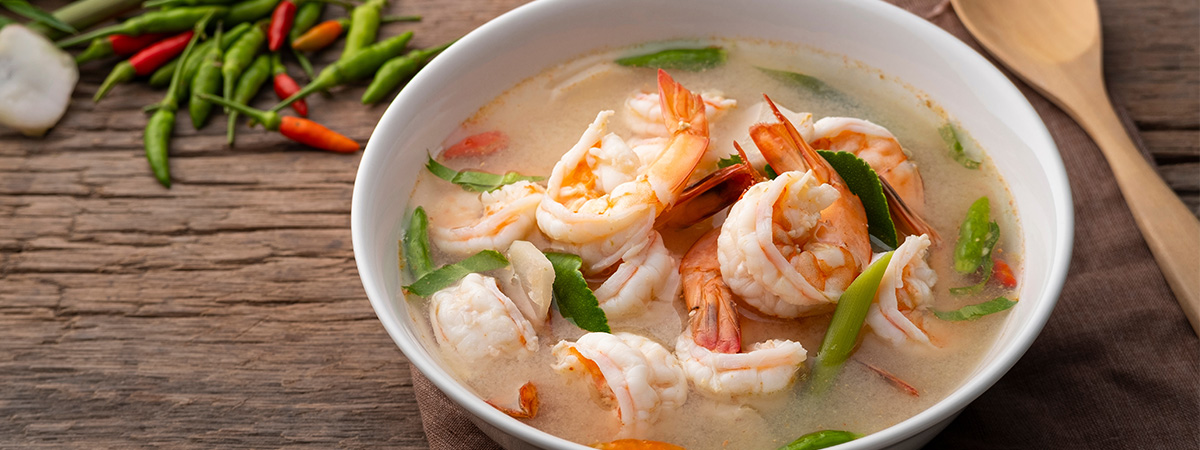
Photo Credit: https://cooking.kapook.com/view279753.html
1. Tom Yum Goong (clear version)
Tom yum goong is a hot and sour shrimp soup flavoured with lemongrass, galangal, kaffir lime leaves, lime juice, and chili. The clear version, called tom yum nam sai, is low in fat, high in protein from the shrimp, and full of aromatic herbs and often mushrooms. It is also one of the spiciest dishes on most menus, which fits the chili evidence above.
The healthier choice is the clear version rather than the creamy version, tom yum nam khon, which is enriched with evaporated milk or coconut milk. Because the broth carries most of the salt, eat the shrimp, mushrooms, and herbs and leave some of the liquid in the bowl.
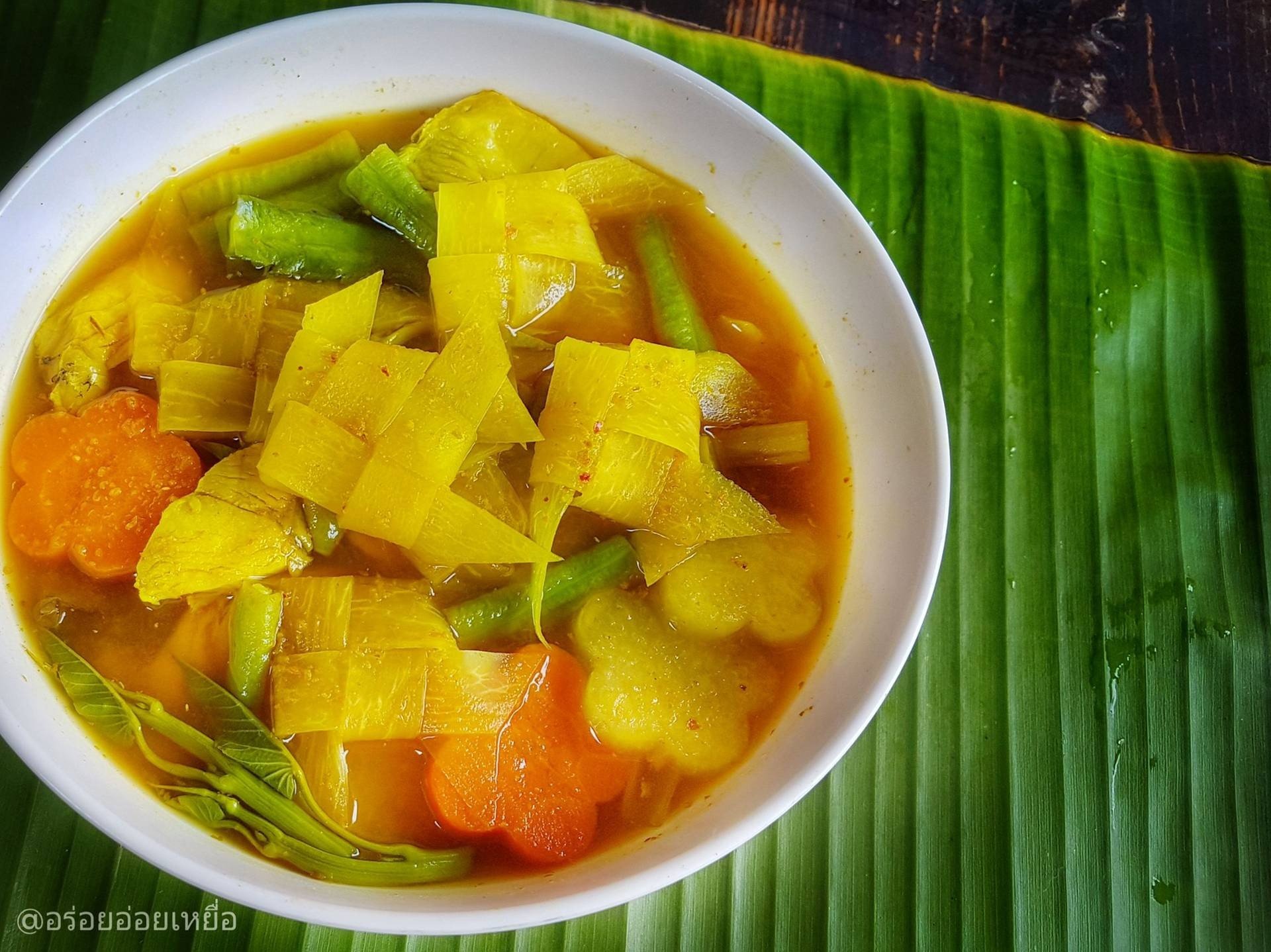
Photo Credit: https://www.wongnai.com/recipes/ugc/c6d2f500b6024d28bf66e663b795dc73
2. Gaeng Som (sour curry)
Despite its name, gaeng som contains no coconut milk at all. It is a thin, sour curry made from a chili paste, tamarind, and fish, cooked with vegetables such as green papaya, cabbage, long beans, or morning glory. This makes it one of the few Thai curries that is low in saturated fat, while still delivering a large portion of vegetables and lean protein from fish.
Like most Thai soups, gaeng som can be salty, because the curry paste contains shrimp paste and the broth is seasoned with fish sauce. Enjoy the fish and vegetables, and go easy on the broth.
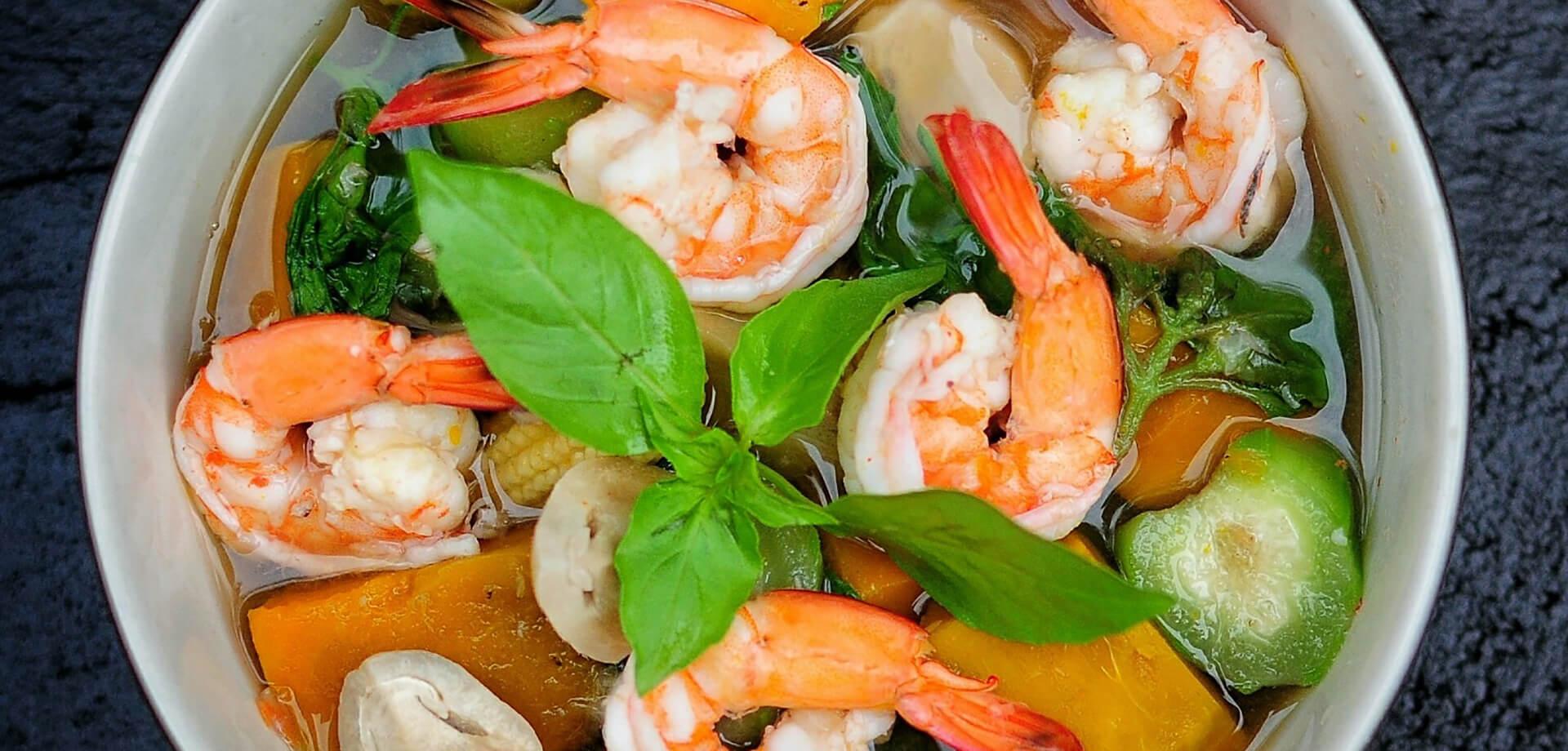
Photo Credit: https://recipe.ajinomoto.co.th/recipe/แกงเลียงกุ้งสด
3. Gaeng Liang (spicy vegetable soup)
Gaeng liang is a traditional Thai vegetable soup made with pumpkin, luffa gourd, baby corn, and other seasonal vegetables, flavoured with white pepper, shallots, shrimp or dried shrimp, and lemon basil. It is often described as one of the most vegetable-rich dishes in Thai cooking, and it is traditionally served to new mothers in Thailand as a warming, nourishing meal.
Because it is mostly vegetables in a light broth, gaeng liang can make a significant contribution toward the WHO target of 400 grams of fruit and vegetables a day. It is also naturally low in fat. Its heat comes from pepper rather than chili, so it is a good choice for people who prefer milder food.
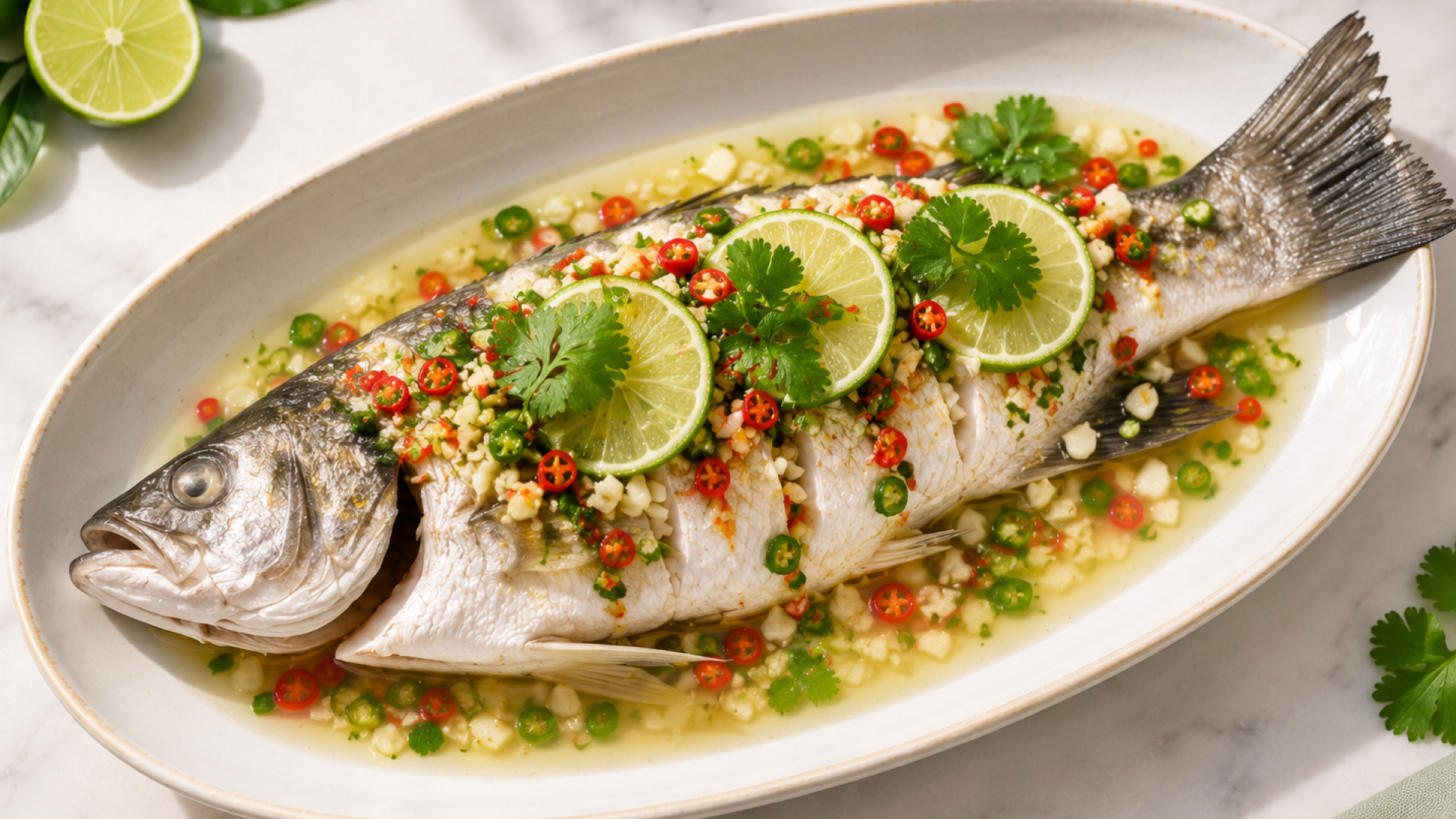
4. Pla Nueng Manao (steamed fish with lime)
Pla nueng manao is a whole fish, usually sea bass, steamed and then covered in a sharp sauce of lime juice, garlic, chili, and fish sauce, served over fresh vegetables. Steaming adds no fat, and fish is one of the best protein sources available. The American Heart Association recommends eating fish, particularly oily fish, about twice a week, because the omega-3 fatty acids in seafood are associated with a lower risk of heart disease.
The sauce is where the sodium hides. Asking for the sauce on the side, or spooning less of it over each piece, keeps the benefits of the fish without the salt.
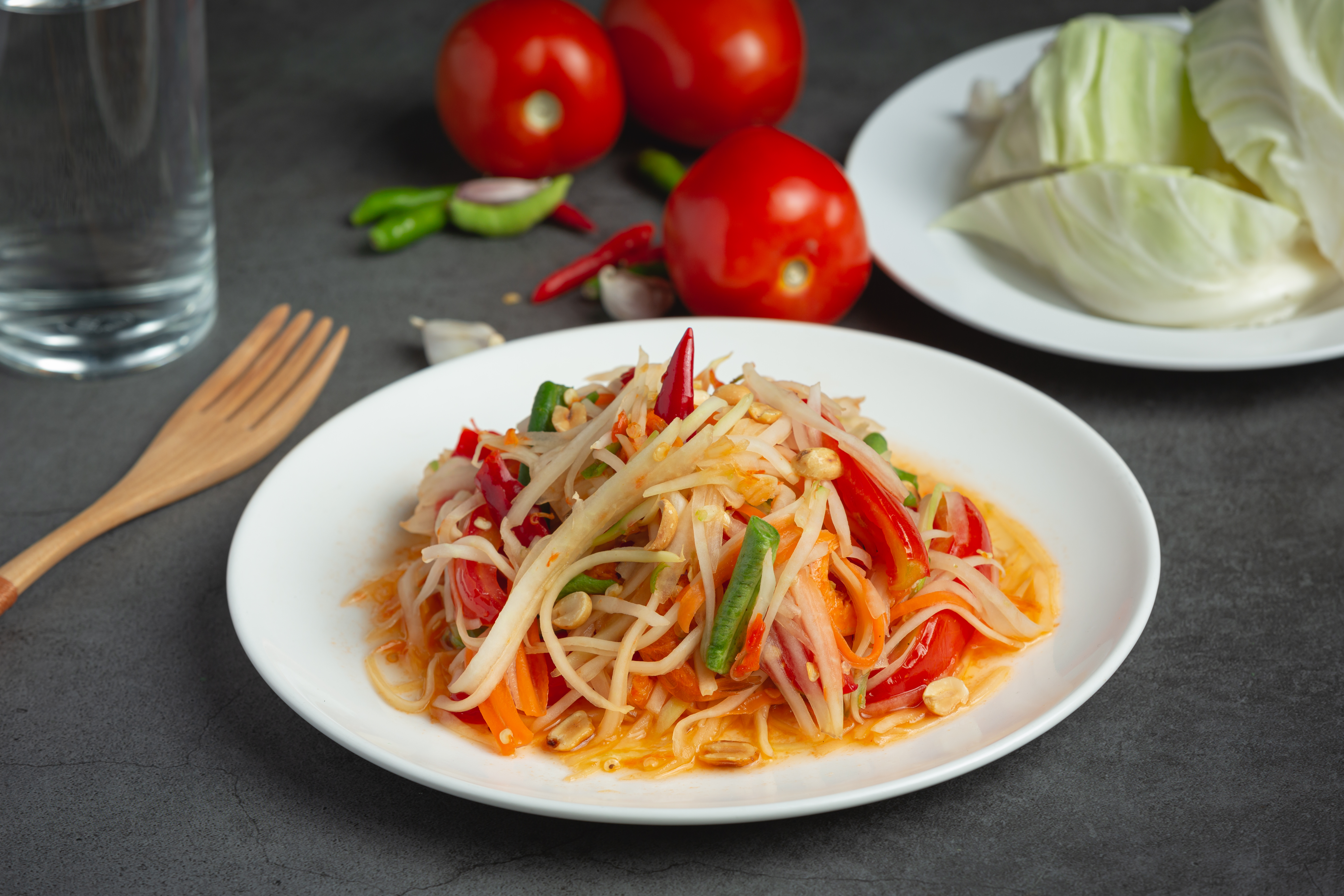
5. Som Tam Thai (green papaya salad)
Som tam is a salad of shredded green papaya pounded in a mortar with lime juice, chili, garlic, tomatoes, long beans, and fish sauce. The central Thai version, som tam thai, adds roasted peanuts and dried shrimp. It is mostly raw vegetables, contains very little fat, and is high in fibre.
The two things to watch are sugar and salt, because many vendors balance the sour lime with palm sugar and plenty of fish sauce. You can ask for less of both, and pairing som tam with grilled chicken and a moderate portion of sticky rice makes a balanced meal.
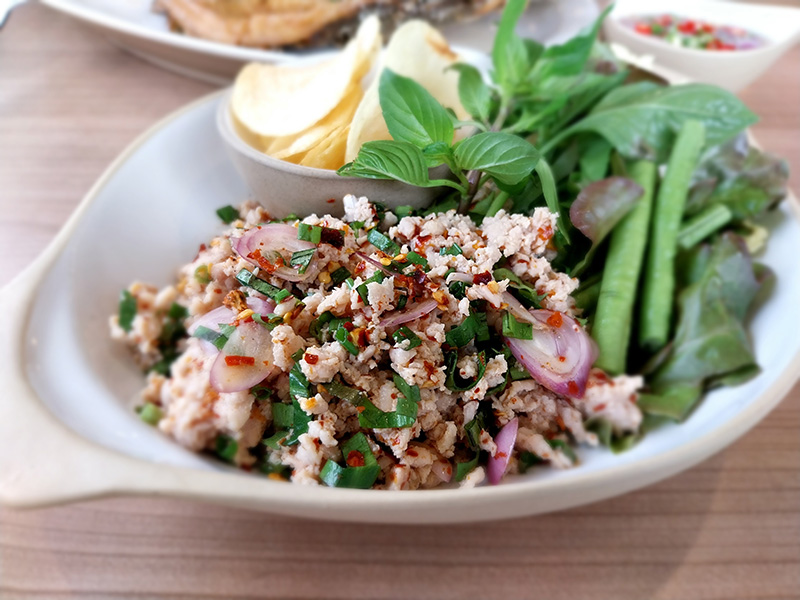
Photo Credit: https://cooking.kapook.com/view281029.html
6. Larb Gai (cooked chicken larb)
Larb is a minced meat salad from northeastern Thailand, seasoned with lime juice, chili, fish sauce, shallots, mint, and toasted ground rice. Made with chicken, it is high in protein, low in fat, and full of fresh herbs. It is usually eaten with raw vegetables such as cabbage and long beans, which adds volume and fibre.
There is one important safety point. Always choose larb made with fully cooked meat. Raw pork versions, such as larb lu, have been linked to infection with Streptococcus suis, a bacterium that can cause meningitis and permanent hearing loss. A population-based study in Phayao Province, published in PLoS One, identified 31 confirmed cases in one year. Five of them, 16.1%, died, and 22 patients had eaten raw pork products, usually about two days before becoming ill. Dishes made with raw freshwater fish carry a separate risk: they can transmit the liver fluke Opisthorchis viverrini, which the International Agency for Research on Cancer classifies as a Group 1 cause of bile duct cancer.
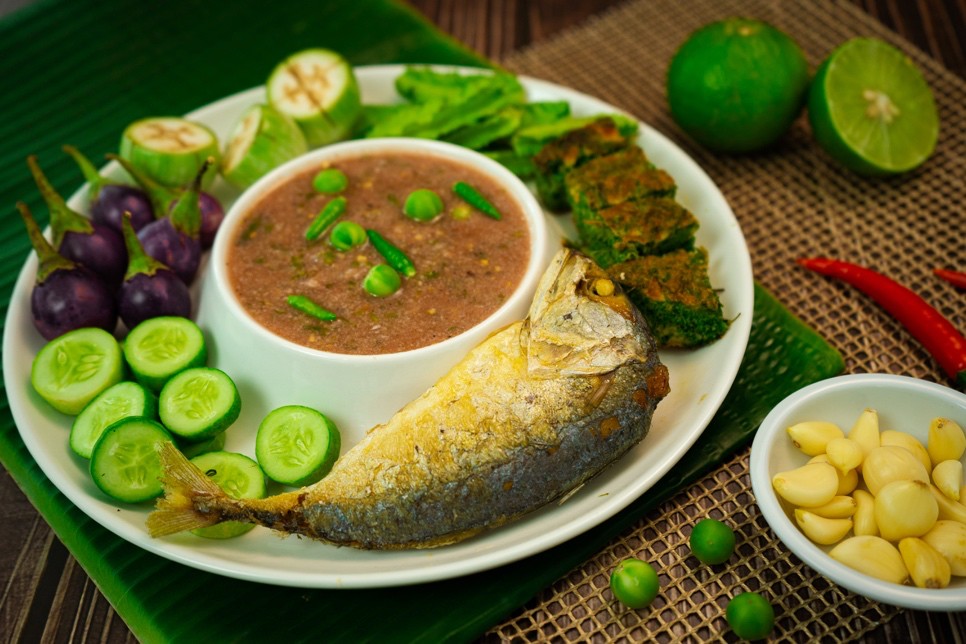 Photo Credit: https://bandtahnbuk.com/portfolio/shrimp-paste-chili-paste/
7. Nam Prik Kapi with vegetables and fish
Nam prik kapi is a pungent chili dip made from shrimp paste, garlic, chili, lime, and a little sugar. It is served with a large plate of fresh and blanched vegetables, such as cucumber, cabbage, long beans, eggplant, and wild greens, and usually with fish. In this dish, the vegetables are the main event and the dip is the seasoning, which makes it one of the easiest ways to eat a large amount of vegetables in a single Thai meal.
The dip itself is very salty, so use it the way it is intended, a little on each bite. The fish is traditionally short mackerel, pla tu, which is often deep-fried. If you can, choose grilled or steamed fish instead.
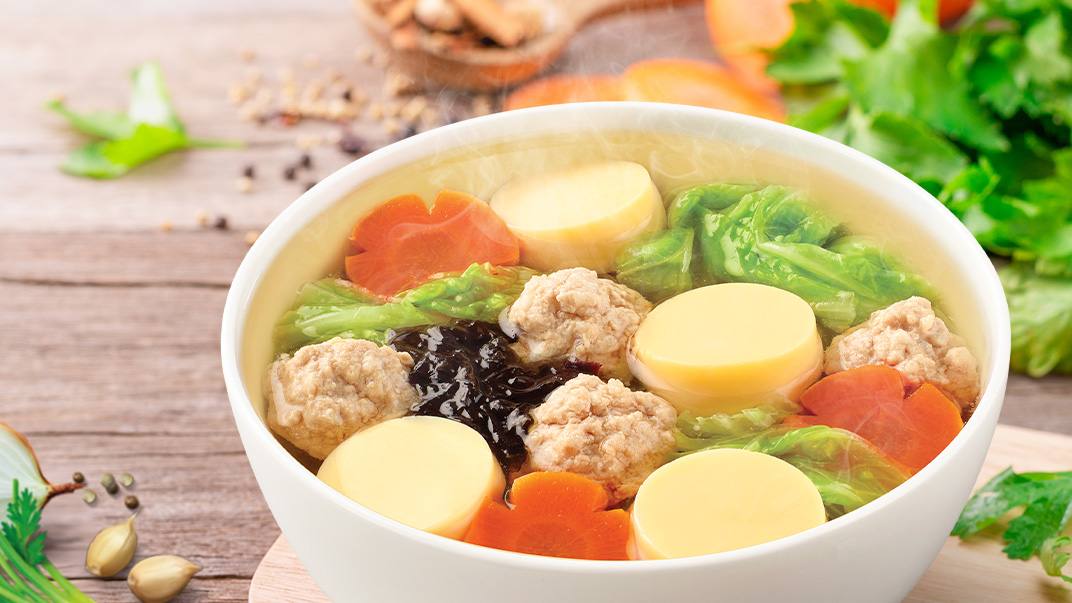
Photo Credit: https://www.knorr.com/th/r/แกงจืดเต้าหู้หมูสับ.html/242153
8. Kaeng Jued Tao Hu (clear tofu soup)
Kaeng jued, which literally means "bland soup," is the gentle opposite of tom yum. It is a clear broth with soft tofu, minced pork or chicken, and vegetables such as Chinese cabbage, glass noodles, or seaweed, seasoned lightly with garlic, pepper, and soy sauce. It is low in fat, easy to digest, and provides protein from both tofu and meat.
Thai families often serve kaeng jued alongside spicier dishes to balance a meal, and it is a common choice for children, older adults, and anyone recovering from illness. Because it is seasoned more lightly than most Thai dishes, it can be one of the lower-sodium options on a menu.
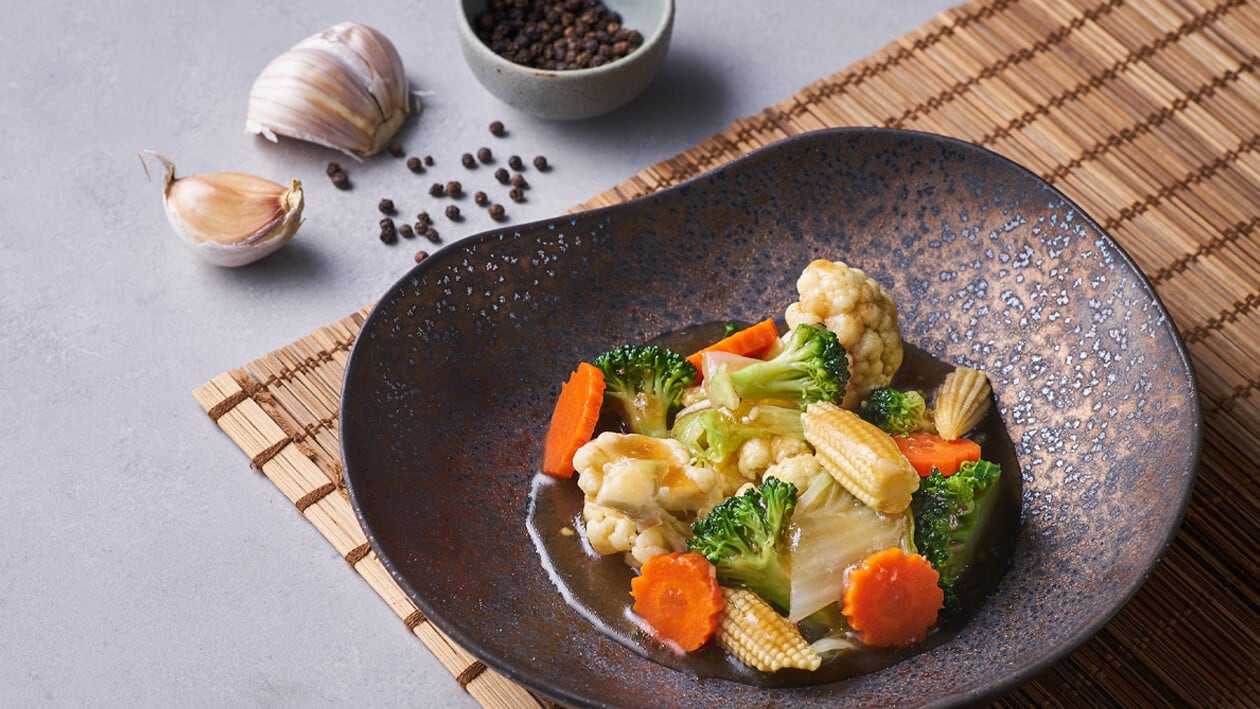 Photo Credit: https://www.unileverfoodsolutions.co.th/th/recipe/ผัดผักรวม-R0078276.html
9. Pad Pak Ruam (stir-fried mixed vegetables)
Pad pak ruam is a quick stir-fry of mixed vegetables, often broccoli, carrots, cauliflower, baby corn, mushrooms, and Chinese cabbage, cooked with garlic and a sauce of oyster sauce and soy sauce. It is one of the simplest ways to add a large portion of vegetables to a meal, and it works well as a shared side dish.
Stir-fries can absorb a lot of oil, and oyster sauce adds both sodium and sugar. Asking for less oil and less sauce, a request most Thai cooks are happy to accommodate, keeps this dish firmly in the healthy category.
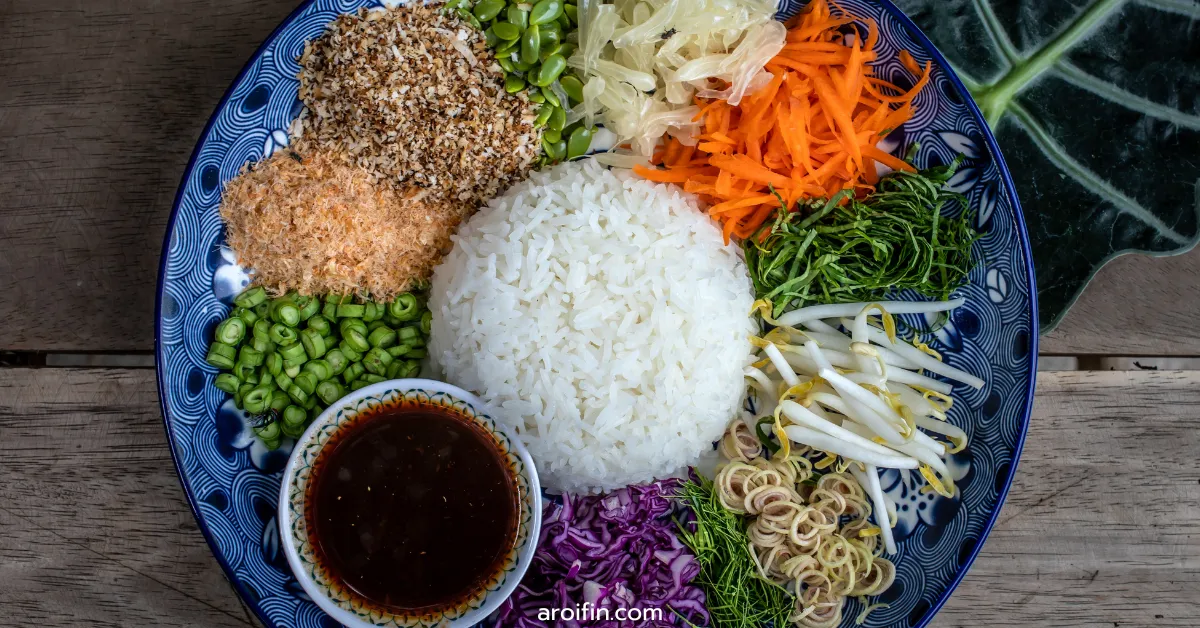 Photo Credit: https://aroifin.com/recipes/khao-yam-pak-tai-spicy-rice-salad/
10. Khao Yam (Southern Thai rice salad)
Khao yam is a colourful rice salad from southern Thailand. A small portion of rice is mixed with finely sliced lemongrass, kaffir lime leaves, green mango or pomelo, long beans, bean sprouts, toasted coconut, and dried shrimp, then dressed with budu, a fermented fish sauce. It is one of the most herb- and vegetable-dense dishes in Thai cuisine, with the rice acting more as a base than the main ingredient.
Budu is very salty, and the sodium survey above found that southern Thailand has the highest salt intake in the country. Add the dressing a little at a time, and let the herbs and sour fruit carry the flavour.
How to make almost any Thai meal healthier
A few habits make a bigger difference than choosing any single dish. Share several dishes instead of ordering one large plate, and make sure at least one of them is mostly vegetables. Choose steamed, boiled, or grilled dishes over deep-fried ones. Eat the solid ingredients of soups and curries and leave some of the broth, where much of the salt is. Keep rice portions moderate. And do not be shy about asking for changes: in Thai, mai wan means "not sweet," mai kem means "not salty," and nam man noi means "less oil." Most cooks will adjust a dish on request.
Also be careful with the condiment caddy on the table. The fish sauce with chili, sugar, and chili vinegar are meant to let each diner adjust flavour, but a few spoonfuls of fish sauce can add more sodium than the dish itself.
Frequently asked questions
Is Thai food healthy?
Much of it can be. Many Thai dishes are rich in vegetables, herbs, and lean protein, and are steamed, boiled, or grilled. The main concerns are high salt from fish sauce and other seasonings, saturated fat from coconut milk, and sugar in some sauces. Choosing the right dishes and asking for less salt and sugar makes a large difference.
Which Thai dishes are the least healthy?
Dishes made with a lot of coconut milk, such as green curry, massaman curry, and tom kha gai, are high in saturated fat. Deep-fried dishes and snacks, and stir-fried noodle dishes cooked with a lot of oil and sugar, are also high in calories. These can still be enjoyed occasionally, as part of a balanced meal.
Is fish sauce bad for you?
Fish sauce is not harmful in small amounts, but it is extremely salty. One tablespoon contains about 1,413 mg of sodium, around 70% of the WHO daily limit. Using it sparingly, and adding less at the table, is one of the most effective ways to make Thai food healthier.
Is it safe to eat raw larb or raw fish dishes in Thailand?
No, these are best avoided. Raw pork dishes have been linked to Streptococcus suis infection, which can cause meningitis and hearing loss, and raw freshwater fish can carry the liver fluke Opisthorchis viverrini, a recognised cause of bile duct cancer. Choose versions made with fully cooked meat or fish.
Is spicy Thai food good for your health?
It may be. A large Chinese study of nearly half a million adults found that people who ate spicy food almost every day had a 14% lower risk of death over about seven years. The study was observational, so it cannot prove cause and effect, and people with reflux or stomach problems may still need to limit chili.
So, what should you order?
You do not need to give up Thai food to eat well. You need to know which dishes do the work for you. A clear tom yum, a plate of steamed fish, a bowl of gaeng liang, and a shared plate of som tam or larb make a meal that is full of vegetables, herbs, and lean protein. The real question is not "Is Thai food healthy?" but "Which Thai dishes am I choosing, and how much salt am I adding to them?"
If you have a health condition such as high blood pressure, diabetes, or kidney disease, a dietitian can help you adapt Thai food to your needs. ArokaGO connects patients with healthcare providers across Thailand, and you can search for clinics and hospitals on ArokaGO that offer nutrition consultations and health check-ups.
References
- World Health Organization. Healthy diet. Fact sheet. Available from: https://www.who.int/news-room/fact-sheets/detail/healthy-diet
- World Health Organization. Guideline: sodium intake for adults and children. Geneva: WHO; 2012.
- Chailimpamontree W, Kantachuvessiri A, Aekplakorn W, et al. Estimated dietary sodium intake in Thailand: a nationwide population survey with 24-hour urine collections. J Clin Hypertens (Greenwich). 2021;23(4):744–754. doi:10.1111/jch.14147
- U.S. Department of Agriculture, Agricultural Research Service. FoodData Central: Fish sauce, ready-to-serve (FDC ID 174531). Available from: https://fdc.nal.usda.gov/food-details/174531/nutrients
- U.S. Department of Agriculture, Agricultural Research Service. FoodData Central: Coconut milk, raw (FDC ID 170172). Available from: https://fdc.nal.usda.gov/food-details/170172/nutrients
- Lv J, Qi L, Yu C, Yang L, Guo Y, Chen Y, et al. Consumption of spicy foods and total and cause specific mortality: population based cohort study. BMJ. 2015;351:h3942. doi:10.1136/bmj.h3942
- Rimm EB, Appel LJ, Chiuve SE, Djoussé L, Engler MB, Kris-Etherton PM, et al. Seafood long-chain n-3 polyunsaturated fatty acids and cardiovascular disease: a science advisory from the American Heart Association. Circulation. 2018;138(1):e35–e47. doi:10.1161/CIR.0000000000000574
- Takeuchi D, Kerdsin A, Pienpringam A, et al. Population-based study of Streptococcus suis infection in humans in Phayao Province in northern Thailand. PLoS One. 2012;7(2):e31265. doi:10.1371/journal.pone.0031265
- IARC Working Group on the Evaluation of Carcinogenic Risks to Humans. Biological agents. IARC Monographs on the Evaluation of Carcinogenic Risks to Humans, Volume 100B. Lyon: International Agency for Research on Cancer; 2012.
This article is for educational purposes only and does not replace advice from a qualified doctor or dietitian. People with high blood pressure, kidney disease, diabetes, or other health conditions should seek personal dietary advice.
ArokaGO
Share this article
More Articles
Discover more insights on health care and medical tourism.

Health Check-Up Packages in Thailand: Which Tests Are Worth It, and Which to Skip
Planning a health check-up in Thailand? What the evidence says about which screening tests help, which to skip, and how to choose a package that fits your age and risk.

Medical Wellness by Hertitude: Longevity Medicine at Aman Nai Lert Bangkok
On the 8th floor of Aman Nai Lert Bangkok, within the seven-acre green seclusion of Nai Lert Park in the heart of the city's Lumphini district, sits Medical Wellness by Hertitude Clinic a physician-led longevity and wellness practice built into one of Bangkok's most private luxury addresses. The clinic occupies part of the hotel's 1,500-square-metre Aman Spa & Wellness centre, positioned on its own floor alongside the Aman Spa above it, forming what the hotel describes as a seamless synthesis of advanced medical wellness and traditional Thai healing.

Genetic Testing for Cancer Risk: Understanding Your Inherited Blueprint for Prevention
Cancer develops through a complex combination of genetic, environmental and lifestyle factors. While behaviors such as smoking, alcohol consumption, diet, physical activity and exposure to certain harmful substances can influence cancer risk, inherited genetic variants can also make some individuals more susceptible to certain types of cancer.