Best Peptides for Weight Training: Boost Muscle Growth, Recovery & Fat Loss

Peptides are gaining attention in the fields of sports medicine, regenerative medicine, and wellness optimization. In recent years, they have been discussed for their potential role in supporting muscle recovery, improving metabolic efficiency, and assisting body composition goals for individuals engaged in weight training.
For athletes, fitness enthusiasts, or individuals undergoing structured training programs, peptides may support the body’s natural biological processes related to muscle repair, hormonal signaling, and tissue recovery.
This article introduces commonly discussed peptides in fitness and recovery contexts, along with their potential roles and considerations.
What Are Peptides and Why Are They Important for Fitness?
Peptides are short chains of amino acids that function as biological signaling molecules in the human body. Some peptides act similarly to hormones, helping regulate processes such as:
• Muscle protein synthesis
• Fat metabolism
• Tissue repair
• Hormonal balance
• Cellular communication
In the context of weight training, these biological effects may contribute to improved recovery, endurance, and body composition when combined with proper nutrition, sleep, and training programs.
Potential Benefits of Peptides in Weight Training
When used under appropriate medical supervision, certain peptides have been explored for their potential to:
• Support lean muscle development
• Improve fat metabolism
• Enhance recovery from training or injury
• Promote better sleep and hormonal balance
• Increase energy and endurance
However, individual responses vary, and professional medical guidance is essential.
Top Peptides Often Discussed in Fitness & Recovery
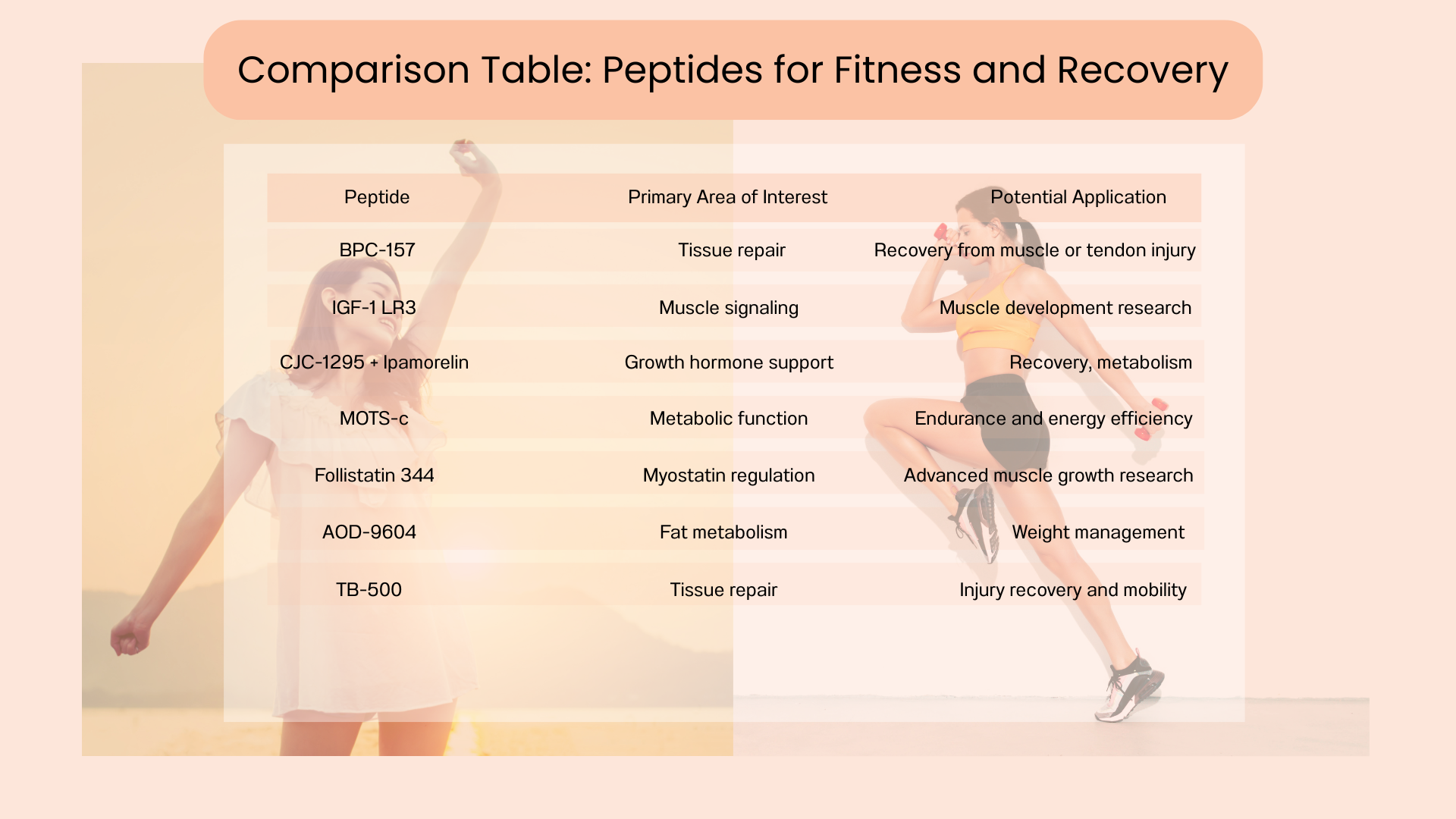
1. BPC-157 – The Recovery Peptide
Potential role: Injury recovery and tissue repair
BPC-157 has been studied for its potential ability to support healing of muscles, tendons, and ligaments. It is often discussed in sports medicine contexts for individuals dealing with repetitive training injuries.
2. IGF-1 LR3 – Muscle Growth Support
Potential role: Muscle growth signaling
IGF-1 LR3 is a synthetic form of Insulin-like Growth Factor-1, which plays a role in cellular growth and repair. It may influence muscle cell development and protein synthesis, although its use is typically restricted to clinical or research contexts.
3. CJC-1295 + Ipamorelin – Growth Hormone Support
Potential role: Hormonal regulation and recovery
This peptide combination is commonly associated with stimulating the body’s natural growth hormone release, which may support recovery, sleep quality, and metabolic function.
4. MOTS-c – Metabolic Efficiency
Potential role: Energy metabolism and endurance
MOTS-c is a mitochondrial peptide that has been studied for its influence on metabolic regulation and exercise adaptation, potentially helping the body use energy more efficiently during physical activity.
5. Follistatin 344 – Myostatin Regulation
Potential role: Muscle development research
Follistatin has been investigated for its ability to regulate myostatin, a protein that limits muscle growth. Because of its potential impact, its use is generally considered experimental and requires careful clinical oversight.
6. AOD-9604 – Fat Metabolism Support
Potential role: Body composition management
AOD-9604 is derived from a fragment of growth hormone and has been studied for its potential role in fat metabolism without affecting blood glucose levels.
7. TB-500 – Tissue Repair and Mobility
Potential role: Injury recovery and tissue regeneration
TB-500 is associated with cell migration and tissue repair, which may help support healing and flexibility for athletes recovering from musculoskeletal strain.
How to Use Peptides Safely
Peptides are generally administered via subcutaneous injection and should only be used under the supervision of a licensed medical professional.
Important safety considerations include:
• Individualized dosing protocols
• Medical screening and monitoring
• Avoiding unregulated or non-pharmaceutical sources
• Understanding potential regulatory restrictions in sports
Athletes competing professionally should also note that many peptides are restricted by anti-doping organizations such as WADA.
Where to Seek Medical Guidance
Individuals interested in peptide-based therapies should consult licensed healthcare providers experienced in regenerative medicine, sports medicine, or metabolic health.
Through platforms such as ArokaGO, international patients and expats can explore verified clinics offering wellness and regenerative medicine consultations in Thailand.
These providers can help evaluate whether a treatment plan aligns with an individual’s health status, training goals, and medical safety requirements.
Frequently Asked Questions
Are peptides legal for fitness use?
Some peptides are legally available only through medical prescription or clinical supervision. Regulations vary by country.
Are peptides safer than anabolic steroids?
Peptides often work by stimulating natural biological pathways, which may result in different risk profiles compared with anabolic steroids. However, safety depends on proper medical use.
Can peptides be used for fat loss?
Certain peptides have been investigated for metabolic support and body composition management, though they should not replace proper diet and exercise.
How quickly do peptides work?
Response time varies. Some individuals report noticeable effects after several weeks, while others require longer treatment protocols.
Final Thoughts
Peptides represent a developing area within sports medicine and regenerative health. When combined with structured training, proper nutrition, and medical supervision, they may offer potential support for recovery, metabolic health, and performance optimization.
Anyone considering peptide-based therapies should prioritize qualified medical consultation, evidence-based guidance, and regulated clinical environments.
Medical Disclaimer:
This article is for informational purposes only and does not constitute medical advice. Always consult a qualified healthcare professional before starting any new medical or wellness treatment.
Source :Siam Clinic Thailand
Siam Clinic Phuket
Share this article
More Articles
Discover more insights on health care and medical tourism.

Top 4 Romantic Beachfront Resorts in Samui with Private Pool Villas
Discover the top 4 romantic beachfront resorts in Samui with private pool villas. Explore luxury retreats like Melati Beach Resort & Spa and Chaweng Regent.

MTF Gender Affirmation Surgery at Asia Cosmetic Hospital: Options, Preparation, and Recovery
Choosing male-to-female gender affirmation surgery involves more than selecting a technique or scheduling an operation. Understanding the potential outcomes, limitations, risks, and aftercare can help you consider whether treatment fits your goals and circumstances.

9 Plastic Surgery Hospitals and Aesthetic Centers in Thailand to Explore on ArokaGO
Finding a plastic surgery hospital in Thailand often begins with a procedure in mind: a facelift, breast lift, rhinoplasty, or body contouring. Choosing where to receive treatment, however, involves more than reviewing photographs and comparing prices. Surgeon qualifications, treatment options, the actual treatment location, and postoperative care all deserve attention.