How to Overcome Chronic Pain After an Accident

Have you ever felt that your life changed from the day you were injured? Pain that lingers for years can make you afraid to do the things you love, hesitant to exercise and sometimes even walking becomes difficult.
Today, we share a real-life story of a 64-year-old woman who endured chronic pain for four years after an accident, and how she was able to reclaim her life with modern medical rehabilitation. Her journey may offer hope and inspiration for anyone currently struggling with chronic pain.
The Day Life Changed
A woman enjoying her retirement who loved gardening, caring for plants, and spending time on her favorite hobbies saw everything change on the day of the accident.
About four years ago, she slipped and fell in her bathroom, instinctively bracing herself with her left hand. At the time, she thought it was just a minor fall. She never imagined it would mark the beginning of a four-year nightmare.
Symptoms That Began to Take Over Her Life
Two days after the fall, symptoms became clearly apparent. She found herself unable to step with her left foot, her left hand was severely swollen and extremely painful, and most frightening of all she could not make a fist at all.
She visited multiple clinics and tried many treatments, including massage, acupuncture, and conventional physical therapy. Nothing helped. Her symptoms gradually worsened. Six months passed. One year. Two years. Eventually, four full years went by.
A Life Put on Hold
Over those four years, she could no longer return to her beloved garden, could not walk for exercise, and struggled to use her left hand. Even simple daily activities became difficult.
Her body began to decondition from prolonged inactivity. Muscles weakened, confidence faded, and worst of all, her hope of returning to a normal life slowly disappeared.
A Diagnosis That Changed Everything
When she arrived at the clinic, the rehabilitation medicine team did not rush to conclusions or begin treatment immediately. Instead, they conducted a thorough and comprehensive evaluation.
Key Findings
After careful assessment, the doctors discovered that her condition was not limited to the original injury site, but involved multiple systems:
- Chronic pain syndrome: Although initially related to the injury, the pain had evolved into a complex chronic condition. The nervous system continued to transmit pain signals even though the original tissues had likely healed.
- Myofascial trigger points in the hip and arm: These developed as the body compensated for pain. Overworked muscles became tight, formed painful knots, and referred pain to other areas.
- Deconditioning: Long-term inactivity led to muscle weakness, impaired balance, and fear of movement (kinesiophobia).
This comprehensive diagnosis allowed the medical team to design a precise and effective treatment plan.
Modern Technology for Rehabilitation
At PYONG Rehabilitation Clinic, physicians created a personalized treatment program using two advanced medical technologies.
1. Dry Needling: Precision Western Medical Needling
Dry Needling is entirely different from traditional Chinese acupuncture. It is based on modern anatomy and physiology.
Simple Explanation
When muscles are injured or overused, certain fibers tighten and form painful knots known as trigger points. These knots cause local pain and referred pain, forcing surrounding muscles to overcompensate and creating further problems.
Dry Needling uses fine needles inserted directly into these trigger points. When the needle hits the correct spot, the muscle produces a local twitch response, indicating that the muscle is releasing.
Deep Healing Mechanisms
Dry Needling works not only on muscle relaxation but also at the cellular level:
- Improves blood circulation, delivering oxygen and nutrients
- Flushes out inflammatory substances
- Stimulates the body’s natural healing processes
- Modulates nerve signaling, reducing pain perception
Treatment Outcome
Dry Needling was applied to trigger points in her hip and arm. From the very first session, she felt noticeable improvement. Her previously immobile hand began to regain flexibility.
2. Peripheral Magnetic Stimulation (PMS): Electromagnetic Therapy
PMS is a highly advanced, non-invasive technology used to treat deep-seated pain.
How It Works
PMS generates a powerful magnetic field that induces electrical currents within body tissues without touching the skin and without causing pain.
These currents:
- Stimulate rhythmic muscle contractions to restore strength
- Improve nerve function and signal transmission
- Enhance blood flow for tissue repair
- Reduce inflammation by regulating inflammatory mediators
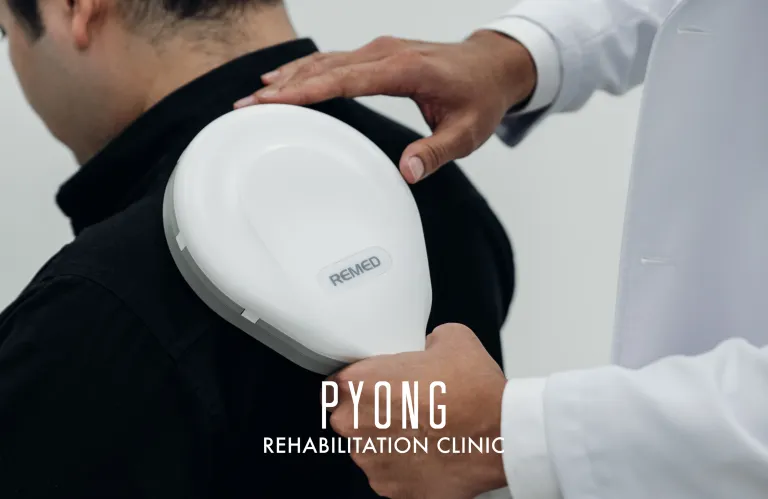
Key Advantages
- Pain-free: Patients feel only gentle rhythmic muscle contractions
- No side effects: No skin irritation
- Immediate results: Many patients feel improvement right away
- Deep penetration: Reaches tissues other methods cannot
Treatment Outcome
PMS was applied to her hip and arm. Muscle strength improved, nerve function normalized, and pain decreased significantly.
Results That Brought Her Life Back
With her personalized treatment plan, she experienced changes she once thought impossible.
Continuous Improvement
- Significant pain reduction: The pain that tormented her for four years gradually subsided.
- Functional recovery of her left hand: She could once again move and make a fist, regaining independence in daily activities.
- Return to exercise: She was able to walk on a treadmill for up to 5 kilometers—something she never imagined she could do again.
- Back to gardening: Most meaningful of all, she returned to the activity she loved and missed for four years.
A Deeper Transformation
Beyond physical recovery, she regained:
- Confidence to move without fear
- Hope for a normal life
- Independence in daily living
- A dramatically improved quality of life, both physically and mentally
Why Is Chronic Pain So Difficult to Treat?
Her story highlights why chronic pain is complex and requires targeted treatment.
The Vicious Cycle of Chronic Pain
- Avoidance of movement due to fear of pain → muscle weakness and atrophy
- Compensation by other muscles → overuse and new pain
- Abnormal nerve signaling → the nervous system “remembers” pain (central sensitization)
- Physical deconditioning → fatigue, weakness, and higher injury risk
- This cycle repeats and becomes increasingly difficult to break.
Why Conventional Treatments Often Fail
Massage, heat therapy, or pain medications may provide temporary relief, but they do not address the root causes:
- Trigger points remain
- Muscle weakness persists
- Nervous system dysfunction is not corrected
This is why advanced technology and specialized physicians are essential.
Who Should Consider This Type of Treatment?
- People with chronic pain after accidents (falls, car accidents, sports injuries)
- Post-surgical patients with lingering pain or delayed recovery
- Older adults with muscle weakness or limited mobility
- Office workers with long-standing pain (e.g., office syndrome)
- Athletes with recurring injuries
Warning Signs Not to Ignore
- Pain lasting longer than 3 months
- Multiple treatments with no improvement
- Pain affecting daily life
- Muscle weakness or reduced mobility
- Radiating pain, numbness, or fear of movement
- Early treatment leads to faster and more sustainable recovery.
Why Choose PYONG Rehabilitation Clinic?
The difference lies in approach and quality of care.
Physician-Led Care at Every Step
All assessments, diagnoses, and treatments are performed by rehabilitation medicine physicians, specialists in musculoskeletal and neurological conditions—not assistants.
Physicians can:
- Identify the true underlying causes
- Adjust treatment plans dynamically
- Prescribe medications when necessary
- Refer to other specialists if needed
A Holistic Approach
The team looks beyond pain alone—considering your body, lifestyle, and daily activities to ensure long-term recovery and prevent recurrence.
We believe the best care is precise, efficient, and sustainable.
Source: PYONG REHABILITATION CLINIC & PENTHOUSE
Arokago Providers Pyong Rehabilitation Group
**Translated and compiled by ArokaGO Content Team
Pyong Rehabilitation Group
Share this article
More Articles
Discover more insights on health care and medical tourism.

Best Hotel in Thailand for Medical and Wellness Travelers
Thailand is one of the world’s most attractive destinations for medical tourism, wellness travel, recovery stays, and health-focused holidays. For international travelers, choosing the best hotel in Thailand is not only about luxury or location. It is also about comfort, privacy, accessibility, wellness facilities, and the ability to support a smooth healthcare journey.

“Monkeypox” Currently Spreading in Thailand: A Thai Traditional Medicine Perspective
In today’s world, where we continue to face the spread of emerging and re-emerging infectious diseases such as monkeypox, understanding diseases through multiple perspectives can help us respond more comprehensively. Although classical Thai traditional medical texts do not directly describe “viruses,” as this body of knowledge was developed before the scientific discovery of microorganisms, the symptoms and characteristics of this disease can still be meaningfully interpreted through ancient Thai medical theory.

Wellness Tourism in Thailand | Why Travelers Come for More Than a Holiday
When people think about Thailand, beaches, street food, temples, and vibrant city life usually come to mind. But in recent years, something has changed. More travelers are arriving with a different purpose — not only to explore, but to improve their wellbeing, reduce stress, undergo preventive health screening, or simply take better care of themselves.