Lazy Rehab: Fix Upper Crossed Syndrome

Reset Your Body from Forward Head Posture and Rounded Shoulders
Have you ever noticed your posture while working?
When we sit for long periods, especially while using computers or phones, our body gradually shifts into a C-shaped posture
๐ Forward head posture
๐ Rounded shoulders
๐ Hunched upper back
๐ Protruding abdomen
This position causes:
๐ Tight chest muscles, leading to shallow breathing
๐ Overworked upper back and shoulder blade muscles
๐ Increased risk of office syndrome
What Is Bruegger’s Relief Position (Lazy Rehab)?
Bruegger’s Relief Position is a simple corrective exercise that targets the root causes of Upper Crossed Syndrome.
๐ Release tight neck and chest muscles
๐ Activate and strengthen upper back muscles
๐ Improve posture alignment
๐ Reduce shoulder rounding
How to Perform Bruegger’s Relief Position
Follow these steps:
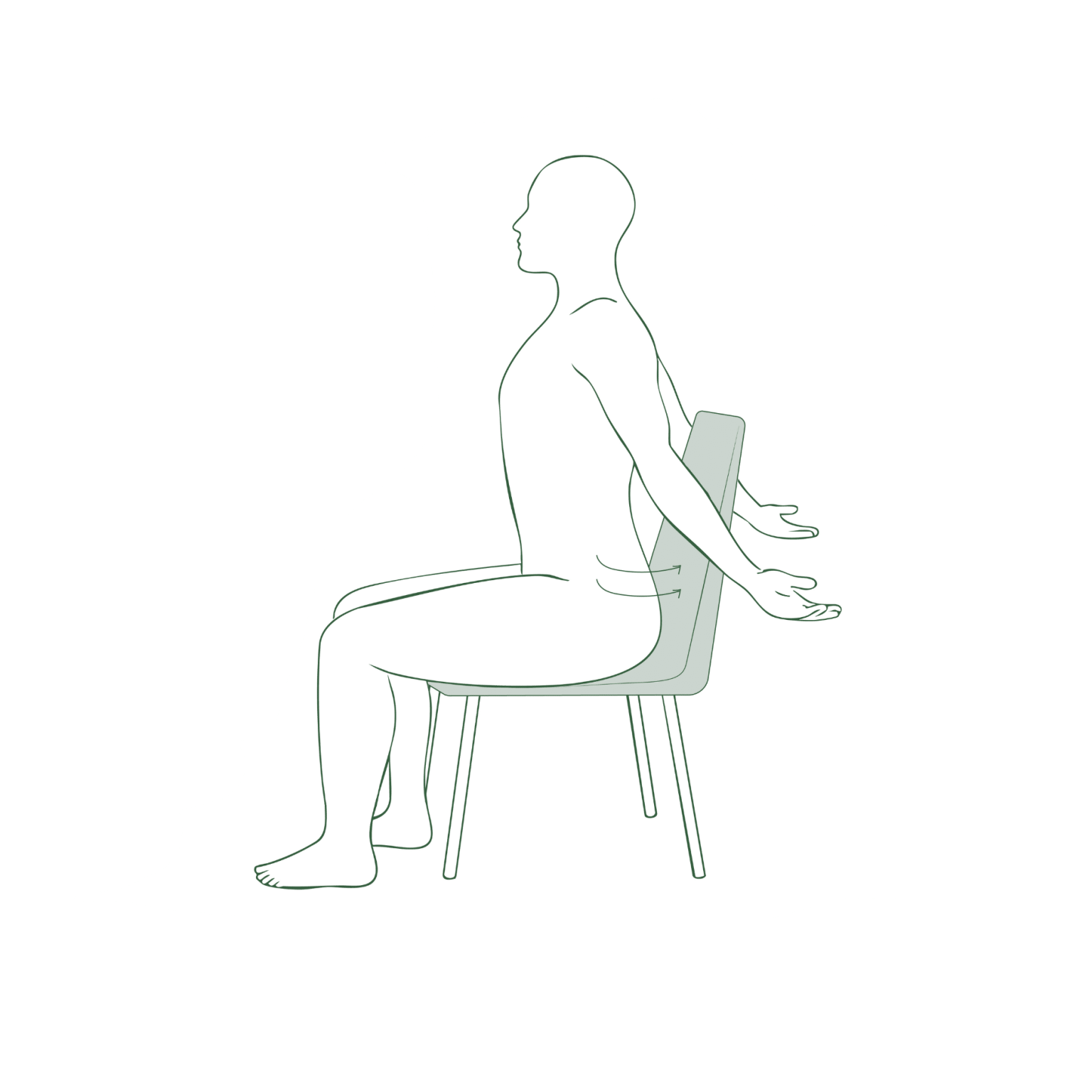
1. Sit at the edge of a chair, placing weight on your sitting bones
2. Slightly spread your legs, with toes pointing outward
3. Lengthen your spine (axial extension) and sit upright
4. Turn your palms upward and rotate your arms outward (external rotation), with thumbs pointing backward
5. Squeeze your shoulder blades together and gently pull them downward
6. Perform a chin tuck-draw your head back in line with your shoulders
7. Take a deep diaphragmatic breath and hold for 30 seconds
How It Works
This exercise is based on the principle of Reciprocal Inhibition
When you activate the upper back muscles and externally rotate the arms:
๐ Tight chest muscles are automatically relaxed
๐ Overused shoulder muscles are stretched and relieved
Why You Should Do It Daily
Practicing this position regularly helps your brain relearn what proper posture feels like. Over time, it can:
๐ Reduce chronic neck and shoulder pain
๐ Improve breathing efficiency
๐ Prevent long-term postural problems
๐ Enhance overall body alignment
Conclusion
Bruegger’s Relief Position (Lazy Rehab) is a highly effective, time-efficient exercise that can help correct posture and relieve discomfort caused by modern sedentary lifestyles.
source :
Arokago Providers Pyong Rehabilitation Group
**Translated and compiled by ArokaGO Content Team
Pyong Rehabilitation Group
Share this article
More Articles
Discover more insights on health care and medical tourism.

Parkinson Freezing of Gait: How Neurorehabilitation Supports Safer Walking
Freezing of gait is one of the most disruptive mobility symptoms associated with Parkinson’s disease. A person may intend to step forward but suddenly feel as though the feet are glued to the floor. The episode may last only seconds, yet it can interrupt daily routines, increase fall risk, and make the person afraid to walk independently. Medication review is important, but many patients also benefit from neurorehabilitation that addresses gait, balance, strength, turning, environmental triggers, and practical strategies for overcoming an episode safely.

Facet Joint Injection Aftercare: How to Reduce Recurring Spine Pain After Treatment
A facet joint injectionmay reduce pain arising from selected joints in the neck or lower back, but symptom relief does not automatically correct the movement, strength, or daily-load factors that may be contributing to the problem. The period of reduced pain can provide an opportunity to reassess movement and begin rehabilitation more comfortably. The objective is not to test the spine with as much activity as possible. It is to use the improvement carefully, rebuild capacity, and learn which factors may be linked to recurrence.

Stroke Recovery at Home vs. Intensive Clinic-Based Neurorehabilitation: How to Choose
After a stroke, families often need to decide whether rehabilitation should continue at home or in a specialised clinic. The right answer depends on medical stability, disability, therapy goals, caregiver support, safety, transport, and the intensity of treatment the patient can tolerate. Home and clinic-based rehabilitation are not competing ideas. Many patients move between them at different stages. The important question is which setting can currently provide the safest and most effective level of assessment, repetition, coordination, and support.