Severe Drug Allergy: Recognize the Symptoms Before It's Too Late

Drug allergies are not far-fetched; they can occur in people of all genders, ages, and types of medications. It is important to observe oneself closely to seek medical attention promptly because if an acute drug allergy is not treated quickly, it can be life-threatening.
What is a Drug Allergy
Drug Allergy (Drug Allergy) is a reaction of the body that responds excessively to medication, not caused directly by the drug’s effect but due to the immune system recognizing the drug as a foreign substance, leading to abnormal symptoms such as rash, itching, facial swelling, difficulty breathing, skin peeling, and inflammation of the mucous membranes in the eyes or mouth. In severe cases, it may lead to a serious shock requiring immediate medical attention. These abnormalities usually occur after receiving medication, with commonly involved drugs including antibiotics, anti-inflammatory painkillers, and anticonvulsants.
Types of Drug Allergies
Drug allergies are classified according to the reaction and symptoms as follows:
1. Immediate-Type Drug Allergy (Immediate - Type Drug Allergy) typically occurs within minutes to 6 hours after receiving the suspected drug. Symptoms often include hives, swelling of the mouth or face, and may affect other systems such as breathing difficulties, chest tightness, abdominal pain, vomiting, diarrhea, dizziness, fainting, and unconsciousness if not treated promptly, which can be life-threatening.
2. Non-Immediate-Type Drug Allergy (Non - Immediate Type Drug Allergy) occurs after receiving a drug from 1 day to 60 days (in certain allergic reactions). This type of reaction is often mistaken for a newly started drug or one taken consecutively for months. Symptoms range from widespread red rash to severe cases causing oral and throat soreness, sore eyes, skin peeling, fever, hepatitis, nephritis, pneumonia, or total skin peeling, blindness, or potentially life-threatening situations.

Why It’s Important to Confirm Drug Allergy
Many people believe they are allergic to drugs without confirmed testing, leading to avoidance of necessary medications in the future. In reality, rashes may result from other causes such as viral or bacterial infections or from receiving multiple medications simultaneously. In such cases, the patient might be allergic only to anti-inflammatory drugs or just one type of antibiotic. However, the patient has to document all allergic histories, leading to missed opportunities for necessary medications in the future. For example, if one contracts a bloodstream infection, they might need to avoid effective antibiotics and have to opt for less effective alternatives. Similarly, in acute coronary syndrome patients, missing the most effective antiplatelet drugs could be detrimental. Diagnostic tests help identify the causative drug or even eliminate the possibility of actual allergies, allowing the use of necessary future medications. If confirmed, alternative drugs may be considered, especially in cases where cross-allergies are common among certain antibiotics.
How to Diagnose Drug Allergies
Doctors will decide on a diagnostic method based on whether the patient’s drug allergy history indicates immediate or non-immediate reactions depending on the patient’s history.
1) Diagnosing Immediate-Type Drug Allergy involves the following methods:
- Skin Prick Test (Skin Prick Test) involves placing a specially prepared concentrated drug on the skin and pricking it to observe reactions such as redness, swelling, and itching.
- Intradermal Skin Test (Skin Intradermal Test) If no reaction is observed in the skin prick test, the drug is injected intradermally in special preparations to observe reactions such as redness, swelling, and itching.
- Drug Provocation Test (Drug Provocation Test) This method is considered by specialists if no reactions are found after skin prick and intradermal tests. It involves careful monitoring and administration of small doses of the drug to confirm current non-allergic status towards the drug.
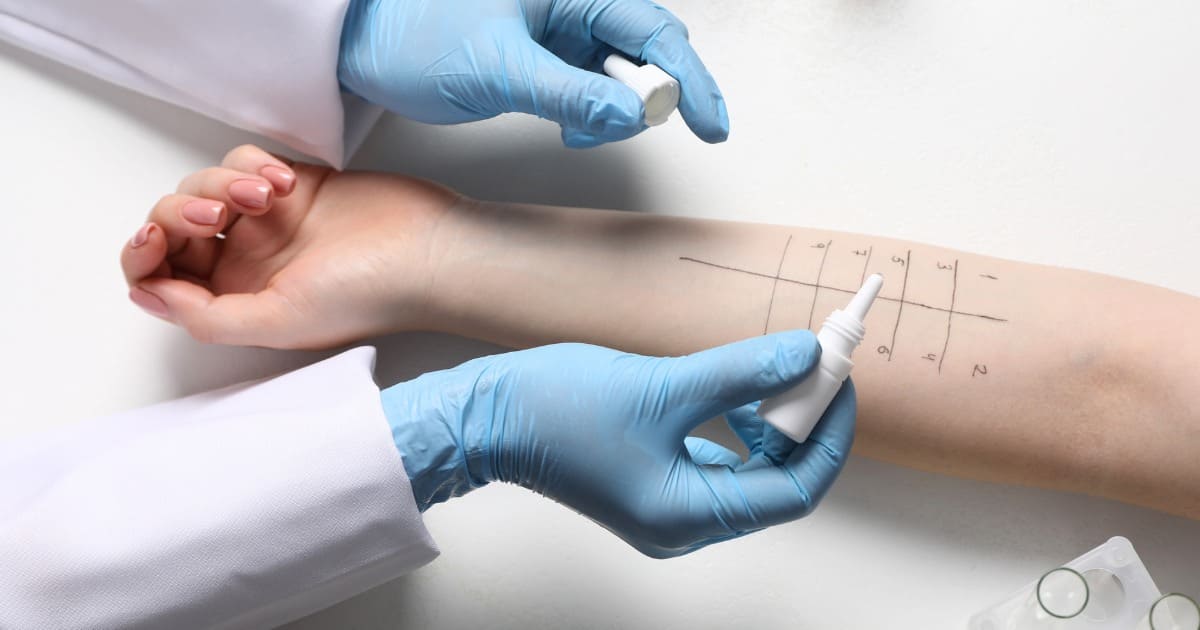
2) Diagnosing Non-Immediate-Type Drug Allergy involves the following methods:
- Delayed Intradermal Reading involves 2 - 3 day assessment after Skin Intradermal Test. The drug is intradermally injected in specially prepared concentrations and assessed for redness, swelling, or itching 2 - 3 days later.
- Patch Test involves applying the suspected drug on the skin for about 2 days and reading the reaction afterward. The patient needs to avoid water during this period before evaluation for redness, swelling, or itching.
- Blood Test for Drug-Induced Inflammation (Blood Test such as ELISPOT, Lymphocyte Transformation Test) is an off-site patient test requiring timely blood collection and drug-specific assessment. Sensitivity ranges from 50 - 70 percent depending on the drug type.
- Drug Provocation Test (Drug Provocation Test) is considered by the physician and patient after no reactions are found in previous tests. The test involves progressively administering drugs over a 3 - 5 day period under close supervision based on patient’s allergic response. If reactions are absent, current non-allergic status to the drug is confirmed.

The Benefits of Diagnosing Drug Allergies
- Patients can use effective and necessary medications.
- Avoid unnecessarily strong medications or those with more side effects.
- Reduce the risk of drug-resistant bacteria, complicating treatment.
What to Do When It’s Necessary to Use an Allergic Drug Without Alternatives
If necessary, a physician treating the patient must consult an allergy specialist to weigh pros and cons, including risks associated with the drug. If no alternatives exist, and it is crucial to treat with the allergic drug, an allergy specialist may conduct a procedure called Drug Desensitization. This involves gradual administration over several hours with pre-procedural allergic medication to mitigate risks. Patients are closely monitored, and any reaction is swiftly addressed. Physicians will discuss with patients to proceed to achieve therapeutic levels. This temporary desensitization implies that discontinuing the drug might revert allergic symptoms. Examples include using antiplatelet drugs in heart conditions despite allergies, antibiotic needs in severe bloodstream infections, or unchangeable chemotherapy regimens despite reactions.
What to Do When Experiencing Drug Allergy Symptoms
- Stop the drug immediately and seek medical attention if a drug allergy is suspected.
- Always inform healthcare providers about any drug allergy history before receiving medication.
-Carry an allergy card for safety in emergencies.
Recommended Hospitals for Treating Drug Allergies
Bangkok Hospital’s Allergy and Asthma Center offers comprehensive evaluations, diagnostics, and closely monitored care for drug allergy patients, providing accurate consultations and knowledge with a team of specialized and experienced physicians to enhance patient quality of life.
Reference :
Bangkok Hospital Severe Drug Allergy: Recognize the Symptoms Before It's Too Late
Independent Writer
Share this article
More Articles
Discover more insights on health care and medical tourism.

9 Plastic Surgery Hospitals and Aesthetic Centers in Thailand to Explore on ArokaGO
Finding a plastic surgery hospital in Thailand often begins with a procedure in mind: a facelift, breast lift, rhinoplasty, or body contouring. Choosing where to receive treatment, however, involves more than reviewing photographs and comparing prices. Surgeon qualifications, treatment options, the actual treatment location, and postoperative care all deserve attention.

The Thailand Effect Is Real? Foreign Travellers Say Yes and Share Their “Cure”
Thailand Effect meaning, post Thailand depression, post Thailand blues, miss Thailand after vacation, Thailand travel, post vacation blues, Thailand tourism, travel wellness Thailand

Vegetarian Festival 2026 in Thailand: How to Enjoy Jay Food the Healthy Way
Visiting Thailand during the Vegetarian Festival 2026? Learn what jay food is, what to choose at food stalls, and how to enjoy plant-based eating more healthily.