
Thailand Advances Cancer Radiation Therapy with Proton Technology and Stronger Safety Standards
Thailand is advancing its cancer treatment capabilities through modern radiation therapy technologies, including linear accelerators and proton therapy, while strengthening radiation safety oversight to protect patients, healthcare professionals and the public, according to the Office of Atoms for Peace (OAP).
Thailand is advancing its cancer treatment capabilities through modern radiation therapy technologies, including linear accelerators and proton therapy, while strengthening radiation safety oversight to protect patients, healthcare professionals and the public, according to the Office of Atoms for Peace (OAP).
Thailand continues to develop its cancer treatment infrastructure with advanced radiation therapy technologies designed to improve treatment precision and reduce unnecessary radiation exposure to surrounding healthy tissues.
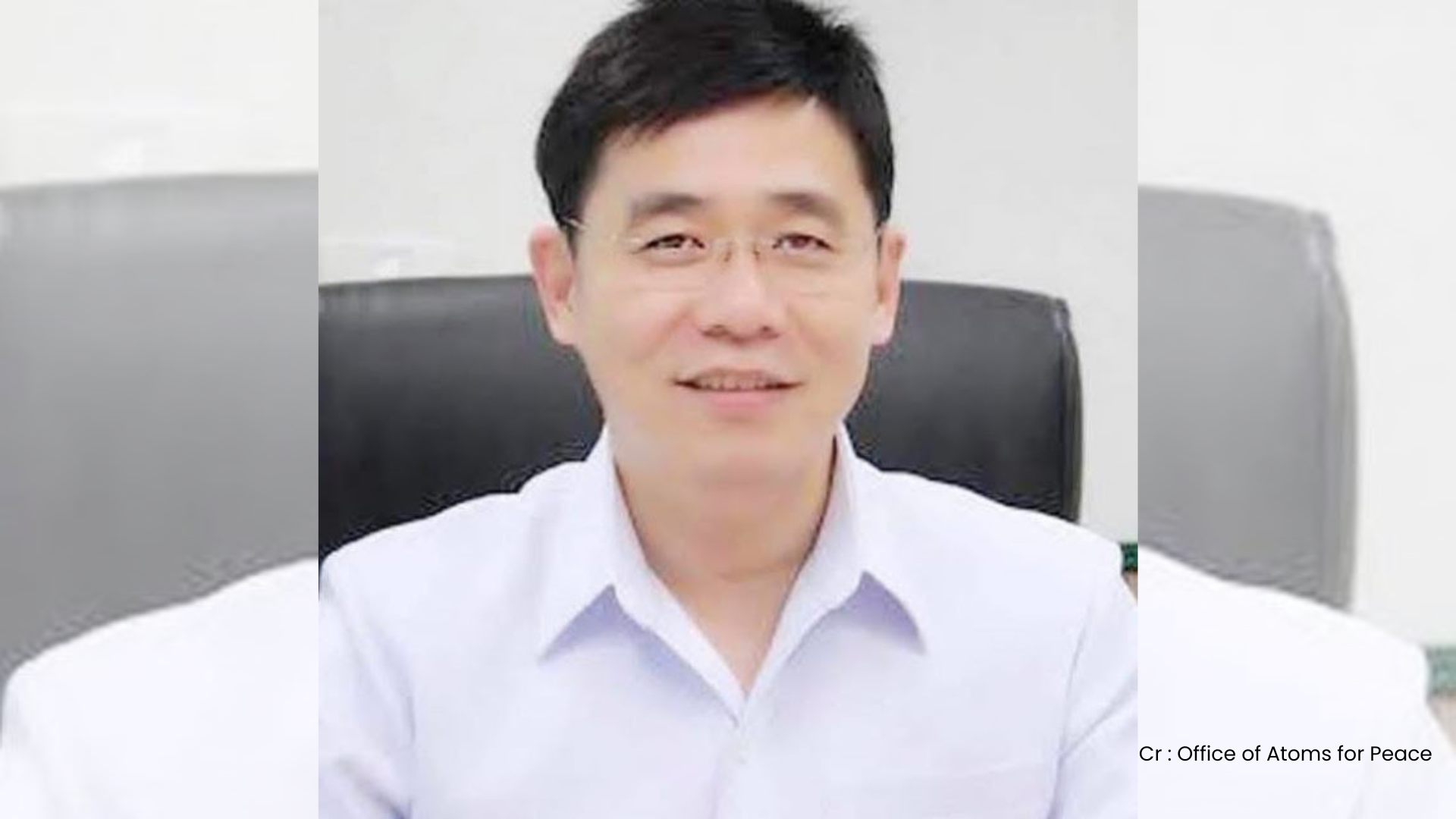
In an article published on October 18, 2026, Dr. Rungrueng Kitphati, Secretary-General of the Office of Atoms for Peace (OAP), highlighted the country's progress in adopting modern radiotherapy equipment alongside regulatory measures intended to maintain safety standards.
The developments reflect Thailand's efforts to expand access to advanced cancer treatment while ensuring that medical radiation technologies are operated under appropriate regulatory oversight.
Thailand Expands Access to Modern Cancer Radiation Therapy
Radiation therapy is one of the principal treatment approaches for cancer, alongside surgery and systemic therapies.
It uses ionizing radiation to damage the DNA of cancer cells, preventing them from multiplying and ultimately destroying or controlling tumors.
Modern radiotherapy systems allow medical teams to deliver carefully planned radiation doses to cancerous tissues while limiting exposure to nearby healthy organs.
According to the OAP, Thailand has adopted several advanced technologies that improve the precision and delivery of cancer radiation treatment.
Two important developments are the widespread use of linear accelerators and the introduction of proton therapy.
Linear Accelerators Become a Mainstay of Cancer Treatment
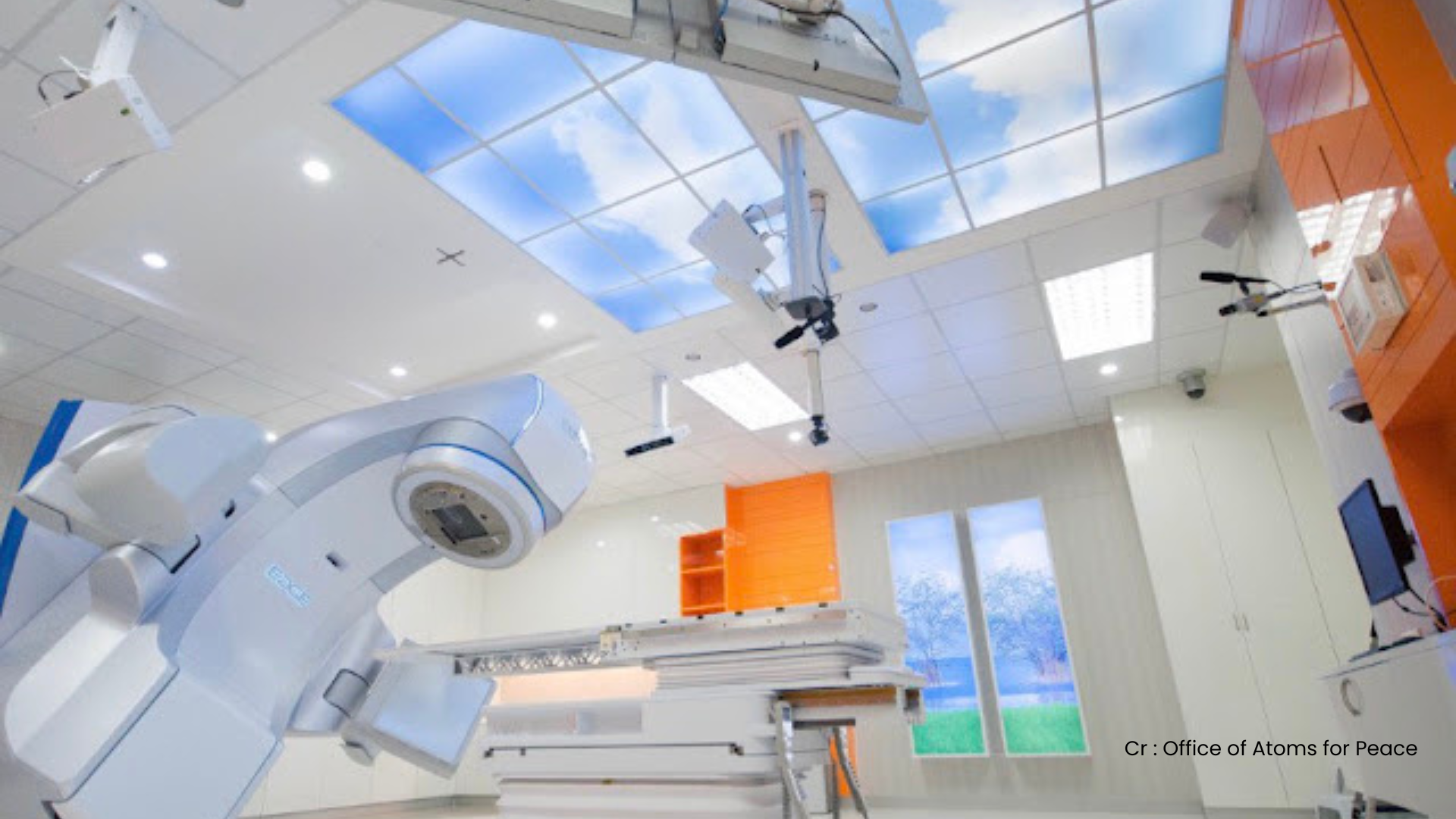
Linear accelerators, commonly known as LINACs, are widely used in modern external beam radiation therapy.
These machines use electrical energy to accelerate electrons, which can be used directly for treatment or directed at a metal target to produce high-energy X-rays.
Unlike radiotherapy systems that rely on sealed radioactive sources, LINACs generate their therapeutic radiation beams during operation.
Modern LINAC systems can also support sophisticated treatment techniques, including:
-
Intensity-Modulated Radiation Therapy (IMRT): Adjusts radiation intensity across treatment fields to conform more closely to the tumor.
-
Volumetric Modulated Arc Therapy (VMAT): Delivers radiation while the treatment machine rotates around the patient, allowing complex dose distributions.
These techniques can help radiation oncology teams shape radiation doses around tumors and reduce exposure to selected healthy tissues.
According to the OAP, LINAC technology is available across multiple regions of Thailand through public hospitals, university medical centers and private healthcare institutions.
Facilities identified in the article include Siriraj Hospital, Ramathibodi Hospital, King Chulalongkorn Memorial Hospital and university hospitals affiliated with Chiang Mai University, Khon Kaen University and Prince of Songkla University.
The National Cancer Institute and regional hospitals under the Ministry of Public Health are also part of Thailand's radiotherapy service network.
Proton Therapy Brings Advanced Cancer Treatment to Thailand
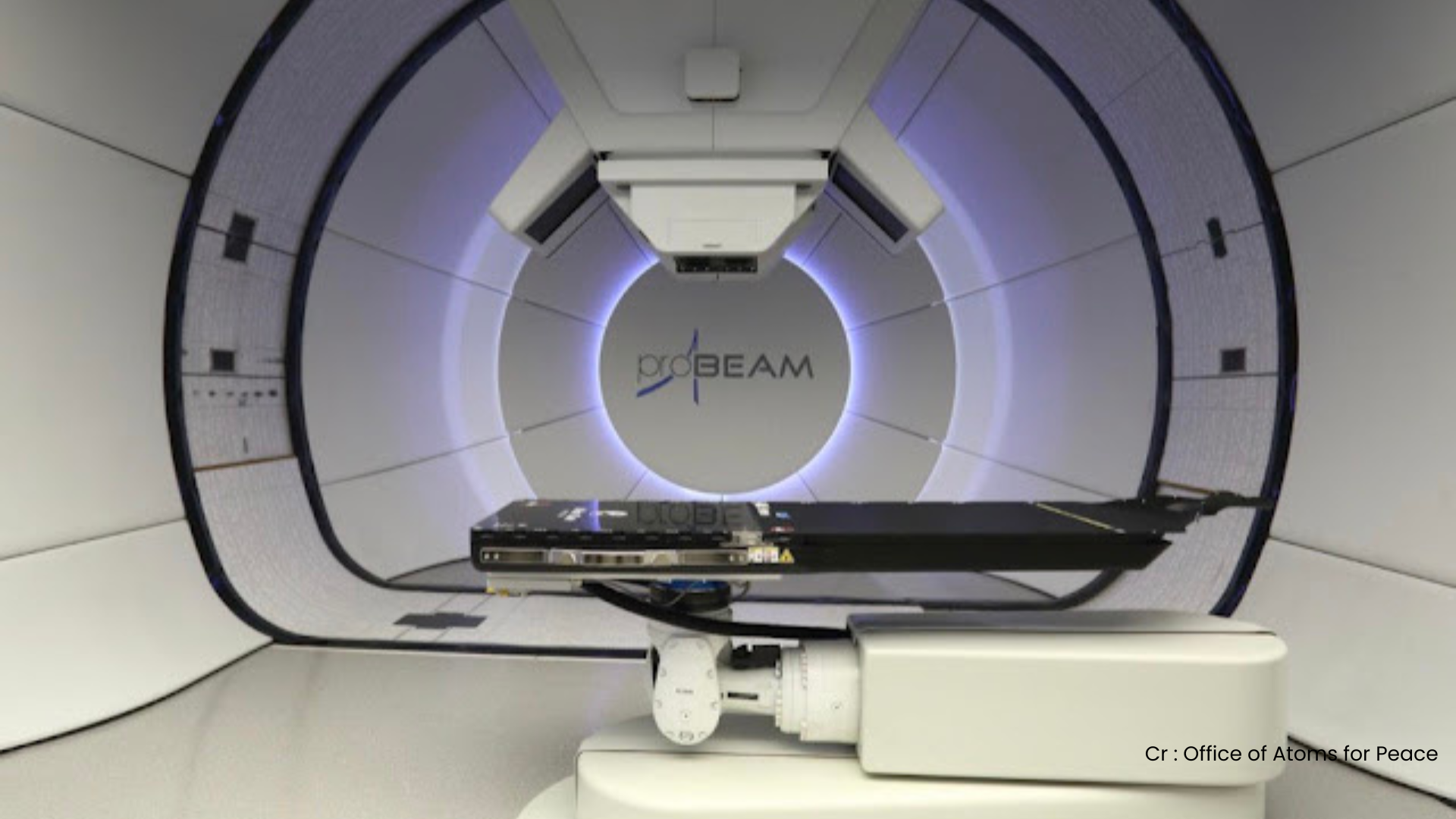
One of Thailand's most significant developments in radiation oncology is the introduction of proton beam therapy.
Unlike conventional photon radiotherapy, which uses high-energy X-rays, proton therapy uses charged particles to deliver radiation to tumors.
Its defining physical characteristic is the Bragg peak, which allows proton beams to deposit much of their energy at a controlled depth.
This property can reduce radiation exposure beyond the targeted treatment area.
Proton therapy may be particularly valuable in selected cases where tumors are located near sensitive organs or where reducing radiation exposure to healthy tissues is especially important.
Potential applications include certain pediatric cancers and tumors close to critical structures such as the brain and spinal cord.
However, proton therapy is not necessarily the best treatment for every cancer. Its suitability depends on the tumor type, location, treatment objectives and individual clinical circumstances.
Thailand's Proton Therapy Center at King Chulalongkorn Memorial Hospital
According to the OAP, Thailand's proton therapy service is provided through the Her Royal Highness Princess Maha Chakri Sirindhorn Proton Center at King Chulalongkorn Memorial Hospital, operated by the Thai Red Cross Society.
The OAP identifies the facility as Thailand's first proton therapy center and the first of its kind in Southeast Asia.
The center represents an important addition to the country's specialized cancer treatment infrastructure.
Its availability enables selected patients to access proton therapy within Thailand, subject to clinical assessment and treatment eligibility.
Thailand Transitions Away from Cobalt-60 Radiotherapy Systems
The OAP also highlighted Thailand's transition from older cobalt-60 teletherapy equipment toward modern linear accelerator systems.
Historically, cobalt-60 radiotherapy machines played an important role in cancer treatment.
These systems use radioactive cobalt-60 sources to generate gamma radiation.
Unlike electrically powered LINACs, radioactive sources continue emitting radiation even when treatment is not being delivered, requiring appropriate shielding, security and source-management procedures.
Cobalt-60 systems also create responsibilities associated with the management and disposal of radioactive sources when equipment reaches the end of its service life.
According to the OAP, Thai hospitals have largely transitioned from cobalt-60 teletherapy toward LINAC-based treatment.
The agency described this transition as part of a broader effort to modernize radiotherapy services and reduce long-term radioactive source management requirements.
Office of Atoms for Peace Strengthens Radiation Safety Oversight
As Thailand's national nuclear and radiation safety regulator, the Office of Atoms for Peace plays an important role in overseeing the safe use of radiation technologies.
The OAP outlined three key areas of regulatory focus.
1. Risk-Informed Licensing and Safety Assessment
Radiotherapy facilities are subject to regulatory licensing and safety requirements.
These include assessments of treatment room design, structural shielding and equipment safety before clinical operation.
Appropriate shielding and safety controls are essential to protecting healthcare workers, patients and people outside treatment areas from unintended radiation exposure.
2. Supporting the Transition to Modern Radiation Equipment
The OAP supports the transition from systems using radioactive sources toward electrically powered radiation-generating technologies where appropriate.
This approach can reduce certain radioactive source management and security responsibilities while supporting the adoption of modern treatment equipment.
3. Promoting a Strong Radiation Safety Culture
Radiation oncology requires coordinated work among medical specialists, radiation therapists, medical physicists and other qualified professionals.
The OAP emphasizes professional training, compliance with applicable authorization requirements and occupational radiation monitoring.
These measures are intended to support safe clinical operations and minimize unnecessary exposure.
What Advanced Radiotherapy Means for Patients in Thailand
The availability of modern radiation treatment technologies provides additional options for cancer patients receiving care in Thailand.
LINAC-based techniques can support highly conformal radiation treatment across a broad range of cancers, while proton therapy offers an alternative for selected clinical indications.
The appropriate treatment method must be determined by a qualified radiation oncology team based on the patient's diagnosis and individual needs.
Technology alone does not guarantee better outcomes. Effective cancer treatment also depends on clinical expertise, treatment planning, quality assurance, multidisciplinary coordination and follow-up care.
Implications for Thailand's Medical Tourism Industry
Thailand's development of advanced radiotherapy services also contributes to its broader healthcare capabilities.
For international patients considering cancer treatment abroad, access to specialized equipment, experienced clinical teams and appropriate safety oversight can be important considerations.
The availability of LINAC-based radiotherapy and proton therapy demonstrates the range of cancer treatment technologies offered within Thailand's healthcare system.
However, international patients should carefully evaluate individual hospitals, treatment eligibility, expected treatment duration, costs and continuity of care before making travel arrangements.
Radiotherapy frequently involves multiple treatment sessions and ongoing monitoring, making medical coordination particularly important for patients traveling from overseas.
Combining Medical Innovation with Patient Safety
Thailand's progress in cancer radiation therapy reflects the importance of developing advanced medical technologies alongside appropriate regulatory safeguards.
The Office of Atoms for Peace emphasizes that radiation technologies can be used safely and effectively when supported by suitable facilities, qualified personnel and robust safety management.
As Thailand continues modernizing its cancer treatment infrastructure, the combination of clinical expertise, advanced equipment and radiation safety oversight will remain essential.
The development of modern LINAC services and specialized proton therapy represents an important step in Thailand's efforts to strengthen cancer care and expand treatment options for patients.
Articles in this category are written by our editorial team to keep you informed about the latest healthcare and medical tourism news.

