Benefits and Differences Between Vitamin D2 Vitamin D3

Vitamin D Supplementation: Benefits and Differences Between Vitamin D2 and Vitamin D3
Vitamin D is an essential nutrient that plays a crucial role in maintaining muscle and bone health. Its primary functions include regulating the balance of calcium and phosphate through intestinal absorption and renal reabsorption, enhancing muscle function via vitamin D receptors in muscle fibers, and supporting bone strength.
Vitamin D deficiency can negatively impact bone health, leading to osteopenia, osteoporosis, and an increased risk of falls-especially in older adults. Ultimately, this may result in fragility fractures associated with osteoporosis. Several studies have shown that maintaining adequate levels of calcium and vitamin D in high-risk elderly populations can significantly reduce the risk of falls and fractures.
Prevalence of Vitamin D Deficiency
Vitamin D deficiency remains a global health concern. In Thailand, studies report a prevalence of vitamin D inadequacy ranging from 50.9% to 78.4%, depending on factors such as age, gender, comorbidities, lifestyle, and geographic region.
Additionally, research from the Police General Hospital found that up to 86% of postmenopausal women with hip fractures had vitamin D deficiency.
Types of Vitamin D: D2 vs D3
Vitamin D exists in two main forms:
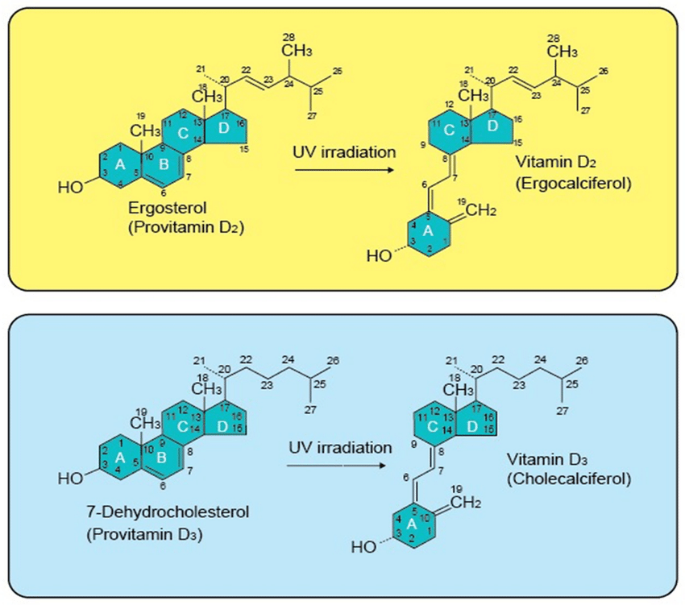
Vitamin D2 (Ergocalciferol)
๐ Derived from plants and yeast
Vitamin D3 (Cholecalciferol)
๐ Derived from animal sources
๐ Synthesized in human skin through sunlight exposure
Approximately 80-90% of vitamin D in the body is produced via skin exposure to sunlight.
Effectiveness of Vitamin D2 vs Vitamin D3
Although both forms undergo similar metabolic processes in the body, research shows differences in their effectiveness:
๐ Vitamin D3 is generally more effective in increasing blood levels of 25-hydroxyvitamin D [25(OH)D]
๐ It is also associated with better bone health outcomes
Possible Explanations:
๐ Higher binding affinity to the Vitamin D receptor (VDR)
๐ More efficient conversion via liver enzymes (25-hydroxylase)
Clinical Study Evidence (Thailand)
A 2022 study by Dr. Thanawat Ampantrup and colleagues compared:
๐ Vitamin D2: 20,000 IU/week
๐ Vitamin D3: 1,000 IU/day
Conducted in female healthcare workers (average age ~50 years) over 1 year:
Key Findings:
๐ Baseline vitamin D deficiency rate: 98.8%
๐ Both D2 and D3 significantly increased 25(OH)D levels at 6 months
๐ Vitamin D3 increased levels faster and more effectively in the first 6 months (P = 0.018)
๐ No further significant increase observed between 6-12 months
Medication Adherence (Compliance):
๐ Vitamin D2 group had better adherence
๐ Weekly dosing is easier than daily intake
๐ Higher Medication Possession Ratio (MPR) at both 6 months and 1 year
Important Insight:
For individuals with baseline 25(OH)D < 20 ng/mL:
๐ Both D2 and D3 increased levels only slightly above 20 ng/mL
๐ This may be insufficient for postmenopausal women with osteoporosis, who require ≥30 ng/mL
Key Takeaways
๐ Vitamin D deficiency is common-even in sunny countries like Thailand
๐ Lifestyle factors (e.g., indoor living, sunscreen use) contribute to deficiency
๐ Vitamin D3 is more effective in raising blood vitamin D levels
๐ Vitamin D2 may improve adherence due to weekly dosing
Conclusion
Both Vitamin D2 and D3 are beneficial, but they differ in effectiveness and convenience. Choosing the right type and dosage should be based on individual needs and guided by healthcare professionals.
source : Dr. Tanawat Amphansap
**Translated and compiled by ArokaGO Content Team
Police General Hospital
Share this article
More Articles
Discover more insights on health care and medical tourism.

Medical Wellness by Hertitude: Longevity Medicine at Aman Nai Lert Bangkok
On the 8th floor of Aman Nai Lert Bangkok, within the seven-acre green seclusion of Nai Lert Park in the heart of the city's Lumphini district, sits Medical Wellness by Hertitude Clinic a physician-led longevity and wellness practice built into one of Bangkok's most private luxury addresses. The clinic occupies part of the hotel's 1,500-square-metre Aman Spa & Wellness centre, positioned on its own floor alongside the Aman Spa above it, forming what the hotel describes as a seamless synthesis of advanced medical wellness and traditional Thai healing.

Genetic Testing for Cancer Risk: Understanding Your Inherited Blueprint for Prevention
Cancer develops through a complex combination of genetic, environmental and lifestyle factors. While behaviors such as smoking, alcohol consumption, diet, physical activity and exposure to certain harmful substances can influence cancer risk, inherited genetic variants can also make some individuals more susceptible to certain types of cancer.

Behind the Surgery: Getting to Know Dr. Tanongsak Panyawirunroj of Asia Cosmetic Hospital
When people think of plastic surgery, they often focus first on what can be seen after a procedure the shape of the face, the nose, the eyes, the breasts, or the contours of the body. Yet behind every visible change lies a far more complex process involving anatomical knowledge, surgical experience, patient assessment, and a series of medical decisions made before, during, and after surgery.