Improving bone health prior to joint replacement surgery.

The importance of osteoporosis to joint replacement surgery.
Total hip arthroplasty (THA) and total knee arthroplasty (TKA) are among the most commonly performed orthopedic procedures. Osteoporosis has been identified as a risk factor that affects the success outcomes of total joint arthroplasty (TJA). Complications associated with TJA include intraoperative fracture, aseptic loosening of the prosthesis, and periprosthetic fracture. Studies have shown that osteoporosis increases the incidence of periprosthetic fractures by 0.3–5.5% after primary joint replacement surgery, and up to 30% following revision joint replacement surgery.
Studies on the incidence of osteoporosis in patients undergoing TJA have reported that 36.7% of patients who undergo joint replacement surgery have osteoporosis. Furthermore, patients who have undergone TJA are at an increased risk of developing osteoporosis after surgery due to postoperative bone loss. Research has found that bone mass loss around the operated joint can increase by up to 20% following TJA
Osteoporosis Medications and Their Outcomes in Improving Bone Health
Evidence suggests that the use of antiresorptive agents can reduce postoperative bone loss following total joint arthroplasty (TJA). A study by Ro et al. found that patients receiving bisphosphonates had a lower rate of revision total knee arthroplasty (TKA) compared with patients who did not receive pharmacological treatment (1.5% vs. 2.9%).
Similarly, studies in patients undergoing total hip arthroplasty (THA) demonstrated that those treated with bisphosphonates had a lower rate of revision THA compared with patients who did not receive medication (2.8% vs. 5.3%).
Furthermore, a meta-analysis has shown that the administration of bisphosphonates can reduce the risk of revision TJA by up to 50%.
Guidelines for the Evaluation and Treatment of Osteoporosis Before TJA Surgery
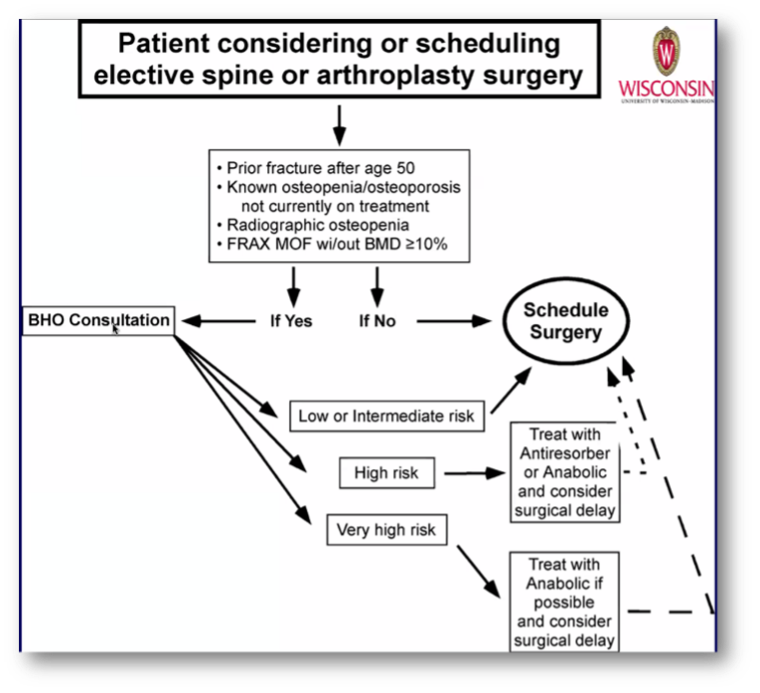
Summary
Osteoporosis is a common condition, particularly among patients who are scheduled to undergo Total Joint Arthroplasty (TJA). However, most patients receive very limited screening, risk assessment, and treatment for osteoporosis prior to TJA. The coexistence of osteoporosis with osteoarthritis can lead to poorer postoperative outcomes, such as intraoperative fractures, aseptic loosening of the prosthesis, and periprosthetic fractures.
Pharmacological treatment, including both anti-resorptive agents and anabolic bone-forming agents, has been shown to improve radiographic and clinical outcomes. Therefore, evaluation and optimization of bone health using osteoporosis medications should begin approximately 2–6 months prior to TJA and should be continued for at least 1–2 years after surgery. This approach can help improve treatment outcomes and reduce the risk of postoperative complications.
Source : Doctorwat
**Translated and compiled by ArokaGO Content Team
Police General Hospital
Share this article
More Articles
Discover more insights on health care and medical tourism.

Medical Wellness by Hertitude: Longevity Medicine at Aman Nai Lert Bangkok
On the 8th floor of Aman Nai Lert Bangkok, within the seven-acre green seclusion of Nai Lert Park in the heart of the city's Lumphini district, sits Medical Wellness by Hertitude Clinic a physician-led longevity and wellness practice built into one of Bangkok's most private luxury addresses. The clinic occupies part of the hotel's 1,500-square-metre Aman Spa & Wellness centre, positioned on its own floor alongside the Aman Spa above it, forming what the hotel describes as a seamless synthesis of advanced medical wellness and traditional Thai healing.

Genetic Testing for Cancer Risk: Understanding Your Inherited Blueprint for Prevention
Cancer develops through a complex combination of genetic, environmental and lifestyle factors. While behaviors such as smoking, alcohol consumption, diet, physical activity and exposure to certain harmful substances can influence cancer risk, inherited genetic variants can also make some individuals more susceptible to certain types of cancer.

Behind the Surgery: Getting to Know Dr. Tanongsak Panyawirunroj of Asia Cosmetic Hospital
When people think of plastic surgery, they often focus first on what can be seen after a procedure the shape of the face, the nose, the eyes, the breasts, or the contours of the body. Yet behind every visible change lies a far more complex process involving anatomical knowledge, surgical experience, patient assessment, and a series of medical decisions made before, during, and after surgery.