Spinal Surgery

Why undergo spine surgery?
The general indications for spine surgery are as follows:
๐ Severe pain that is unbearable
๐ Muscle atrophy or weakness
๐ Inability to control urination or bowel movements
๐ Patient has received general treatment for at least 6-8 weeks but symptoms have not improved

Spine Surgery Approaches
Surgery for herniated discs and lumbar nerve canal expansion includes:
๐ Microscopic surgery (Microscope) is a surgery for herniated discs using a small magnifying camera to help remove the herniated disc pressing on the spine and nerves. It may involve small incisions or muscle openings, depending on the patient’s symptoms and severity.
๐ Endoscopic surgery (Endoscope) involves inserting an endoscope through a small incision of about 8 millimeters to get a clear view of the nerves. The surgeon cuts only the problematic part of the nerve without removing healthy muscles. Patients recover quickly and can move immediately after surgery.
๐ Spinal fusion surgery (Spinal Fusion) fuses the spine to relieve severe pain from vertebral movement, abnormal disc movement, or nerve entrapment. This involves using metal screws and artificial intervertebral discs to stabilize the vertebrae. It is typically used to treat patients with vertebral slippage causing nerve compression and spinal curvature deformities
๐ Minimally invasive transforaminal lumbar interbody fusion (MIS TLIF) surgery uses small incisions to insert devices into the spine. A camera helps locate and remove the deteriorating or misaligned lumbar intervertebral disc. The surgeon then fuses the spine using the patient’s own bone and metal devices through small skin incisions. Using 3D X-ray imaging (O-arm) and navigation systems ensures precise positioning, resulting in small wounds and rapid recovery.
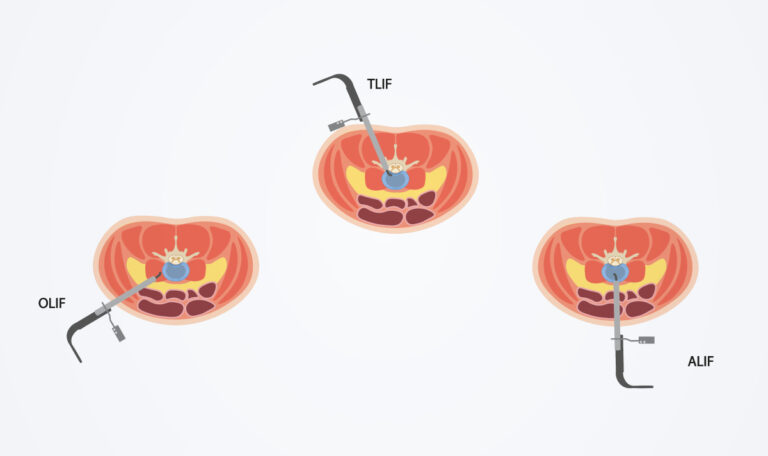
๐ Anterior lumbar interbody fusion (ALIF) is a surgery to reinforce the intervertebral discs from the front without damaging the back muscles. It is for patients with deteriorating intervertebral discs, spinal abnormalities, and spinal tumors.
Advantages of Spine Surgery MIS SPINE
๐ Small wounds
๐ Rapid recovery
๐ Less blood loss
๐ Low infection rates
๐ Reduced postoperative pain from muscle damage
๐ Maintains the original structure of the patient’s spine
However, patients with spinal issues should consult specialists for careful evaluation and proper planning of spine surgery . Follow medical advice andprepare for spine surgery as well aspostoperative care to ensure satisfactory results.
source : Bangkok Hospital
**Translated and compiled by ArokaGO Content Team
Independent Writer
Share this article
More Articles
Discover more insights on health care and medical tourism.

Weight Loss Injection Pen
Being overweight or obese is a growing health concern worldwide. It is associated with many chronic diseases such as diabetes, hypertension, heart disease, high cholesterol, and even certain types of cancer.

Gastroesophageal Reflux Disease (GERD)
Gastroesophageal Reflux Disease (GERD), commonly known as acid reflux, is a digestive disorder in which stomach acid flows back into the esophagus, causing irritation and discomfort. This article provides a comprehensive overview of GERD

Stroke from narrowing or blockage of cerebral arteries
Stroke is the third most common disease, after cancer and heart disease.